Here’s what Kamala is thinking.
Former Vice President Kamala Harris is warning that President Donald Trump’s new Iran agreement could backfire politically, making the surprising prediction that Republicans may pay a price at the ballot box despite the administration’s claims that the deal will lower gas prices and strengthen national security.
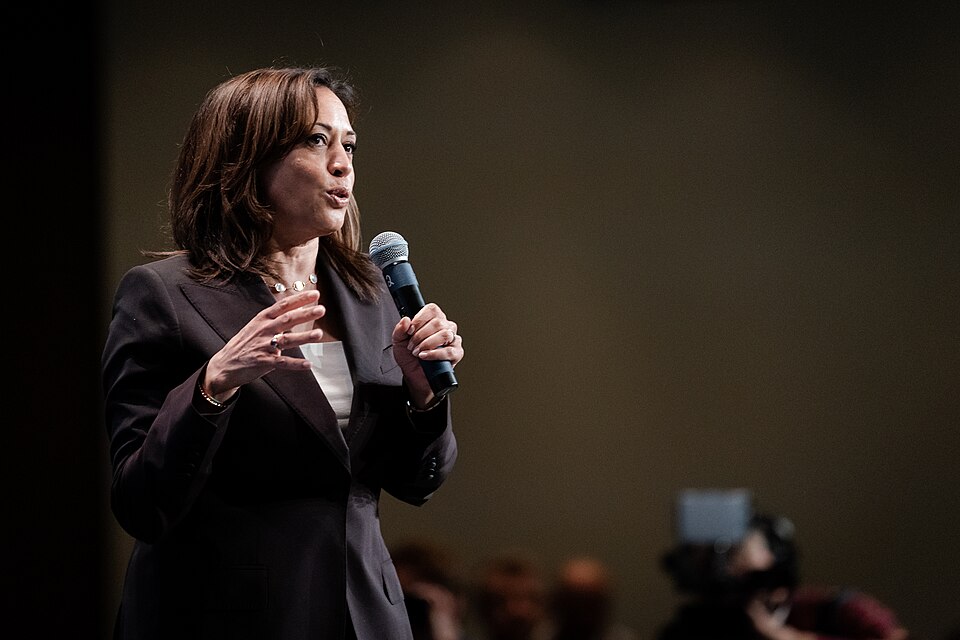
Speaking at a climate summit in Vienna on Tuesday, Harris criticized Trump’s handling of the Iran negotiations and argued that Americans never wanted the conflict that led to the current agreement.
“This is a war the American people did not want,” Harris said. “This is a war of choice.”
Her comments come as the Trump administration prepares to release details of a new memorandum of understanding with Iran that officials say could reopen the vital Strait of Hormuz shipping route, reduce tensions in the Middle East, halt Iran’s nuclear weapons ambitions, and force the regime to end support for terrorist organizations.
The agreement has already sparked comparisons to former President Barack Obama’s controversial 2015 Iran nuclear deal, a deal Trump repeatedly criticized and ultimately withdrew from during his first term.
Harris Compares Trump’s Deal To Obama’s Iran Agreement
Harris suggested that Trump’s negotiations could ultimately produce results similar to the Obama-era agreement, despite the administration’s insistence that the new framework is much tougher on Tehran.
“Whatever is being negotiated, this president is going to declare victory,” Harris said.
She argued that the final outcome could resemble the same type of arrangement Trump spent years condemning on the campaign trail and during his presidency.
The comments immediately reignited debate over which administration has taken the stronger approach toward Iran’s nuclear program and regional influence.
Gas Prices Become A New Political Battleground
Harris also attempted to connect the Iran negotiations to the financial struggles facing many American families.
According to the former vice president, energy costs have increased because of instability in the Middle East, placing additional pressure on household budgets already stretched by years of inflation.
“There is a direct correlation between this war of choice and what has happened in terms of gas prices,” Harris claimed.
The Trump administration strongly disputes that narrative.
White House officials have repeatedly argued that the agreement is designed specifically to stabilize energy markets, restore normal shipping traffic through the Strait of Hormuz, and bring relief to consumers who have been hit by high fuel costs.
For many voters, especially retirees and working families living on fixed budgets, the price of gasoline remains one of the most visible indicators of economic health.
Harris Predicts Democrats Will Win The Midterms
Despite recent polling showing economic concerns remain a top issue for voters, Harris expressed confidence that Democrats will emerge victorious in the upcoming midterm elections.
“I have no question or doubt that we will win the midterms,” she said.
Her prediction comes as both parties prepare for what could be one of the most closely watched election cycles in years.
Republicans are expected to campaign heavily on economic issues, border security, energy independence, and foreign policy, while Democrats continue focusing on healthcare, climate initiatives, and social programs.
Oil Prices Fall As Investors Watch Iran Talks
Meanwhile, financial markets reacted positively to reports that negotiations are making progress.
Oil prices recently fell to their lowest levels since early spring as investors became increasingly optimistic that disruptions to global energy supplies could ease in the months ahead.
Supporters of the agreement argue that restoring stability in one of the world’s most important shipping corridors could help reduce energy costs, strengthen global trade, and lower inflationary pressures affecting American consumers.
The Next 60 Days Could Decide Everything
According to reports, the agreement includes a 60-day evaluation period during which Iran must demonstrate that it has abandoned efforts to develop nuclear weapons and ended support for terrorist groups.
Whether Iran follows through on those commitments could determine whether the deal becomes a major foreign policy victory for Trump or fuels a new political battle heading into the midterm elections.
For now, Harris is betting voters will reject the agreement.
The Trump administration is betting Americans will see lower gas prices, greater stability abroad, and a stronger economy at home.
The next few months may reveal which side is right.