Trump has made his stance very clear.
President Donald Trump delivered one of his strongest warnings yet about the rise of democratic socialist candidates on Monday, arguing that the movement represents a greater long-term threat to the United States than many of the nation’s most defining historical crises.
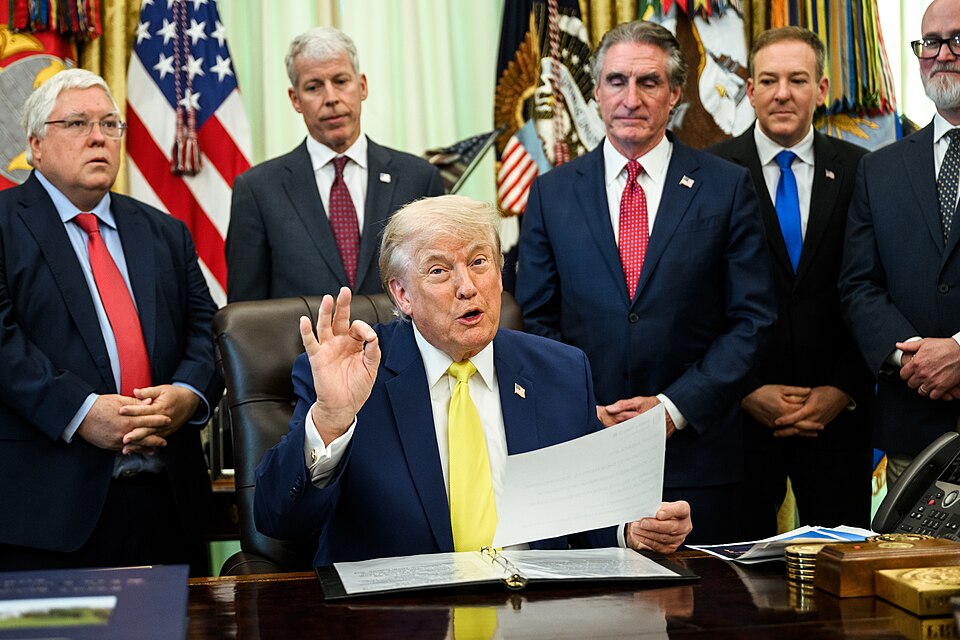
Speaking to reporters in the Oval Office, Trump said the growing popularity of democratic socialist politicians should concern Americans who value limited government, free markets, strong law enforcement, and secure borders.
According to the president, the term “social democrat” is often used to make the movement appear more moderate than it actually is.
“They use the word social democrat because it sounds so nice, but it’s really communism you’re talking about,” Trump said.
Trump went on to argue that the country’s current ideological divide could have consequences that extend far beyond ordinary political disagreements.
“I believe it is the largest threat to our country there is, maybe since our creation as a nation,” Trump said. “That includes WWI, WWII, 9/11, it includes the Pearl Harbor attack.”
The remarks reflect a theme Trump has increasingly emphasized as democratic socialist candidates continue gaining momentum in local and state elections across the country.
The president has frequently argued that policies such as expanding government programs, reducing police funding, limiting immigration enforcement, and increasing government control over the economy would fundamentally change the nation if they continue gaining political support.
Trump renewed those concerns after several candidates backed by New York City Mayor Zohran Mamdani won Democratic House primaries in New York, a development many political observers see as another sign of the progressive wing’s growing influence within the Democratic Party.
Speaking last week at the Faith & Freedom Coalition’s annual policy conference in Washington, Trump warned supporters that the movement is spreading beyond New York.
“This movement isn’t going to stay confined to New York,” Trump said. “That’s why the Democratic Party has a serious problem.”
He argued that candidates promoting expansive government benefits often attract support by offering promises that are difficult to fulfill over the long term.
Trump argued that some candidates win support by promising generous benefits, saying they attract voters with commitments he believes are unrealistic and impossible to fulfill.
Democratic Socialist candidates have appeared in elections across several major cities and states, including Los Angeles, Seattle, Colorado, and Washington, D.C., fueling debate over the future direction of the Democratic Party. Their growing presence has become a major talking point for Republicans heading into the next election cycle.
Trump has increasingly framed the debate as a choice between what he describes as traditional American values—including economic freedom, public safety, and border security—and policies championed by the Democratic Party’s progressive wing.
The president also targeted Washington, D.C., mayoral candidate Janeese Lewis George in a Truth Social post on Sunday, criticizing positions he believes would weaken law enforcement and immigration enforcement in the nation’s capital.
Trump described Lewis George as a “communist” and claimed she supports policies such as making Washington a sanctuary city, opposing Immigration and Customs Enforcement (ICE), expanding cashless bail, reducing police funding, and reversing tougher anti-crime initiatives.
He argued those proposals would undo recent efforts to improve safety and quality of life in the city.
Trump wrote that he does not believe those policies will succeed and said he has no intention of allowing them to gain traction because of the work he has put into improving Washington, D.C.
Despite his criticism, Trump said he would still meet with Lewis George if she wins the mayoral election, signaling he is willing to work with the city’s next elected leader while continuing to oppose policies he believes would move the capital in the wrong direction.
As democratic socialist candidates continue winning primaries and expanding their influence in major cities, Trump has made opposition to the movement an increasingly central part of his political message. With the 2026 midterm elections drawing closer, the president appears determined to frame the contest as a debate over the future direction of the country, arguing that voters will ultimately decide whether America continues pursuing free-market principles or embraces a larger role for government in everyday life.