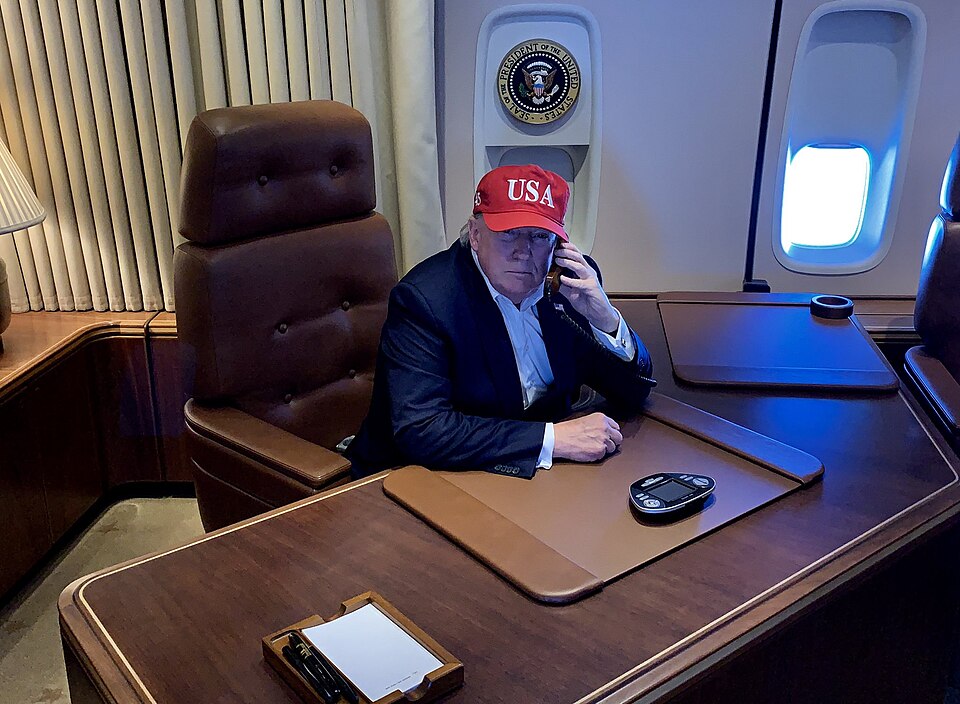
Trump has made a bold new claim.
President Donald Trump unveiled a bold new vision for America’s role in the Middle East on Monday, declaring that the United States could become the “guardian angel” of the Strait of Hormuz after another major round of military strikes against Iran. The remarks came as tensions between Washington and Tehran escalated once again, raising fresh concerns about global oil supplies, regional stability, and the possibility of a wider conflict.
Speaking during an appearance on Fox & Friends, Trump dismissed Iran’s claims that it had effectively closed the Strait of Hormuz, one of the world’s most important shipping lanes.
Trump Says America Will Protect the Strait
Responding to Iran’s latest claims, Trump asserted that the United States is taking control of the strategic waterway, arguing that Iran has been left with little remaining capability to challenge the move.
The president later expanded on what he believes America’s role should be in protecting the vital waterway.
Trump said the U.S. plans to respond forcefully and maintain control over the strategic waterway, suggesting the country could effectively oversee its security. He added that the United States might even take on a formal guardian role for the strait and argued that, unlike in the past, America should be compensated for providing that protection.
Trump argued that the United States has spent years protecting international shipping without receiving adequate compensation and suggested that America’s security efforts should no longer come at taxpayers’ expense.
Why the Strait of Hormuz Matters
The Strait of Hormuz is one of the most strategically important waterways in the world. Before Operation Epic Fury began on February 28, nearly one-fifth of all seaborne oil shipments traveled through the narrow passage each year, making it a critical route for the global energy market.
Any disruption to commercial traffic through the strait has the potential to impact oil prices, gasoline costs, shipping routes, and financial markets worldwide. Because of its importance, the waterway has long been viewed as a key national security concern for both the United States and its allies.
Cease-Fire Collapses as Tensions Return
Earlier this year, the White House helped broker an extended cease-fire with Iran, followed by a preliminary memorandum of understanding designed to reduce hostilities.
That agreement has since unraveled amid renewed disputes over control of the Strait of Hormuz and the future of commercial shipping through the region.
Iran has maintained that it has authority over the waterway and has suggested that foreign vessels could eventually be required to pay for passage. The Trump administration has rejected those claims, insisting that the strait remains open under international law.
Speaking on Monday, Trump said an agreement had already been finalized before, in his view, the other side backed away from it. He argued that similar situations have happened repeatedly, claiming they have broken roughly 10 agreements. Trump added that, as a result, his administration intends to respond with strong action.
U.S. Launches Largest Round of Strikes
According to U.S. Central Command, American forces struck approximately 140 Iranian military targets Sunday night in what officials described as the largest wave of attacks since the latest conflict began.
The operation reportedly targeted missile launch sites, drone facilities, ammunition storage areas, communications equipment, and additional military infrastructure intended to weaken Iran’s ability to launch future attacks.
Trump said the campaign has severely damaged Iran’s military capabilities.
Trump said U.S. forces have pushed the opposing side onto the defensive, claiming much of its military equipment—including key air defense systems—has been destroyed. He also pointed to overnight strikes, adding that U.S. forces respond aggressively whenever drones are launched.
Iran Responds With Regional Attacks
Iran responded by launching projectiles toward several U.S. partners throughout the Middle East, including Bahrain, Kuwait, Qatar, Jordan, and Oman. Oman shares territorial waters with Iran in the Strait of Hormuz, making the nation strategically important as tensions continue to rise.
Officials from the affected countries did not immediately report significant damage or casualties.
Meanwhile, Iranian state media acknowledged that multiple locations inside the country were struck overnight and confirmed that at least one person was killed during the latest round of attacks.
Diplomatic Efforts Continue
Sunday night’s military operation followed Iran’s recent attack on a commercial container ship, one of several incidents that prompted Trump to declare the previous cease-fire effectively over.
Despite the renewed fighting, international mediators from Egypt, Pakistan, and Qatar continue working behind the scenes in hopes of securing a broader agreement that could reduce tensions and prevent additional military escalation.
What Happens Next?
Trump’s latest comments suggest the administration intends to maintain a strong military presence around the Strait of Hormuz for the foreseeable future.
With global energy markets closely watching developments, any prolonged conflict in the region could have significant consequences for oil prices, inflation, international trade, and economic stability.
Whether diplomacy can succeed or military operations continue, the Strait of Hormuz remains one of the world’s most closely watched flashpoints—and Trump’s proposal for the United States to serve as the “guardian angel” of the waterway signals that Washington is prepared to play a much larger role in securing one of the globe’s most critical maritime corridors.