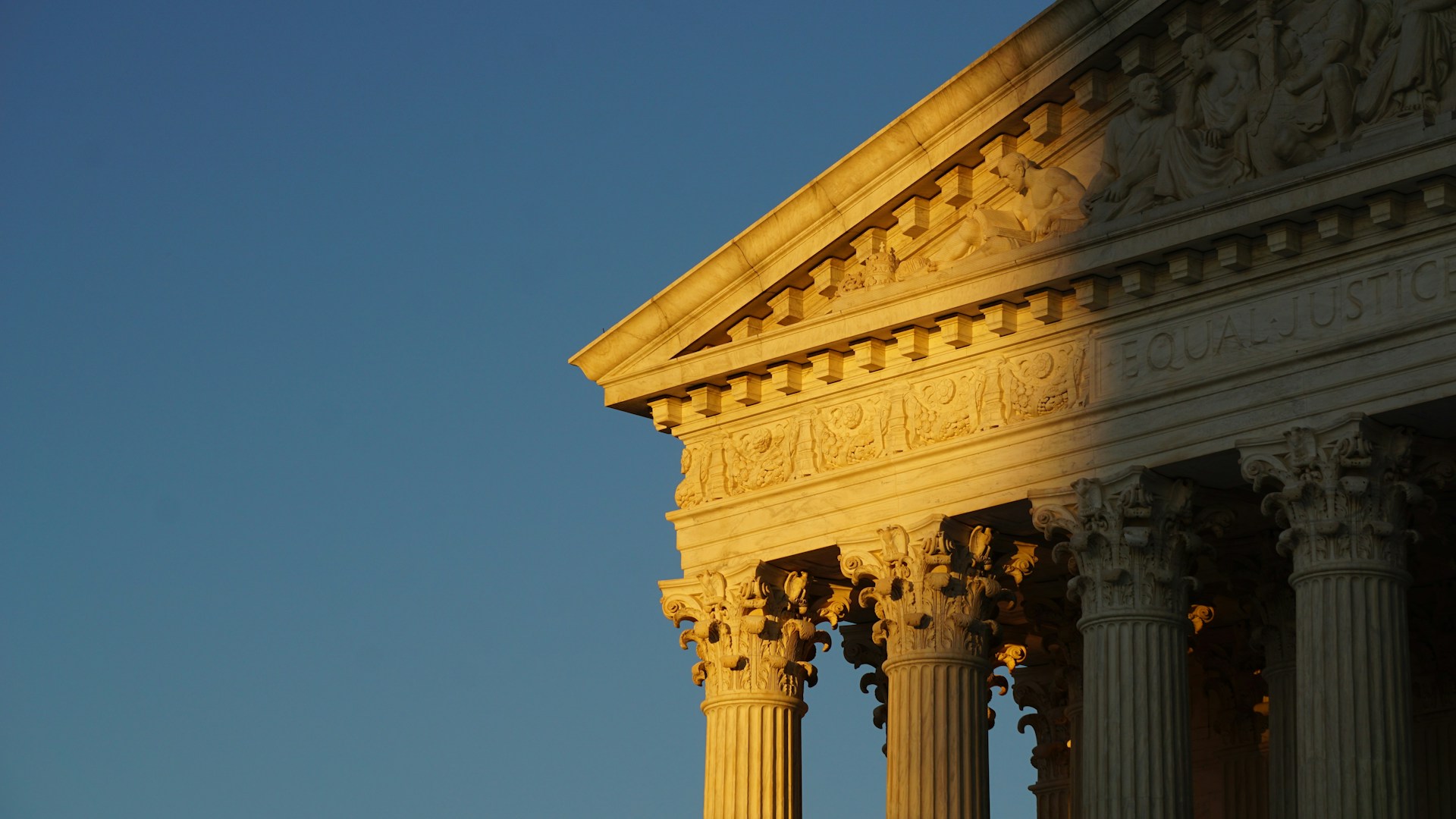
This was a major victory for Trump.
The Supreme Court handed President Donald Trump a major victory Monday in a closely watched election case, removing a significant legal obstacle to his administration’s push for new mail-in voting requirements ahead of the 2026 midterm elections.
The ruling could have important consequences as Republicans and Democrats prepare for the November elections that will determine control of Congress.
In a decision opposed by the Court’s three liberal justices, the Supreme Court concluded that a federal judge acted too soon when she blocked portions of Trump’s executive order involving mail ballots and voter eligibility procedures.
The decision does not settle whether Trump’s underlying election policies are ultimately legal. Instead, the Court determined that the states’ challenge was premature because courts generally review final agency rules rather than presidential instructions directing an agency to develop a rule.
That gives Trump an important victory for now — but another major court battle is already underway.
Supreme Court Removes Roadblock To Trump Election Order
Trump signed an executive order in March directing his administration to pursue significant changes involving federal elections.
Among its provisions, the order instructed the U.S. Postal Service to develop new standards governing mail-in and absentee ballots used in federal elections.
The administration has argued that stronger safeguards are necessary to protect election integrity and ensure that only legally eligible voters participate in federal elections.
A coalition of Democratic-led states sued to stop the order.
U.S. District Judge Indira Talwani, an appointee of former President Barack Obama, sided with the states on key portions of the dispute and blocked implementation of parts of Trump’s order.
The Trump administration then turned to the Supreme Court.
On Monday, the administration prevailed.
Why The Supreme Court Sided With Trump
The central issue before the justices involved when federal courts are allowed to intervene.
The Trump administration argued that the states sued before the Postal Service completed its rulemaking process.
The Supreme Court agreed that the earlier challenge came too soon.
In practical terms, the majority concluded that courts should review what the Postal Service actually implements rather than block the president’s directive based on what the agency might ultimately decide.
That is an important distinction because the Postal Service has since moved forward with a final regulation.
The states can now challenge that completed rule in court.
As a result, Monday’s decision gives Trump a significant procedural victory without guaranteeing that the administration will ultimately prevail on the constitutionality or legality of its election policies.
What Trump Wants To Change About Mail-In Voting
Trump’s executive order represents part of a broader administration effort to strengthen citizenship verification and mail-ballot procedures in federal elections.
The order called for federal officials to develop lists involving confirmed U.S. citizens eligible to participate in elections.
It also directed the Postal Service to pursue new requirements surrounding ballot mail.
The administration has framed the initiative as an election-integrity measure intended to strengthen safeguards surrounding voting.
Trump has criticized widespread mail-in voting for years, arguing that absentee voting systems can create opportunities for fraud and undermine public confidence when sufficient protections are not in place.
Documented cases of voter fraud, improper ballot activity and ineligible voting have occurred around the country.
However, available evidence has not established nationwide election fraud on the massive scale Trump has sometimes alleged.
That distinction remains important as courts consider the administration’s policies.
Why This Matters Before The 2026 Midterms
The timing could hardly be more consequential.
Americans will vote in November in elections that will decide control of the House and Senate and help determine how much of Trump’s agenda Republicans can advance during the remainder of his term.
Mail-in voting remains an important part of the election system in numerous states.
That makes any significant change to mail-ballot requirements politically and legally sensitive, particularly when those changes arrive only months before Election Day.
Republicans have increasingly pushed for tougher election-security measures, including citizenship verification, voter identification requirements and tighter controls surrounding absentee ballots.
Supporters argue such safeguards can deter illegal voting and increase Americans’ confidence that elections are being conducted fairly.
Democrats and voting-rights advocates counter that additional requirements could create unnecessary barriers for legitimate voters.
Those concerns are particularly focused on elderly Americans, rural residents and people with disabilities who may depend more heavily on absentee voting.
Liberal Justices Sound Alarm Over Decision
The Supreme Court’s liberal wing strongly opposed the majority’s decision.
Justice Sonia Sotomayor, joined by Justice Elena Kagan, stressed that the ruling does not establish that Trump possesses the legal authority to carry out all of the directives contained in his executive order.
Their position was essentially that the Supreme Court was postponing the larger legal confrontation rather than resolving it.
Justice Ketanji Brown Jackson issued a separate dissent and accused the majority of failing to appreciate the potential disruption caused by changing election procedures so close to the midterms.
Jackson argued that the government’s request should have been rejected.
The sharp disagreement underscores how contentious election-law disputes have become as November approaches.
23 States And Washington, D.C., Challenge Trump
The lawsuit is being led by California, Massachusetts, Nevada and Washington and includes a total of 23 states plus the District of Columbia.
The Democratic-led states contend that Trump’s policies could interfere with their authority to administer elections.
They have also warned that new mail-voting procedures could cause confusion and create problems for millions of Americans who rely on absentee ballots.
The states specifically raised concerns about voters with disabilities and residents of rural communities, where voting in person may be more difficult.
Trump’s administration has countered that the original lawsuit was filed before federal agencies had taken the final actions necessary for courts to review.
That procedural argument proved successful before the Supreme Court.
Obama-Appointed Judge Will Get Another Look At The Case
Despite Trump’s victory, the legal fight now heads back to the lower courts.
Judge Talwani has established an accelerated schedule to consider challenges involving the Postal Service’s finalized regulation.
That means opponents could still persuade a federal court to block the policy before the November election.
Talwani has also ruled against Trump’s executive order in separate litigation brought by private organizations.
The rapidly moving cases virtually guarantee that election law will remain a major legal battleground in the weeks leading up to the midterms.
Democrats Vow To Keep Fighting Trump Policy
Washington Attorney General Nick Brown, a Democrat, blasted the Supreme Court’s decision while acknowledging that the justices had not approved the substance of Trump’s policy.
Brown maintains that states — rather than the president — possess primary authority over election administration and says his office will continue fighting the administration’s requirements.
The Democratic-led states have also warned that forcing them to wait for final federal regulations leaves little time to resolve complex legal disputes before voting begins.
Their attorneys argue that implementing major changes shortly before an election could produce mistakes and confusion that are difficult to correct once ballots are already being distributed.
The Trump administration sees the issue differently, arguing that federal courts cannot strike down policies before agencies have actually finished developing them.
Election Integrity Takes Center Stage
Beyond the immediate lawsuit, the Supreme Court battle highlights a much larger national debate over election security.
Conservative lawmakers have increasingly called for policies designed to verify citizenship, strengthen voter identification rules and tighten safeguards surrounding absentee ballots.
Supporters say Americans deserve confidence that every legal vote is counted and that election systems contain adequate protections against fraud or abuse.
Critics argue that poorly designed restrictions can prevent legitimate voters from participating.
Finding the line between ballot access and election security has become one of the country’s most contentious political disputes.
And with control of Congress at stake in November, that debate is unlikely to disappear anytime soon.
Another Important Supreme Court Victory For Trump
Monday’s decision also continues a broader pattern of major Trump administration disputes reaching the Supreme Court on its emergency docket.
The emergency docket allows the justices to intervene rapidly in time-sensitive cases, frequently without the extensive briefing and oral arguments associated with ordinary Supreme Court appeals.
For presidents attempting to implement policies while lawsuits move through lower courts, those emergency decisions can have enormous practical consequences.
This case is a prime example.
Had the lower-court injunction remained intact, Trump’s administration would have faced a major obstacle to implementing its proposed mail-ballot changes before November.
The Supreme Court has now removed that particular obstacle.
What Happens Next?
The victory does not mean the election fight is finished.
Quite the opposite.
Now that the Postal Service has finalized its regulation, Democratic-led states can challenge the actual rule and ask federal courts to stop it from taking effect.
The courts will therefore face a difficult question with Election Day rapidly approaching: whether the administration possesses the legal authority to impose these requirements and whether courts should allow substantial voting changes so close to a national election.
For Trump, however, Monday brought an unmistakable victory.
His administration convinced the Supreme Court that the earlier injunction could not stand, giving the president additional room to pursue his election-integrity agenda before the midterms.
Whether that victory survives the next round of litigation could become one of the most consequential election-law battles of 2026.