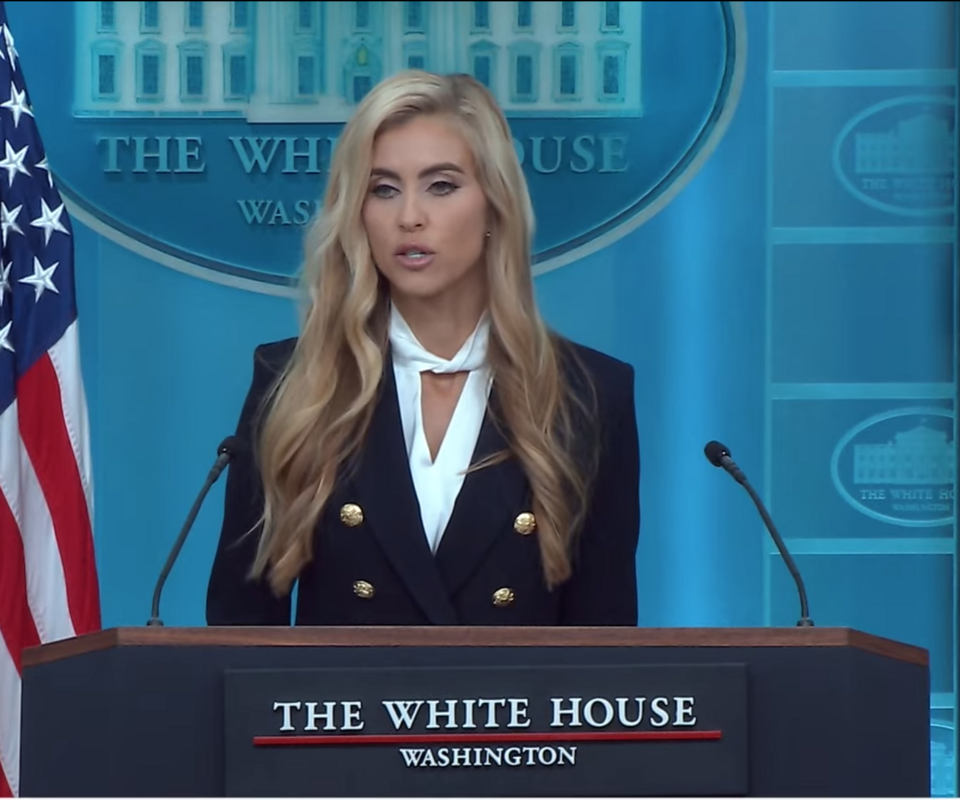
Here’s what was said.
President Donald Trump is facing criticism from a former Democratic White House official who claims the administration put its own press secretary in an impossible position, leaving her unprepared for one of Washington’s most demanding jobs.
Joe Lockhart, who served as White House press secretary under former President Bill Clinton, accused the Trump administration of failing to properly prepare Katie Zacharia before placing her in front of the national media.
Lockhart argued that Zacharia’s disappointing performance was not entirely her responsibility. Instead, he suggested that the White House itself contributed to her difficulties by giving her insufficient time to prepare.
His criticism came as Zacharia prepared to leave her position after serving just five days, creating another unexpected personnel change inside the Trump administration.
Former Clinton Official Blames Trump White House
During a Friday appearance on CNN, Lockhart discussed Zacharia’s short-lived tenure and questioned the administration’s decision to place her behind the White House briefing room podium with so little preparation.
Although Lockhart served under a Democratic president, he emphasized that his concerns were not intended simply as a partisan attack against Trump.
Instead, he argued that Zacharia deserved some understanding because she had been placed in a difficult situation without adequate support.
Lockhart described her as a victim of the circumstances surrounding her appointment and maintained that the White House should have done more to prepare her for the intense demands of the job.
According to Lockhart, the responsibility for a successful transition does not fall entirely on the incoming press secretary.
The president and senior administration officials also have an obligation to ensure that their spokesperson understands the administration’s policies, priorities, and communication procedures.
His remarks placed the focus directly on Trump’s management of the White House communications operation.
Lockhart Reveals How Clinton Prepared Him for the Job
To explain his concerns, Lockhart compared Zacharia’s experience with his own transition into the White House press secretary position during the Clinton administration.
Lockhart said he spent approximately two months preparing before taking over the briefing room.
During that period, he studied major policy issues and met with officials responsible for national security, federal spending, and other important government operations.
Those meetings helped him understand the administration’s decisions and prepared him to answer difficult questions from reporters.
He also explained that Clinton and his senior staff would not allow him to begin conducting briefings until they believed he was ready.
Zacharia, by contrast, reportedly had only hours to prepare before facing the White House press corps.
Lockhart argued that the difference in preparation was substantial and made her difficulties far less surprising.
He said she had been “set up to fail” and suggested that criticism of her performance should also be directed toward the officials responsible for preparing her.
The former Clinton spokesman also encouraged observers to show some sympathy for Zacharia rather than placing all the blame on her personally.
Trump Tells Press Secretary to Reconsider Position
Lockhart’s criticism followed news that Zacharia was leaving the White House press secretary position almost immediately after beginning the job.
A White House official confirmed that she was transitioning out of the role after Trump told reporters he had encouraged her to reconsider whether she wanted to continue.
The announcement marked an unusually rapid departure from one of the administration’s most visible communications positions.
The White House press secretary is responsible for representing the president, explaining federal policy decisions, responding to national controversies, and handling questions from journalists.
That responsibility requires extensive preparation, particularly when the administration faces significant political challenges.
Zacharia’s departure raised questions about why the White House selected her for the position and whether officials had given her sufficient resources to succeed.
Lockhart’s argument was that the administration placed her in the spotlight without the preparation needed to handle those responsibilities effectively.
Katie Zacharia Faces Questions About Legal Credentials
The controversy surrounding Zacharia extended beyond her performance at the White House podium.
Shortly after her appointment, questions emerged about her professional qualifications and previous descriptions of her legal background.
Reports indicated that Zacharia had graduated from Pepperdine University with a law degree but was not licensed to practice law in any U.S. state.
The Wall Street Journal also reported that she had failed the California bar examination.
The distinction became controversial because obtaining a law degree does not automatically qualify someone to practice law.
The watchdog organization Campaign for Accountability filed a complaint with the State Bar of California requesting an investigation into statements concerning Zacharia’s legal qualifications.
The complaint was a request for review, not proof that she had committed professional misconduct.
When asked about the bar examination controversy, Zacharia downplayed its significance, describing the test results as “somewhat inconsequential.”
However, the issue added to the attention surrounding her appointment and complicated an already difficult introduction to the White House press corps.
First White House Briefing Lasted Just 14 Minutes
Zacharia’s first official White House press briefing took place Tuesday and lasted approximately 14 minutes.
During the appearance, she answered only three questions from reporters.
The unusually short briefing attracted attention as journalists and political observers evaluated the administration’s newest spokesperson.
Zacharia also announced the resignation of Kimberly Guilfoyle, the U.S. ambassador to Greece and a prominent Trump ally.
That announcement became another major political development emerging from an already closely watched briefing.
For a new press secretary, even routine appearances can be challenging because questions may involve numerous government departments, international developments, and sensitive political matters.
Lockhart’s criticism centered on the argument that Zacharia had not received enough preparation to handle those expectations.
His comparison with the Clinton administration suggested that the problem involved not just one employee’s performance but also the White House’s preparation and management of its communications staff.
Controversy Raises Questions About White House Leadership
The dispute has created an unusual political dynamic.
Rather than simply criticizing a member of Trump’s administration, a former Democratic White House spokesman publicly defended her while directing much of his criticism toward the president’s team.
Lockhart’s comments raised questions about how much responsibility senior officials should bear when a newly appointed spokesperson struggles.
His argument was that preparation is essential, regardless of political affiliation.
At the same time, Zacharia faced separate questions about her credentials that would not necessarily have been resolved through additional briefing preparation.
Those controversies remain distinct from Lockhart’s argument about whether the White House adequately prepared her to speak on its behalf.
Trump’s decision to encourage Zacharia to reconsider the position also became part of the broader discussion about her rapid departure.
The president’s critics may view the episode as evidence of poor planning, while his supporters may see a personnel decision that was addressed quickly once problems became apparent.
Neither interpretation changes the fact that Zacharia’s tenure was exceptionally brief.
What Happens Next for Trump’s Press Operation?
With Zacharia leaving after only five days, the Trump administration faces the task of selecting another press secretary capable of handling the demands of the national media.
The next appointee will need to demonstrate familiarity with administration policies, confidence during briefings, and the ability to respond effectively to challenging questions.
The transition also comes as Republicans prepare for the November 2026 midterm elections, when communication about the president’s agenda will remain a major priority.
For Lockhart, the lesson from Zacharia’s departure was straightforward: even a capable communicator can struggle when placed in a high-pressure position without sufficient preparation.
His criticism ultimately focused on the responsibility of the president and senior White House officials to give their spokesperson the tools needed to succeed.
Whether Trump actually undermined Zacharia’s chances of success remains a matter of political debate, but Lockhart’s accusation has added a new dimension to the controversy.
The episode leaves the White House facing questions not only about its next press secretary, but also about how that individual will be selected, trained, and prepared to represent the president before the American public.