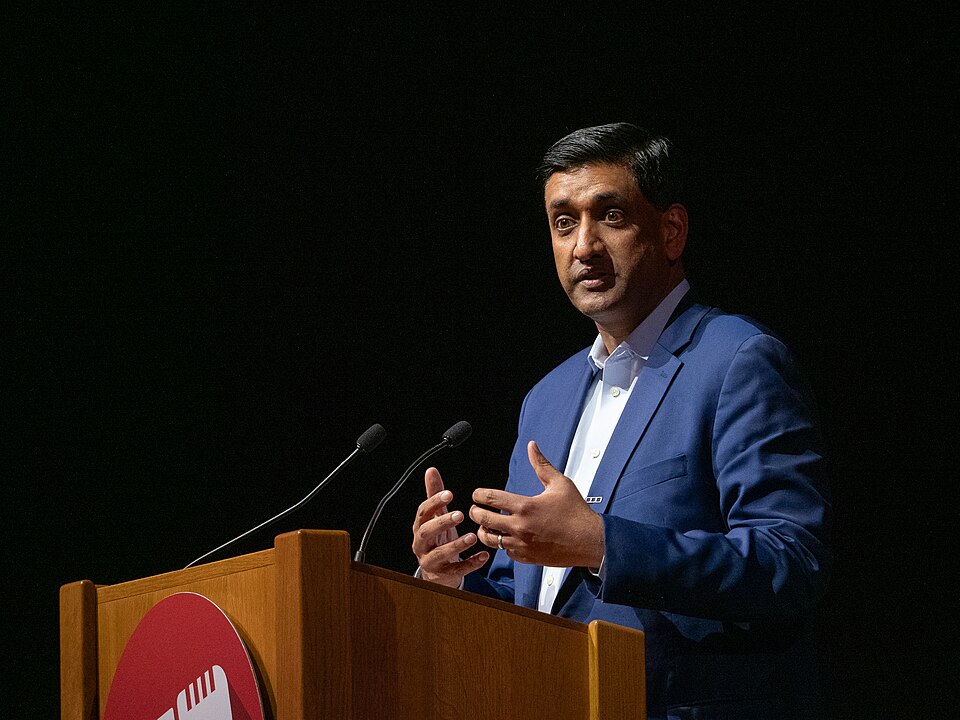
Here’s what was suggested.
A Democratic congressman is pushing an unexpected proposal that could send $1,700 payments to Americans, setting up a potential showdown with President Donald Trump over government spending, national security, and the rising cost of everyday necessities.
Rep. Ro Khanna, D-Calif., announced Monday that he wants Congress to approve direct payments intended to compensate Americans for higher gasoline, grocery, and electricity prices associated with the ongoing war in Iran.
The proposal comes as Democrats prepare to assume control of Congress in January 2027, following their victories in the November midterm elections.
Khanna believes the new Democratic majority should move quickly to approve the payments and force Trump to decide whether to sign the legislation.
However, the proposal comes with a significant complication: The California Democrat’s earlier legislation would finance the payments by redirecting money from the Pentagon’s budget.
That detail could spark a major debate in Washington over whether financial relief for American households should come at the expense of military funding.
Democrats Push For $1,700 Payments To Americans
Khanna wants lawmakers to make the proposed payments an immediate priority when the new Congress takes office.
In a social media announcement, the California Democrat argued that families deserve financial compensation for the economic consequences of the Iran conflict.
He called for a $1,700 payment to help Americans recover money spent on higher fuel prices, groceries, and electricity.
Khanna urged Democrats to pass the proposal during their first week in control of Congress and send the legislation directly to President Trump’s desk.
The proposal could become an early test of the incoming Democratic majority’s ability to deliver on its promises to address the nation’s affordability concerns.
For Americans struggling to manage household expenses, an additional $1,700 could provide temporary financial relief.
But important questions remain about how the payments would be funded, who would qualify, and whether the plan has a realistic chance of becoming law.
No payments have been approved, and there is currently no official date for Americans to receive the proposed money.
Rising Gas And Grocery Prices Fuel The Debate
Khanna’s proposal comes amid continuing concerns about the economic consequences of the war in Iran.
According to Mark Zandi, chief economist at Moody’s Analytics, the conflict has cost American households approximately $2,000 on average since it began.
Higher energy prices have played a major role in that financial burden.
Gasoline prices climbed above $4 per gallon during the conflict, while the national average stood at approximately $3.81 on November 16.
Diesel prices have also risen substantially compared with the previous year.
Those increases can affect far more than the price of filling a vehicle.
When transportation becomes more expensive, businesses face higher costs for delivering food, consumer products, and other essential goods.
Farmers and agricultural suppliers can also experience additional expenses related to fuel, fertilizer, and transportation.
Those costs can eventually reach consumers through higher prices at grocery stores and other retailers.
For many American households, the result is continued pressure on monthly budgets.
Khanna argues that direct payments could help families recover some of the money they have already spent.
However, critics of additional government payments may question whether temporary assistance addresses the underlying problems driving higher prices.
The Proposal Comes With A Major Catch
One of the most controversial aspects of Khanna’s plan involves where the funding would originate.
In September, the California Democrat introduced legislation called the Illegal War Refund Act.
The bill would require the federal government to calculate the economic costs American taxpayers have experienced because of the Iran conflict.
Under the legislation, the Office of Management and Budget would evaluate financial consequences associated with rising fuel prices, food costs, interest rates, and inflation.
The government would then transfer an equivalent amount from Department of Defense funding to the Treasury Department.
That money would be distributed to eligible taxpayers and their dependents.
Certain Pentagon accounts, including military personnel, military construction, and military health programs, would be protected from those reductions.
Nevertheless, the proposal would redirect money away from other defense-related activities.
That could become a serious obstacle as Congress debates the military’s ongoing responsibilities and America’s national security priorities.
Lawmakers concerned about military readiness could argue that reducing defense resources during an active overseas conflict creates unnecessary risks.
Supporters of Khanna’s proposal, meanwhile, argue that American taxpayers should receive compensation for the economic costs associated with the war.
The disagreement could become one of the earliest spending battles between the incoming Democratic Congress and the Trump administration.
What Would The Payments Mean For Seniors And Retirees?
The proposed $1,700 checks could attract particular attention from older Americans who depend on Social Security, pensions, and retirement savings.
Many retirees operate within relatively fixed monthly budgets, making increases in household expenses particularly difficult to manage.
Higher electricity bills, grocery prices, transportation costs, and other recurring expenses can place additional pressure on those budgets.
A one-time payment could help cover necessities, pay outstanding bills, or replenish emergency savings.
However, the financial benefit would depend on the final legislation and individual eligibility requirements.
Khanna’s September bill outlines a payment system involving eligible tax filers and dependents, but it does not guarantee that every American would automatically receive exactly $1,700.
The final amount would depend on calculations and distribution provisions established through the legislative process.
There is also no approved application process or payment schedule.
Americans should therefore avoid making financial decisions based on the assumption that these payments are guaranteed.
Trump Faces Another Fight With Democrats
The proposal also highlights growing political differences over the direction of American foreign policy.
President Trump has defended his administration’s approach toward Iran, emphasizing the importance of preventing the country from obtaining nuclear weapons.
The president has acknowledged that the conflict has contributed to higher energy prices but has maintained that the national security objectives justify the economic costs.
Trump has also expressed confidence that gasoline prices will decline once the conflict ends and energy markets stabilize.
Khanna has taken a sharply different position.
The California Democrat has opposed continued funding for the Iran war and has called on Congress to use its spending authority to restrict further military operations.
His proposed payments represent another way to challenge the administration’s handling of the conflict.
Rather than focusing exclusively on military strategy, Khanna is directing attention toward the financial consequences experienced by American households.
That approach could resonate with voters concerned about affordability, particularly after economic issues played a major role in the midterm elections.
But it could also create difficulties for Democrats who support maintaining strong defense capabilities while pursuing additional financial assistance for taxpayers.
Could The Payments Increase Government Spending Concerns?
The proposal raises broader questions about federal spending and long-term economic stability.
Direct government payments can provide immediate assistance to households facing financial hardship.
However, the effects of such payments depend heavily on how they are funded and implemented.
Khanna’s earlier legislation proposes reallocating existing defense funding rather than simply establishing an entirely new spending program without an identified funding source.
Even so, shifting billions of dollars between federal priorities could have substantial consequences.
Congress would need to examine the potential impact on defense operations, federal budgeting, and the economy.
Some lawmakers may favor returning money directly to taxpayers, while others may prefer policies focused on lowering energy prices, reducing inflation, and limiting federal spending.
For Americans concerned about the national debt and fiscal responsibility, the source of the proposed payments could be just as important as their size.
Those questions are likely to receive considerable attention if Democrats bring the legislation forward in January.
Is Ro Khanna Preparing For A Bigger Political Role?
Khanna’s proposal arrives as speculation continues about his political future.
The California congressman has emerged as a prominent progressive Democrat and has been discussed as a possible contender for the 2028 presidential nomination.
He has traveled across the country supporting Democratic candidates and promoting his positions on economic policy and foreign affairs.
By calling for $1,700 payments, Khanna is placing himself at the center of an issue affecting millions of voters.
The proposal also gives Democrats an opportunity to emphasize their campaign promises about lowering costs for American families.
However, advancing the idea into actual legislation could prove considerably more difficult than announcing it.
Even with Democratic control of Congress, lawmakers would need to agree on the funding mechanism, eligibility rules, and final payment amounts.
President Trump’s approval would also be necessary unless Congress could assemble enough support to override a veto.
Will Americans Receive A $1,700 Check In 2027?
Despite growing attention surrounding the proposal, Americans should understand that the payments are not guaranteed.
Khanna has called for Congress to act in January 2027, but the proposal has not been approved.
His earlier refund legislation remains an introduced bill rather than an enacted federal program.
At this point, there is no confirmed payment date, no authorized distribution process, and no guarantee that eligible Americans will receive $1,700.
The amount could also change if lawmakers negotiate a different version of the legislation.
Whether the measure advances will depend on congressional negotiations and the response from the White House.
For now, the proposal remains a political initiative rather than a guaranteed financial benefit.
The Bottom Line
Rep. Ro Khanna’s push to send $1,700 payments to Americans is creating a new debate over inflation, federal spending, and the economic costs of the Iran war.
While the proposal could offer temporary relief to families and retirees facing higher everyday expenses, its connection to Pentagon funding raises difficult questions about national security and government priorities.
With Democrats preparing to take control of Congress, the issue could quickly become a major test of their economic agenda and their relationship with President Trump.
For American taxpayers, the most important question remains whether Washington can deliver meaningful financial relief without creating additional economic problems or compromising essential national security responsibilities.
Until Congress approves legislation and the president signs it into law, the proposed $1,700 checks remain just that — a proposal, not a guaranteed payment.