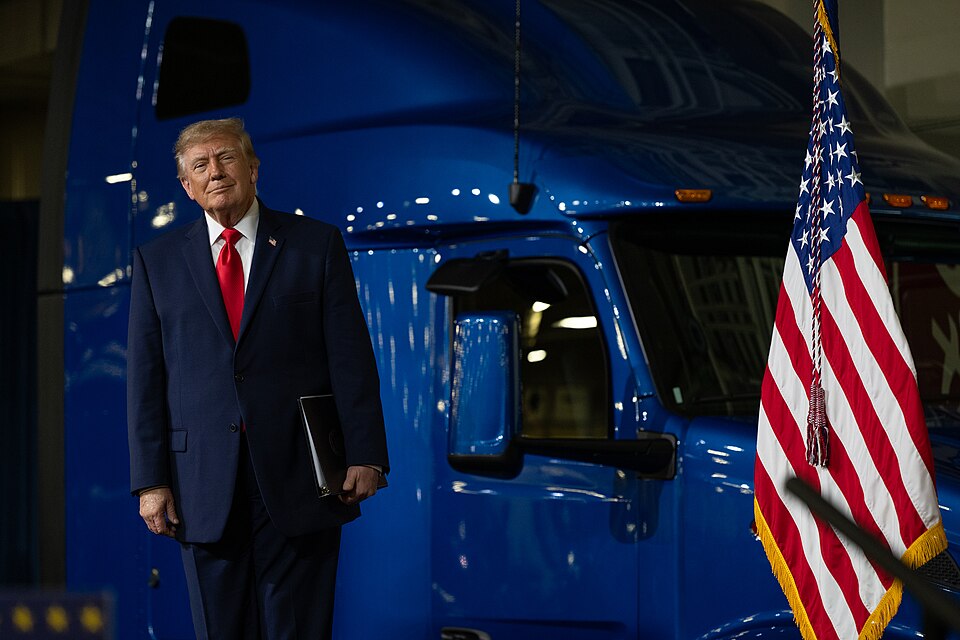
CNN is playing dirty games with President Trump.
CNN has once again placed President Donald Trump under the spotlight, this time releasing a video compilation that challenges his repeated statements about inflation and falling consumer prices.
The controversial segment aired Wednesday, October 14, during CNN’s NewsNight with Abby Phillip, where the network played several clips of Trump promoting his administration’s economic achievements.
However, CNN’s presentation came with a pointed criticism: New government figures show that inflation has been rising rather than falling.
The segment quickly brought attention to a familiar political disagreement involving Trump, the national media, and the economy.
With the November midterm elections approaching, questions about rising prices, household expenses, and the administration’s economic performance have become increasingly important.
CNN Airs Video Targeting Trump’s Inflation Claims
CNN anchor Abby Phillip introduced the video montage while discussing the latest Consumer Price Index report.
The compilation featured several of Trump’s public statements about the direction of the American economy.
In one recording, the president declared that his administration had already stopped inflation.
Another clip showed Trump suggesting that consumer prices were declining.
CNN presented the statements alongside recently released inflation figures, arguing that the president’s descriptions did not match current economic conditions.
Phillip also challenged Trump’s assessment of inflation over the previous several months.
The network’s criticism centered on a straightforward question: Are Americans seeing the price relief that the president has repeatedly promised?
For households dealing with groceries, gasoline, electricity, and other necessities, that question has practical financial implications.
New Government Report Reveals Rising Inflation
The CNN segment followed the release of inflation data from the U.S. Bureau of Labor Statistics on October 14.
According to the report, the annual inflation rate increased to 3.7% in September 2026, compared with 3.4% in August.
Consumer prices increased 0.6% over the previous month.
The figures indicated that inflation was accelerating, with energy expenses contributing significantly to the increase.
Gasoline prices rose 9.1% during September, according to the report.
Other categories, including airline fares, medical care, and certain consumer goods, also experienced price increases.
These developments have renewed concerns about affordability at a time when Americans are closely evaluating the government’s economic performance.
An important distinction is that inflation measures how quickly prices are changing.
Even when inflation slows, prices can continue increasing. For consumers to experience actual price reductions, prices generally must decline rather than simply rise at a slower pace.
That difference is essential when evaluating statements about the economy.
Gas Prices Create Additional Financial Pressure
One of the biggest concerns highlighted by the inflation report involves the cost of energy.
Gasoline prices have climbed significantly over the past year, with the conflict involving Iran contributing to disruptions in international energy markets.
Higher gasoline prices affect everyday drivers, but their economic consequences extend much further.
Transportation companies face increased operating expenses, businesses spend more on shipping, and some of those additional costs can eventually reach consumers.
Home heating expenses and other energy-related bills have also become concerns.
For households managing fixed monthly budgets, even relatively modest price increases can accumulate over time.
The challenge becomes more significant when several expenses rise simultaneously.
A family paying more for gasoline, groceries, insurance, and utilities may have less money available for savings or unexpected expenses.
That is why inflation remains such an important political issue, regardless of which party controls the White House.
Trump Continues Promoting His Economic Policies
Despite criticism from CNN and other news organizations, Trump has remained confident in his administration’s economic agenda.
The president has promoted domestic manufacturing, American energy production, tariffs, and investment in U.S. businesses as important elements of his economic strategy.
His administration argues that these policies can strengthen domestic industries and improve America’s competitive position.
Supporters of the approach believe increasing domestic production and reducing dependence on overseas suppliers could produce long-term economic benefits.
However, economists continue debating the consequences of tariffs, particularly their potential effects on consumer prices.
Some research suggests that tariffs have contributed to higher costs for imported goods and certain American-made products.
Meanwhile, international conflicts and disruptions to energy supplies have added new complications to the inflation outlook.
These economic forces make it difficult to attribute every price increase or decrease to a single government policy.
The larger question is whether the administration’s overall strategy will ultimately deliver more affordable living conditions.
CNN’s Latest Trump Coverage Draws Attention
The montage also highlights the longstanding disagreement between Trump and CNN.
Throughout his political career, the president has frequently accused the network of unfair coverage and negative reporting.
CNN has continued examining his public statements, including claims involving economic policy, immigration, and government spending.
The latest video reflects that contentious relationship.
But while viewers may disagree about CNN’s presentation or editorial choices, the government inflation statistics remain publicly available for independent examination.
Americans can evaluate both the president’s statements and the economic data without relying exclusively on a television network’s interpretation.
The issue is particularly important because consumer prices directly affect the financial circumstances of millions of households.
What Rising Inflation Means for Social Security and Retirement Budgets
Inflation can have significant consequences for Americans receiving Social Security benefits or other fixed retirement income.
When everyday expenses increase, the purchasing power of a monthly retirement check can become strained.
Although Social Security benefits generally receive annual cost-of-living adjustments, those changes do not guarantee that every retiree’s expenses will be fully covered.
Individual households face different financial pressures depending on their housing arrangements, medical costs, transportation needs, and other obligations.
Retirees may also have to consider how inflation influences the value of their savings over time.
For these reasons, inflation is more than a political talking point.
It is a financial issue that influences household decisions throughout the country.
Midterm Elections Put Trump’s Economy Under Scrutiny
With the November 3, 2026, midterm elections approaching, both political parties are emphasizing their positions on the economy.
Republicans are defending the administration’s policies and arguing that their long-term approach can improve economic conditions.
Democrats are highlighting rising costs and questioning whether the president has delivered on his affordability promises.
The latest inflation numbers provide additional material for that debate.
Still, economic conditions can change, and one monthly inflation report does not establish the future direction of the economy.
Energy markets, international developments, monetary policy, and domestic economic activity will all influence what happens next.
For voters, the central issue is likely to remain whether household expenses are becoming more manageable.
What Happens Next for Trump and CNN?
CNN’s video has intensified attention on Trump’s economic statements at an important moment in the election cycle.
The network argues that the president’s claims about falling prices are inconsistent with recent inflation data.
The administration continues defending its economic policies and promoting its broader agenda for American businesses and workers.
Ultimately, future inflation reports and changes in household expenses will provide stronger evidence of whether economic conditions are improving.
The disagreement between Trump and CNN may continue generating headlines, but the more consequential question involves the financial outlook for American families.
As Election Day draws closer, Americans will continue watching gasoline prices, grocery bills, and other household expenses to judge whether the economy is moving in the right direction.