Here’s what happened.
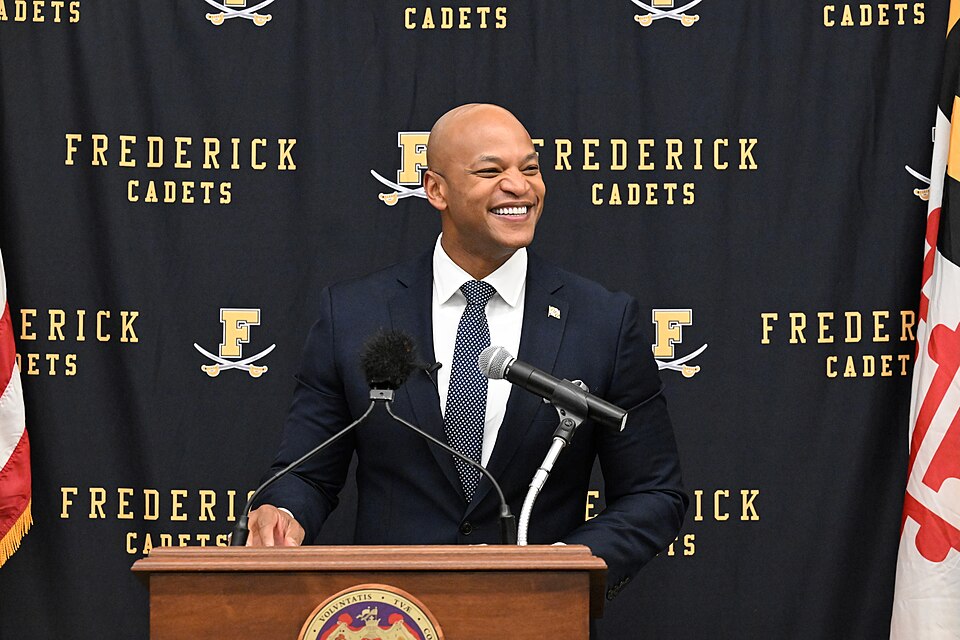
Maryland Gov. Wes Moore is escalating his criticism of President Donald Trump after the president restricted CNN, Politico and MS NOW reporters from accessing the White House.
Appearing Sunday on CNN’s “State of the Union,” Moore argued that Trump’s decision raises concerns about freedom of the press and the First Amendment.
The Democratic governor argued that the president was treating the Constitution as optional when responding to news outlets whose coverage he dislikes.
The dispute has quickly grown into a larger debate over presidential authority, press freedom and who should be allowed to cover the White House in person.
Wes Moore Takes Aim at Trump Over First Amendment
During his interview with CNN’s Dana Bash, Moore argued that Trump has shown disregard for constitutional protections involving freedom and rights.
Moore focused heavily on the First Amendment, noting that freedom of speech, freedom of the press and freedom of assembly were among the protections placed at the beginning of the Bill of Rights.
He argued that those protections should not depend on whether government officials approve of a news organization’s coverage.
Moore then delivered one of his sharpest criticisms of the administration.
He said Trump uses the Constitution like a “suggestion box” because he dislikes certain media coverage.
Moore also said he hoped administration officials would spend more time studying constitutional protections.
Trump Administration Defends White House Media Ban
Trump’s allies are strongly defending the president’s decision.
U.S. Ambassador to the United Nations Mike Waltz appeared on the same CNN program and argued that Trump has the authority to determine which journalists receive physical access to government facilities.
Waltz said the president was “absolutely within his rights” to restrict reporters when he believes news organizations are not operating in good faith.
The Trump administration’s position centers on an important distinction: freedom of the press does not necessarily mean every journalist has an unrestricted right to enter every part of a government facility.
Critics of the ban, however, argue that the government cannot deny access to particular news organizations simply because officials dislike their reporting.
That disagreement is now at the center of the controversy.
Trump Targets CNN, Politico and MS NOW
Trump revealed the new restrictions in a Friday post on Truth Social.
The president accused CNN, Politico and MS NOW of repeatedly publishing what he considers inaccurate or unfair coverage and said the restrictions would take effect immediately.
Trump also indicated that additional news organizations could eventually face similar treatment.
By Saturday, journalists from all three outlets were no longer permitted to enter the White House grounds.
The decision prompted immediate objections from the affected news organizations and members of the White House press corps.
News Organizations Push Back
CNN defended its White House journalists and argued that reporters have constitutional protections when gathering and publishing information about the federal government.
Politico similarly defended its journalism and objected to restrictions based on its reporting.
MS NOW said it was ready to act in defense of its reporters and their right to continue covering the president.
The disagreement could eventually raise significant legal questions over how much discretion a presidential administration has when granting or revoking press access.
Former White House Correspondents’ Association President Responds
Weijia Jiang, CBS News’ senior White House correspondent also spoke out against the restrictions during her appearance on CNN.
Jiang argued that the controversy should not be viewed simply as three news organizations complaining about losing access.
Instead, she said restrictions affecting one organization could eventually affect others.
Her concern centers on the ability of journalists to gather information directly from administration officials and provide that information to the public.
Trump Has Long Battled With Major News Organizations
Trump’s clashes with national news organizations are nothing new.
Throughout his political career, the president has repeatedly accused major television networks, newspapers and digital publications of biased or inaccurate reporting.
His supporters have also criticized mainstream media organizations over reporting errors, corrections and coverage they believe unfairly targets Trump and his administration.
Journalists and press-freedom organizations counter that government officials should not be permitted to punish news organizations because they dislike their coverage.
Those competing arguments are once again colliding over access to the White House.
Is Banning Reporters From the White House Constitutional?
The constitutional question is more complicated than simply determining whether journalists have freedom of the press.
The First Amendment prohibits the government from abridging freedom of speech and freedom of the press.
At the same time, it does not automatically guarantee every journalist unlimited access to every government building, official or event.
The more difficult legal question involves why access is being denied.
Courts have previously considered whether government officials may exclude journalists based on their reporting or viewpoints once a system of press access has been established.
That distinction could become important if the latest White House restrictions face a legal challenge.
White House Press Battle Could Have Wider Consequences
For now, Politico, MS NOW and CNN remain at the center of the dispute.
But Trump’s warning that other organizations could face restrictions has expanded the controversy beyond those three outlets.
Moore maintains that the issue involves fundamental constitutional protections.
Trump and his allies argue that the president has legitimate authority over access to the White House and should not be required to accommodate news organizations the administration believes have acted improperly.
The disagreement leaves several unresolved questions involving presidential power, press access and First Amendment protections.
Whether those questions remain a political dispute or eventually become the subject of another court battle could determine how far future administrations may go when restricting media access to the White House.