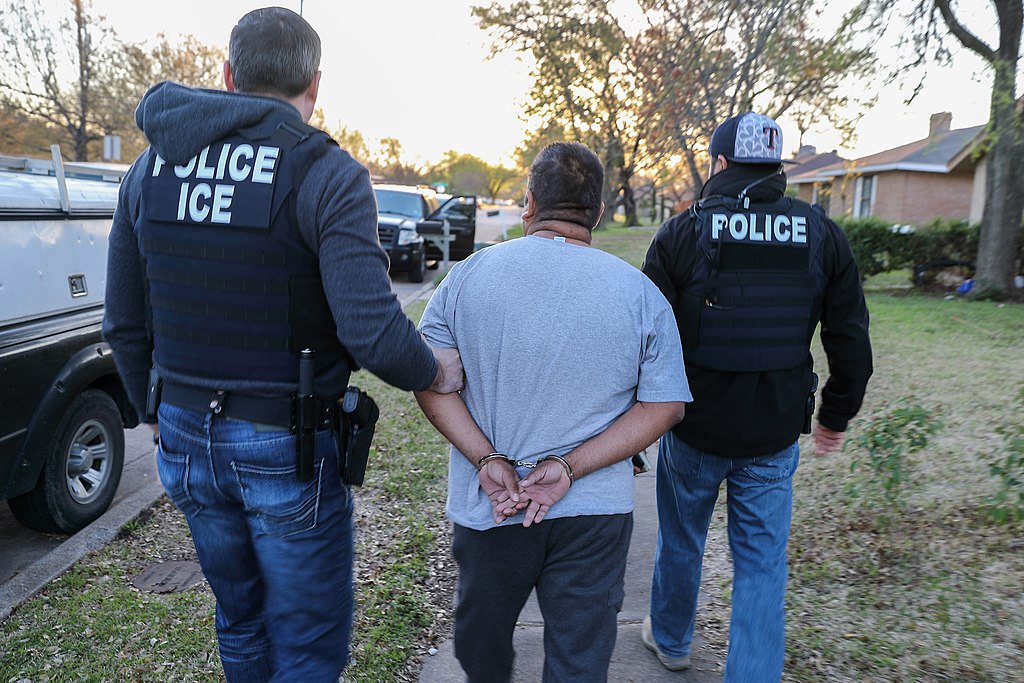
Here’s what ICE agents could be forced to wear next.
Democrats in Congress have introduced a new bill that would require Immigration and Customs Enforcement (ICE) and Customs and Border Protection (CBP) officers to wear clearly visible, scannable QR codes while carrying out arrests and enforcement actions.
Supporters of the proposal say the change would improve transparency during immigration operations. Critics argue it could create new risks for officers at a time when federal law enforcement is already facing increased threats and political pressure.
The legislation comes as President Donald Trump continues to emphasize immigration enforcement as a central priority of his administration, a position he campaigned on and won reelection supporting.
DHS Assistant Secretary Tricia McLaughlin has previously defended the administration’s approach.
“President Donald Trump campaigned on immigration enforcement, the American people voted for it, and Secretary Noem is delivering,” McLaughlin told Newsweek.
Details of the QR Code Proposal
The proposal, known as H.R. 7233, was put forward by Democratic New York Rep. Ritchie Torres and would mandate that ICE and CBP officers involved in immigration or law-enforcement actions wear uniforms featuring a visible, scannable QR code.
Torres says the proposal is intended to modernize identification standards and reduce confrontations during enforcement encounters. He argues that allowing members of the public to scan a code could be safer than asking officers for physical identification.
The measure, known as the Quick Recognition Act, has been referred to the House Judiciary Committee and the Committee on Homeland Security, where it is awaiting further review.
Why the Timing Matters
The proposal arrives during a period of heightened national debate over immigration enforcement. Protests have erupted in several cities, including Minneapolis, following a fatal shooting involving an ICE agent earlier this year.
Democratic lawmakers have cited these events as evidence that stronger oversight is needed. DHS officials, however, have defended ICE’s actions as lawful and necessary to protect public safety.
Minneapolis Mayor Jacob Frey has described the ongoing protests as “not sustainable,” while federal officials warn that escalating rhetoric against law enforcement can increase risks on the ground.
Democratic Divisions Over ICE
Torres’ bill is co-sponsored by Democratic Reps. Darren Soto of Florida and Shri Thanedar of Michigan. Thanedar has also introduced a separate proposal—the Abolish ICE Act (H.R. 7123)—which would dismantle the agency within 90 days and eliminate its funding.
That effort highlights growing divisions within the Democratic Party over immigration enforcement and border security.
Earlier this week, seven House Democrats faced criticism from their own party after voting with Republicans to advance a Department of Homeland Security funding bill that includes roughly $10 billion for ICE. Those lawmakers said the vote was necessary to keep FEMA, TSA, and other essential homeland security functions operating.
Public Opinion and Law Enforcement Safety
Polling data has played a role in the debate. A recent YouGov survey found more Americans disapprove of ICE’s performance than approve, while other surveys show rising support among Democrats for reducing or eliminating the agency.
DHS officials say those numbers fail to capture the risks ICE officers are facing.
McLaughlin warned that assaults against ICE agents have increased dramatically, blaming political rhetoric and misinformation.
“DHS is a law enforcement agency, and it will continue to carry out immigration enforcement for the safety of Americans,” she said, pointing to cases involving violent criminals, drug traffickers, and gang members.
She also emphasized the administration’s position on illegal immigration.
“For individuals in the country illegally, the safest and most efficient option is self-deportation,” McLaughlin said, citing the CBP Home app, which offers travel and financial assistance. “President Trump and Secretary Noem have made the message clear.”
What Happens Next
The QR code bill remains in the early stages of the legislative process and must advance through committee before any House vote can occur. According to GovTrack, the proposal currently has a 2 percent chance of becoming law, reflecting the challenges it faces in a divided Congress.
Even so, the legislation signals continued Democratic efforts to reshape immigration enforcement policy at a time when the Trump administration is reaffirming border security and law enforcement as core federal responsibilities.
For now, ICE operations continue nationwide, even as lawmakers debate how far Congress should go in regulating the agency’s day-to-day work.