The GOP didn’t expect this.
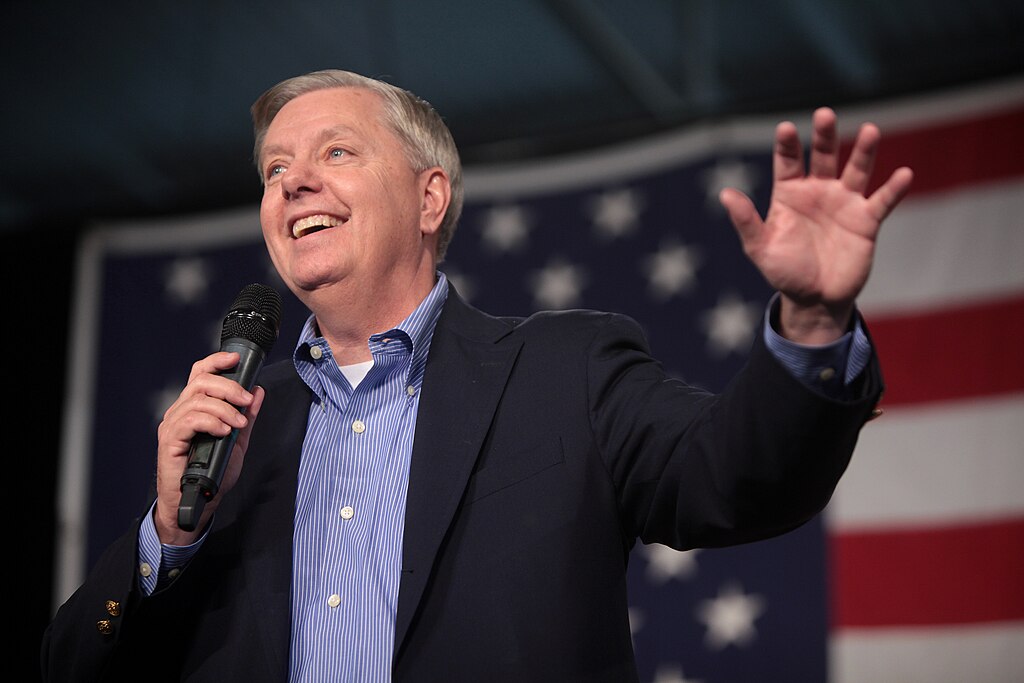
A surprising moment unfolded at the Munich Security Conference when Sen. Lindsey Graham made remarks about Greenland that many observers say undercut President Donald Trump’s high-profile Arctic strategy.
In comments that quickly circulated online, Graham questioned the controversy surrounding Greenland’s ownership, stating bluntly that the real issue isn’t who owns the island — but what strategic outcomes the United States secures.
For many conservative voters, especially those who prioritize national defense and American strength, the exchange raised eyebrows.
Trump’s Greenland Strategy: Why It Matters
Greenland may look remote on a map, but it sits at the center of growing geopolitical tensions.
The Arctic region is becoming a hotspot for:
- Russian military expansion
- Chinese economic influence
- Critical mineral access
- Strategic missile defense positioning
President Trump has long argued that America must strengthen its Arctic presence to counter both Moscow and Beijing. Supporters say that means expanding U.S. military infrastructure and leveraging NATO allies for greater burden-sharing.
Critics overseas, particularly in Europe, have expressed concern about how aggressively the administration has approached the issue.
Graham’s Message to Europe: “Relax”
At the conference, Graham urged European leaders not to panic over rhetoric about Greenland.
He suggested the focus should be on results — specifically, stronger NATO funding and greater allied participation in defense spending.
For older Americans who remember decades of NATO imbalance, that argument may resonate.
Under Trump’s leadership, European NATO members have significantly increased defense budgets. Graham emphasized that point, crediting Trump’s pressure campaign for forcing allies to contribute more fairly.
WATCH:
⚡️Senator Graham:
Who gives a shit who owns Greenland?
I don't. pic.twitter.com/HBWmpfuvdl
— War Intel (@warintel4u) February 13, 2026
NATO Funding and Defense Spending: A Core Conservative Issue
One of the biggest applause lines in Trump’s foreign policy has been pushing NATO countries to pay their fair share.
Graham asked a pointed question: Would NATO be spending this much on defense if Trump hadn’t demanded it?
That question goes directly to the heart of conservative concerns about:
- American taxpayers carrying global defense costs
- Weak deterrence policies
- Growing Russian and Chinese aggression
For voters over 50 who lived through the Cold War, strength abroad still matters.
Arctic Security: The Bigger Picture
While Graham downplayed the ownership debate, he acknowledged something important: Greenland’s defenses are likely to expand.
Why?
Because Arctic security is no longer optional.
Greenland offers:
- Early missile detection capabilities
- Air and naval positioning advantages
- Access to rare earth minerals
- Strategic oversight of North Atlantic shipping lanes
Whether through diplomacy, NATO coordination, or direct U.S. investment, Arctic fortification is expected to grow under Trump’s leadership.
Bipartisan Presence at Munich
Graham led a bipartisan congressional delegation that included:
- Sheldon Whitehouse
- Lisa Murkowski
- Mark Warner
- Chris Coons
- Richard Blumenthal
- Steve Daines
The bipartisan makeup underscores how serious Arctic defense, NATO spending, and global security have become.
What This Means for Conservative Voters
Did Lindsey Graham truly “humiliate” Trump?
Or was this simply a messaging difference while both leaders pursue stronger American defense strategy?
That debate is likely to continue.
What remains clear is this:
- NATO spending is up
- Arctic security is expanding
- Russia and China are being watched closely
- U.S. military posture is strengthening
For many Americans age 50+, national security and strong leadership remain top priorities — and the Arctic may become one of the most important fronts in the years ahead.