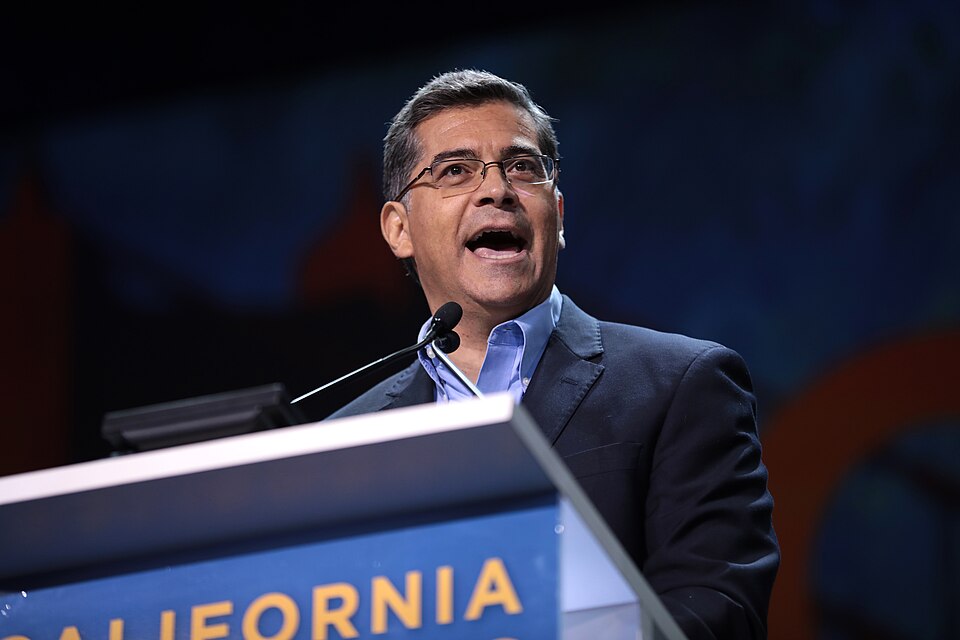
Here’s what he is offering.
California’s race for governor is putting the state’s crushing cost of living back in the spotlight, and Democratic candidate Xavier Becerra is drawing attention with an unusual proposal that he says could provide relief from expensive electricity bills.
Becerra wants qualifying California households to receive two hours of electricity without normal usage charges each day.
The former Biden administration official has promoted the concept as a way to help lower-income families while encouraging Californians to consume more electricity during hours when the state produces abundant solar power.
But Republican gubernatorial candidate Steve Hilton is attacking the proposal as a political “gimmick” that fails to address what he considers the real problem: California electricity has simply become too expensive.
The disagreement could become a major pocketbook issue in the campaign to succeed Gov. Gavin Newsom, particularly as families, retirees and small-business owners continue searching for relief from California’s high utility costs.
Becerra Proposes Two Hours Of Free Electricity
Becerra introduced his proposal as a “power hour” program aimed at Californians having difficulty paying their utility bills.
Becerra said California already has assistance programs designed to help residents who struggle to pay their electricity bills.
His proposal would go further by encouraging eligible customers to shift some of their electricity consumption to designated daytime hours.
The basic concept revolves around California’s enormous solar-energy system.
Solar panels generate substantial amounts of electricity during sunny daytime periods. Yet household electricity demand often increases later, particularly when workers return home in the evening.
That creates a challenge for the electrical grid.
Becerra believes California could encourage people to change when they use appliances by making electricity effectively free to participating households during a designated two-hour window.
“The best way to get you to readapt, to recalibrate, is to tell you, ‘The best time for you to use electricity today, 1 [p.m.] to 3 [p.m.], and if you do that, I won’t charge you,’” Becerra explained.
He suggested his administration could pursue the program during his first year in office in cooperation with California utility regulators.
California Electricity Bills Have Become A Major Problem
Becerra’s proposal comes amid growing frustration over electricity prices in California.
For older Californians living on fixed incomes, homeowners trying to keep up with monthly expenses and small businesses operating on narrow margins, utility bills can represent a significant financial burden.
California’s electricity affordability problem has developed over years and cannot be attributed to one single cause.
Wildfire expenses, infrastructure upgrades, utility investments and government energy policies can all influence the final rates customers pay.
That makes the debate over Becerra’s proposal larger than whether residents should receive two hours of electricity without usage charges.
The fundamental question is why electricity costs so much in California — and what the next governor intends to do about it.
Is The Electricity Really Free?
This is where Becerra’s proposal could face its toughest questions.
Calling electricity “free” does not eliminate the cost of producing and delivering it.
California’s electrical infrastructure still requires power generation, transmission equipment, maintenance, workers, wildfire protection and billions of dollars in investment.
If participating customers are not paying for electricity during certain hours, voters may reasonably ask where the cost goes.
Would taxpayers subsidize it?
Would other utility customers absorb some of the expense?
Would participating households face higher electricity prices during other portions of the day?
Could existing assistance programs cover the expense?
Or could California’s surplus daytime solar generation make the program economical enough that consumers and utilities both benefit?
Those details will ultimately determine whether Becerra’s proposal produces meaningful savings or merely shifts costs around.
Until a complete financing and implementation plan is available, Californians will not have all the information necessary to answer those questions.
There’s Another Problem: Most People Are At Work
Hilton has highlighted another potential weakness in the proposal.
Millions of Californians aren’t sitting at home between 1 p.m. and 3 p.m.
They’re working.
A retiree or someone working from home could potentially schedule the washing machine, dishwasher, air conditioning or electric-vehicle charging around the discounted period.
A nurse, construction worker, police officer, teacher, retail employee or office worker may have far less flexibility.
Hilton argues that asking Californians to reorganize their daily lives around the state’s energy system gets the problem backward.
“He says you just have to change your habits. So if you’re at work, too bad,” Hilton said while criticizing Becerra’s plan.
Hilton argues that California’s government should instead focus on lowering electricity costs throughout the day.
Similar Electricity Programs Have Been Tried Elsewhere
The underlying idea is not unique to California.
Australia has pursued a similar approach involving several hours of discounted electricity during periods of abundant solar generation.
The economic theory makes sense on paper.
When an electrical system has large quantities of solar power available during the afternoon, encouraging consumers to move demand into those hours can potentially make better use of electricity that is already being generated.
The challenge comes in designing the rates.
If consumers receive free or deeply discounted electricity for several hours but pay substantially higher prices during the remainder of the day, some households could discover that the program does not save them as much money as expected.
That is why the details of Becerra’s proposal will be critical.
A promise of “free electricity” makes an attractive campaign message.
California voters will ultimately want to know what happens to their total monthly bill.
Hilton Wants A Very Different Energy Policy
Hilton has responded with a substantially different approach.
Rather than focusing primarily on shifting electricity consumption to solar-heavy portions of the day, the Republican wants California to increase its use of natural gas-fired power generation as part of a broader effort to bring down energy costs.
Hilton has described Becerra’s proposal as “offensive,” “insulting” and a “gimmick.”
He went even further in his criticism, calling the proposal “insane” and personally insulting Becerra.
Behind the heated campaign language, however, is an important policy disagreement that California voters will have to consider.
Should California continue emphasizing renewable-energy production while developing incentives to make the grid operate more efficiently?
Or should state leaders reconsider portions of California’s existing energy strategy and increase reliance on conventional energy sources in pursuit of lower prices and greater reliability?
That debate is likely to extend well beyond this single proposal.
California’s Cost-Of-Living Crisis Looms Over Governor’s Race
Electricity prices are only one part of a much broader affordability problem confronting California.
Families must also contend with housing costs, gasoline prices, insurance premiums, groceries, taxes and other everyday expenses.
For Californians approaching retirement or already living on fixed incomes, even modest increases in recurring monthly expenses can have a significant effect on household finances.
Small businesses face similar pressure.
Higher electricity expenses can eventually affect the prices consumers pay at restaurants, stores and other businesses because companies must find ways to absorb their operating costs.
That makes energy policy an economic issue as much as an environmental one.
California voters are likely to demand more than slogans from candidates seeking the state’s highest office.
They will want measurable results.
The Bigger Question For California Voters
Becerra’s proposal has one obvious political advantage: It is simple.
Two hours of free electricity sounds appealing.
The economics behind that promise are considerably more complicated.
If Becerra can demonstrate that California’s excess daytime solar generation allows qualifying households to significantly reduce their bills without imposing substantial additional costs on taxpayers or other ratepayers, the proposal could gain support.
If the program merely shifts costs to different hours or different customers, Hilton and other critics will likely argue that California is treating the symptom rather than the disease.
For conservatives, the controversy also raises a familiar question about government intervention.
Should Sacramento create another program designed to influence when residents consume electricity, or should state officials concentrate on expanding affordable energy supplies and reducing the underlying cost of power?
Becerra and Hilton are presenting California voters with very different answers.
And for families opening increasingly expensive utility bills month after month, the answer could matter far more than the campaign rhetoric.
The debate ultimately comes down to a straightforward question:
Do Californians need two hours of “free” electricity — or do they need affordable electricity 24 hours a day?