As a potential trade war is underway between the US and Canada, Trump says there’s one thing America depends on.
President Donald Trump acknowledged Monday that the United States “desperately needs” aluminum, highlighting America’s continued reliance on Canadian supplies even as his administration intensifies its trade pressure on Canada.
Trump made the remarks while promoting a proposed aluminum plant in Oklahoma, arguing that expanding domestic production could help the United States reduce its dependence on foreign suppliers.
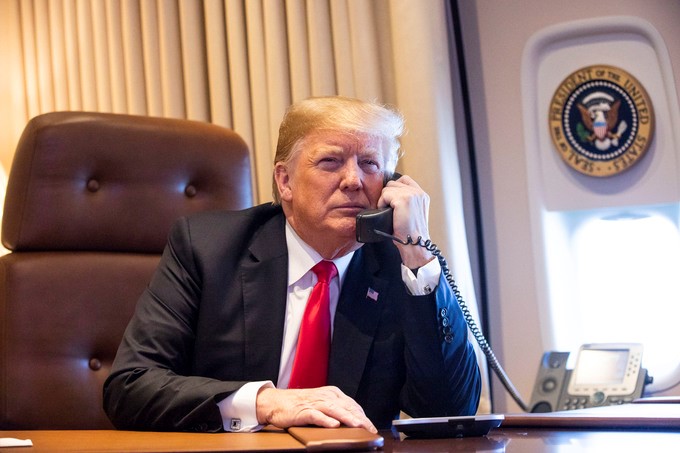
Trump emphasized the nation’s urgent demand for aluminum while speaking by phone at a rally for Mike Mazzei, a Republican candidate for governor of Oklahoma, Bloomberg reported.
Trump said the United States has a pressing need for aluminum, noting that the country lacks sufficient domestic supplies and currently relies heavily on Canada to meet demand.
The admission puts a spotlight on an important challenge for Trump’s America-first trade agenda: The United States wants to produce more critical materials at home, but American manufacturers remain heavily dependent on imports while that domestic capacity is being developed.
Trump Wants More Aluminum Made in America
Trump used his remarks to promote a proposed aluminum facility in Inola, Oklahoma, which he argues could help address America’s need for additional domestic production.
The president later took to Truth Social to emphasize the importance of the project.
“You can’t get Aluminum in the United States, and this Plant will go elsewhere if it’s not approved,” Trump wrote, describing the facility as “desperately needed.”
The issue extends far beyond one manufacturing project in Oklahoma.
Aluminum is used throughout the American economy, including in automobiles, airplanes, construction materials, electrical equipment, machinery and consumer packaging. That makes access to affordable and reliable aluminum important for manufacturers, workers and consumers.
Expanding American aluminum production could therefore become an important part of Trump’s broader effort to rebuild U.S. manufacturing and reduce the country’s reliance on foreign supply chains.
Why America Still Needs Canadian Aluminum
Canada remains an especially important aluminum supplier for the United States.
American manufacturers consume large quantities of Canadian aluminum because Canada has substantial production capacity and benefits from its geographic proximity to the United States.
That creates an economic dilemma.
Trump has repeatedly argued that America should become less dependent on foreign nations for products and materials that can be produced domestically. But replacing established supply chains cannot happen overnight.
Until additional American production comes online, U.S. manufacturers may continue relying heavily on Canadian aluminum.
That reality helps explain why Trump’s comments attracted attention.
Only hours earlier, the president had delivered a dramatically tougher message about America’s overall economic relationship with Canada.
Trump Says “We Don’t Need Canada”
As tensions between Washington and Ottawa escalated, Trump threatened additional 50% tariffs on Canadian cars, trucks, automotive parts and steel beginning January 1, 2027.
The president also accused Canada of benefiting disproportionately from its economic relationship with the United States.
“WE DON’T NEED CANADA, THEY NEED US!” Trump wrote on Truth Social.
Trump’s argument centers on the enormous importance of the American consumer market to Canadian exporters. The United States is Canada’s largest trading partner, giving Washington substantial leverage in any prolonged trade confrontation.
But aluminum demonstrates why the relationship is more complicated than trade statistics alone suggest.
American companies still depend on Canadian materials, while Canadian producers depend heavily on American customers.
The result is a deeply connected economic relationship that neither country can quickly unwind without consequences for businesses on both sides of the border.
Could Tariffs Raise Costs for American Manufacturers?
One of the biggest questions surrounding Trump’s trade strategy is what higher tariffs could mean for American businesses.
Tariffs can make imported products more expensive, potentially encouraging companies to purchase American-made alternatives. That is a central argument behind Trump’s push to use tariffs to strengthen domestic manufacturing.
The challenge comes when American companies cannot obtain enough of a particular material domestically.
If manufacturers must continue importing aluminum while tariffs remain in place, their costs could increase. Businesses may absorb those expenses, change suppliers or pass some costs along to customers.
The long-term calculation is different.
If tariffs and other policies encourage companies to build additional factories and smelters in the United States, supporters argue America could eventually become less dependent on imports while creating industrial jobs and strengthening domestic supply chains.
The proposed Oklahoma aluminum plant therefore represents exactly the type of investment Trump wants to encourage.
Why Domestic Aluminum Production Matters
For decades, American leaders in both parties have debated how much the country should rely on overseas production for economically and strategically important goods.
That debate intensified after supply-chain disruptions exposed vulnerabilities in industries ranging from automobiles and computer chips to pharmaceuticals and construction materials.
Aluminum is especially significant because of its widespread industrial applications.
More domestic production could provide American manufacturers with greater supply-chain security while supporting construction, transportation, energy and manufacturing jobs.
There is also a national-security component to the debate. Maintaining reliable supplies of essential industrial materials can become particularly important during international conflicts or major disruptions to global trade.
For Trump, that strengthens the case for producing more aluminum inside the United States rather than remaining heavily dependent on imports.
U.S.-Canada Trade Negotiations Hit Trouble
Washington and Ottawa reportedly came close to reaching an agreement that could have reduced the aluminum tariff before negotiations broke down.
Canadian Prime Minister Mark Carney said his government had worked “intensively and in good faith” toward reaching an agreement with Washington, while accusing American negotiators of asking too much while offering too little.
Trump has taken a different position, arguing that previous trade arrangements have allowed Canada to benefit unfairly from access to the American market.
The disagreement has now grown beyond aluminum, with automobiles, steel and other major industries caught in the widening trade dispute.
That raises the stakes for both countries.
Canada depends heavily on access to American consumers, while numerous U.S. businesses rely on Canadian products, raw materials and components.
What This Could Mean for American Consumers
For most Americans, the important question is ultimately whether the trade confrontation will produce more jobs and manufacturing at home without significantly increasing household costs.
Trump’s strategy is based on using America’s enormous consumer market as leverage.
By making imported goods more expensive and encouraging domestic investment, the administration hopes companies will have a greater incentive to manufacture products and critical materials inside the United States.
If that strategy succeeds, additional factories could mean more American jobs, stronger domestic supply chains and less dependence on foreign producers.
However, the transition could create challenges if tariffs increase costs before sufficient American production becomes available.
That makes projects such as the proposed Oklahoma aluminum facility particularly important to Trump’s economic strategy.
The Bottom Line
Trump’s comments reveal the complicated reality behind America’s growing trade confrontation with Canada.
The president believes the United States holds tremendous economic leverage over its northern neighbor and wants to use that leverage to secure better trade terms while bringing manufacturing back to American soil.
At the same time, Trump openly acknowledged that the United States currently needs Canadian aluminum.
That does not necessarily contradict the larger goal of reducing America’s dependence on foreign suppliers. Instead, it highlights why expanding domestic manufacturing has become such an important part of Trump’s economic agenda.
The key question is how quickly America can increase its own aluminum production.
Until that happens, Canada will remain an important supplier for American manufacturers — even as Washington and Ottawa continue battling over tariffs, trade and the future of their economic relationship.