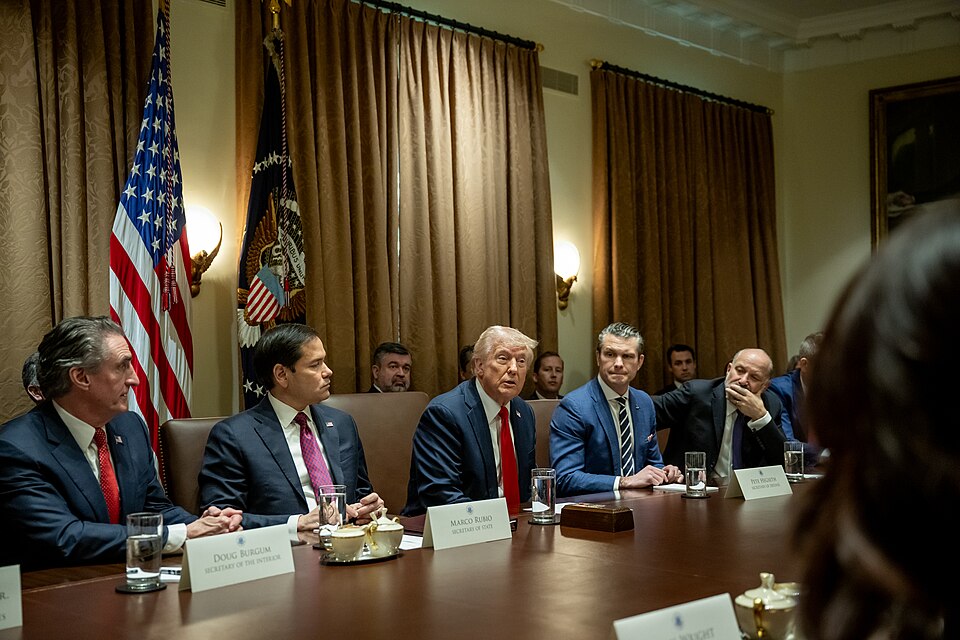
Here’s what they are claiming President Trump did.
President Donald Trump is facing fresh legal controversy just days before the November 3 midterm elections, following accusations that two major federal agencies may have violated federal law by distributing messages praising his administration.
The allegations involve the Social Security Administration (SSA) and the Internal Revenue Service (IRS), two government agencies responsible for programs affecting millions of American taxpayers, retirees, and families.
Legal experts have raised concerns that the messages, which highlighted achievements under Trump’s leadership, may have crossed the line between legitimate government communication and political activity.
At the center of the controversy is the Hatch Act, a longstanding federal law designed to prevent government employees from improperly using their official positions to influence elections.
However, no criminal charges against Trump have been announced in connection with the emails, and no official finding has established that the communications violated federal law.
With Election Day approaching, the dispute is adding another political headache for the White House.
Social Security Administration Under Fire Over Trump Emails
The controversy began attracting attention after Social Security Commissioner Frank Bisignano sent communications promoting improvements made under the Trump administration.
The messages reportedly highlighted efforts to modernize Social Security operations, improve customer service, and make government services more accessible to Americans.
Those issues are particularly important for retirees and older Americans who rely on Social Security benefits to help cover everyday expenses.
For many beneficiaries, obtaining timely assistance, resolving benefit questions, and receiving accurate information remain major concerns.
The administration has emphasized its efforts to improve those services.
But the emails raised questions because they specifically praised Trump’s leadership shortly before the midterm elections.
Critics argue that government agencies should not use official communications to promote political figures during an election season.
The central question is whether the messages were simply informing Americans about government accomplishments or improperly advancing a partisan political agenda.
That distinction matters because federal employees operate under strict rules governing political activity.
IRS Email Praising Trump’s Tax Policies Raises Questions
The Internal Revenue Service has also found itself drawn into the controversy.
According to reports, an IRS communication highlighted tax policies associated with the Trump administration, including legislation intended to deliver tax relief to American households.
The message promoted the administration’s efforts to reduce tax burdens and help taxpayers keep more of their earnings.
Taxes have remained a significant concern for Americans heading into the November elections.
Retirees, small-business owners, working families, and individuals living on fixed incomes all have a financial interest in federal tax policy.
For older Americans in particular, changes involving retirement income, deductions, and overall tax liability can affect long-term financial planning.
However, the concern raised by critics is not simply that the IRS discussed tax legislation.
Instead, it involves whether the agency’s language improperly promoted the president’s political record during a closely contested election season.
Supporters of the administration could argue that federal agencies have a legitimate responsibility to explain new policies and government accomplishments.
Critics contend that such explanations must remain separate from political campaigning.
Whether the IRS communication actually crossed that legal boundary remains unresolved.
What Is the Hatch Act, and Did Trump Violate It?
The legal controversy centers on the Hatch Act of 1939, which restricts certain political activities by federal government employees.
The law is intended to protect the federal workforce from improper political influence and prevent taxpayer-funded government operations from being used to advance partisan campaigns.
Under the Hatch Act, federal employees generally cannot use their official authority or influence to interfere with or affect election results.
However, the law does not prohibit government officials from discussing public policies, explaining agency operations, or reporting on the accomplishments of their departments.
That creates an important distinction.
A federal agency announcing improvements in Social Security customer service would ordinarily be performing a legitimate government function.
But communications designed to persuade voters to support a particular political party or candidate could raise legal concerns.
The specific wording, purpose, and circumstances surrounding the messages are therefore important.
Kathleen Clark, a law professor at Washington University in St. Louis, reportedly questioned whether the communications were serving an appropriate government purpose.
Her concerns focused on the possibility that the messages were more political than informational.
Importantly, a possible Hatch Act violation is not automatically a criminal offense. The law primarily provides for administrative and disciplinary consequences, although certain other forms of misconduct can potentially trigger separate legal issues.
The president himself is also exempt from the Hatch Act’s ordinary restrictions on federal employees.
Consequently, the latest controversy focuses on the actions of administration officials rather than a new criminal prosecution of Trump.
Trump Administration Already Facing Political Activity Complaints
The latest allegations come as other senior administration officials have faced criticism over their involvement in political events.
Among those previously named in complaints are Federal Communications Commission Chairman Brendan Carr, Interior Secretary Doug Burgum, and Commerce Secretary Howard Lutnick.
Their participation in an Alaska campaign event supporting Republican Senator Dan Sullivan drew scrutiny from watchdog organizations.
The concerns centered on whether officials improperly connected their government positions with political campaigning.
Democracy Defenders Fund and Reporters Without Borders filed a complaint involving the matter.
However, the filing of a complaint does not establish that anyone violated the law.
Investigators must consider the specific conduct involved, the officials’ responsibilities, and the legal restrictions applying to their positions.
The additional controversy illustrates how closely government officials are being watched as the midterm elections approach.
Hatch Act Accusations Have Also Involved Democrats
Although the latest controversy involves the Republican administration, disputes over the Hatch Act have affected officials from both political parties.
Former Social Security Commissioner Martin O’Malley, who served during President Joe Biden’s administration, was previously found to have violated the law.
In May 2025, the U.S. Office of Special Counsel announced that O’Malley had improperly engaged in political activity while serving in his official government role.
That case demonstrates that Hatch Act restrictions are not limited to Republican or Democratic administrations.
Federal officials are expected to follow applicable political activity rules regardless of which president appointed them.
For taxpayers, the underlying principle is straightforward: Government resources should serve the public rather than improperly benefit a political campaign.
At the same time, federal agencies must be able to explain their policies, programs, and accomplishments without every official announcement automatically being treated as election interference.
Determining where that boundary lies can be complicated.
What Does This Mean for Social Security Recipients and Taxpayers?
Despite the political controversy, there is no indication that the allegations themselves will change Social Security benefits or individual tax obligations.
Americans receiving retirement benefits should continue receiving payments according to their normal schedules.
Likewise, the dispute does not independently change federal tax rates, filing requirements, or eligibility for deductions.
The questions surrounding the emails concern how federal agencies communicate with the public, not whether the government has the authority to administer Social Security or collect taxes.
Nevertheless, the case has attracted attention because both agencies play major roles in Americans’ financial lives.
Social Security provides essential income to millions of retirees, while the IRS administers the federal tax system.
How those agencies communicate with Americans can influence public confidence in government operations.
That makes transparency, accuracy, and adherence to federal law particularly important.
Political Battle Intensifies Ahead of November 3 Midterms
The timing of the accusations is significant.
With voters preparing for the November 3, 2026, midterm elections, Republicans and Democrats are competing for control of Congress.
The outcome will help determine how much legislative support Trump receives during the remainder of his presidency.
Republicans are highlighting the administration’s record on taxes, economic policy, and government operations.
Democrats, meanwhile, are raising concerns about the administration’s conduct and approach to governing.
The Hatch Act controversy gives critics another issue to examine as voters prepare to make their decisions.
However, it remains uncertain whether the allegations will lead to a formal investigation, disciplinary proceedings, or any official finding of misconduct.
Until those questions are resolved, the allegations should not be confused with proven legal violations.
Will Trump Face Consequences Over the Latest Accusations?
For now, the White House is confronting another controversy involving federal officials and the proper use of government communications.
The dispute raises questions about the responsibilities of the Social Security Administration and IRS when discussing presidential policies during an election season.
Critics believe the government must maintain a firm separation between official duties and partisan political activity.
Others argue that administrations should be able to inform Americans about their policy achievements without automatically facing allegations of improper campaigning.
Ultimately, federal law and the specific circumstances surrounding the communications will determine whether any rules were broken.
As Americans prepare to vote, the larger question is whether government agencies can highlight a president’s accomplishments without crossing the line into political campaigning.
For Trump, the accusations represent another political challenge just before the midterms. Whether they develop into an official finding of wrongdoing remains to be seen.