The GOP is getting cleaned out.
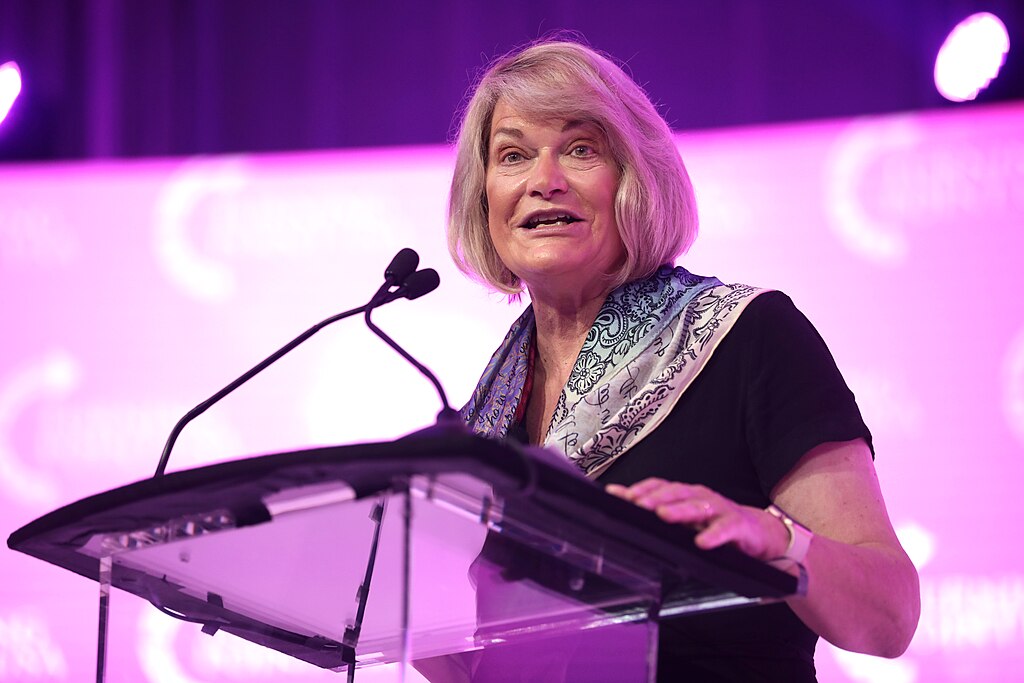
President Donald Trump and Senate Republicans were dealt an unexpected blow this week as Sen. Cynthia Lummis announced she will not seek reelection in 2026—opening a critical GOP seat in one of the most conservative states in America.
Lummis made her announcement after the Senate adjourned for the holiday recess, confirming that her time in the upper chamber will end after just one term. The decision creates immediate uncertainty for Republicans working to maintain control of the U.S. Senate heading into the next election cycle.
In a statement explaining her choice, Lummis cited exhaustion after an intense legislative session and acknowledged that committing to another six-year term was no longer realistic. While reaffirming her dedication to conservative principles, she admitted the physical and mental demands of Washington had taken their toll.
Despite stepping away from the ballot, Lummis stressed her continued alliance with President Trump and the America First agenda. She said she intends to spend her remaining time in office pushing legislation aligned with Trump’s priorities and helping Republicans hold the Senate in 2026.
Lummis previously served four terms in the U.S. House before returning to public office to replace the late Sen. Mike Enzi. Her exit is already reverberating through Washington, particularly among conservatives focused on financial innovation and economic policy.
As chair of the Senate Banking Subcommittee on Digital Assets, Lummis became one of the GOP’s most influential voices on cryptocurrency and digital finance. President Trump specifically highlighted that role when endorsing her earlier this year, praising her work toward making the United States the global leader in cryptocurrency.
Her departure marks a growing trend within the Republican Party. Lummis becomes the fifth GOP senator to announce plans to leave office, joining Sens. Joni Ernst, Mitch McConnell, Thom Tillis, and Tommy Tuberville.
With the Wyoming seat now open, attention is rapidly shifting to potential successors. Rep. Harriet Hageman is widely viewed as a top contender and could quickly consolidate conservative support in what is expected to be a competitive Republican primary.
The GOP primary is scheduled for mid-August, and while Wyoming remains solidly Republican, open-seat races always carry risk. Democrats have not won a Senate race in the state since 1977, but national strategists on both sides are closely watching how the race unfolds.
For President Trump and Senate Republicans, Lummis’ decision represents more than a retirement—it is a reminder that maintaining conservative control in Washington will require unity, strong candidates, and energized voters heading into 2026.