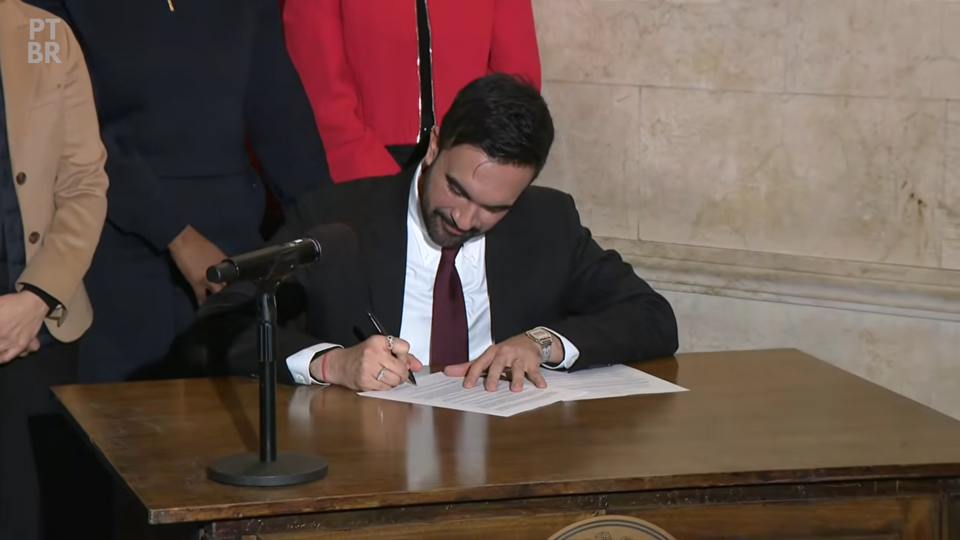
What is Mamdani doing?
New York City’s housing crisis is back in the national spotlight after new figures showed apartment rents climbing to record highs, putting Mayor Zohran Mamdani under renewed political pressure just months after promising to make the city more affordable.
The latest numbers have sparked a fresh debate over what is driving soaring housing costs in America’s largest city. While supporters of the mayor argue that decades of underbuilding are largely responsible, critics say New York’s sanctuary city policies and rising population have added even more pressure to an already strained housing market.
NYC Rents Reach Record Highs
According to a new report from real estate brokerage Corcoran Group, the median monthly rent in Manhattan climbed to a record $5,295 in June. Brooklyn also reached a new milestone, with median rents hitting $4,350.
The new data comes despite Mamdani making housing affordability one of the central promises of his campaign. Since taking office, he has pledged to expand affordable housing, strengthen tenant protections, and reduce the financial burden on renters struggling with New York City’s high cost of living.
Instead, many residents continue to face historically expensive rental prices as demand for apartments remains strong and available housing remains limited.
Critics Point To Immigration And Housing Demand
The latest rent figures quickly fueled criticism from conservatives, who argue that immigration has increased competition for housing in a city already suffering from a shortage of available apartments.
Conservative radio host Andrew Wilkow criticized New York’s sanctuary city policies after the report was released.
“You declared yourself a sanctuary city. You welcomed hundreds of thousands of illegals. Then you had to find places to put them,” Wilkow wrote on social media. “That put pressure on housing supply. Shortages create price increases. It’s pretty simple.”
Publicly available city data shows that roughly 38% of New York City residents were born outside the United States, while approximately 40% of renter households are occupied by foreign-born residents. The data does not distinguish between legal immigrants and individuals living in the country illegally.
Republican Rep. Brandon Gill of Texas also weighed in after the rent report was released.
“Young Americans compete for housing with millions of foreign arrivals,” Gill wrote on social media.
Research Examines Housing Costs
Several economic studies have explored the relationship between immigration, population growth, and housing prices.
Researchers affiliated with the Federal Reserve Bank of Philadelphia found that immigration inflows equal to about 1% of a city’s population were associated with roughly a 1% increase in average rents and home values.
A more recent study published by researchers affiliated with the Federal Reserve Bank of Dallas concluded that areas experiencing increases in unauthorized immigrant workers also saw rental prices rise when housing construction failed to keep pace with population growth.
Both studies emphasize that the findings represent the views of the researchers and do not reflect official policy positions of the Federal Reserve System.
Not all economists agree on the long-term effects.
A separate academic study published in 2024 suggested that while deportations could reduce housing demand, they could also increase construction costs by shrinking the labor force responsible for building new homes. Researchers concluded that housing prices are influenced by multiple factors, including supply, labor availability, interest rates, and overall economic conditions.
Mamdani Defends His Housing Agenda
Housing affordability has remained one of Mayor Mamdani’s signature priorities.
His administration has approved a rent freeze for rent-stabilized apartments, expanded rental assistance programs, and introduced an ambitious housing plan aimed at creating or preserving approximately 400,000 affordable housing units across New York City.
Supporters argue those policies are intended to protect tenants from rapidly rising costs while increasing the long-term supply of affordable housing.
However, critics contend that rent freezes alone cannot solve the city’s housing shortage and may discourage private investment in rental properties.
Political Debate Intensifies
New York City Comptroller Mark Levine has called for additional housing construction by rezoning neighborhoods, easing certain building regulations, and increasing investment in affordable housing developments.
Conservative attorney Mike Davis responded by suggesting that stronger immigration enforcement should also be part of the solution, arguing that reducing demand would help ease pressure on the housing market.
Meanwhile, the White House has pointed to lower rental prices in some Southern and Southwestern markets as evidence that increased immigration enforcement has helped stabilize housing costs. Critics dispute that conclusion, arguing that broader economic conditions, local construction activity, and mortgage rates have played larger roles in recent market trends.
Critics Renew Their Attacks
Mamdani also faced criticism earlier this year after celebrating the city’s rent freeze initiative.
Conservative commentator Bonchie argued that while rent-stabilized tenants benefited, overall market rents continued climbing to new records, leaving many New Yorkers paying even higher prices for apartments outside the stabilized system.
Opponents of the mayor’s housing strategy argue that long-term rent controls reduce incentives for landlords to invest in maintenance and discourage new housing development, ultimately limiting supply and driving up prices for renters who do not qualify for stabilized units.
Supporters counter that stronger tenant protections are necessary to prevent longtime residents from being priced out of their neighborhoods while additional housing is built.
What’s Next For New York’s Housing Crisis?
With Manhattan and Brooklyn rents now at record highs, housing affordability is once again emerging as one of New York City’s most closely watched political issues.
Whether the city’s long-term housing strategy succeeds—or whether critics gain momentum in blaming current policies for worsening affordability—will likely remain at the center of the debate in the months ahead.
For millions of New Yorkers struggling to afford rent, the outcome of that debate could have a lasting impact on the future of housing in America’s largest city.