A huge deal is brewing that could change a lot.
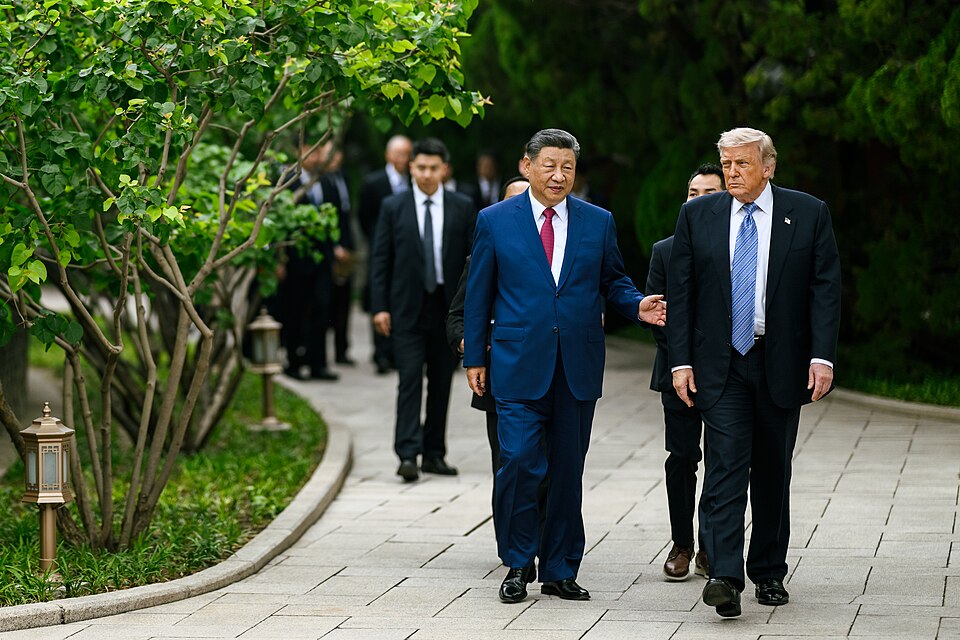
President Donald Trump is preparing for a major meeting with Chinese President Xi Jinping as the United States and China push forward on negotiations involving trade, tariffs, artificial intelligence and national security.
The talks could have significant consequences for American businesses, farmers, manufacturers and consumers as Washington and Beijing attempt to preserve their current trade truce while opening a new channel for cooperation on emerging AI threats.
Treasury Secretary Scott Bessent said U.S. and Chinese officials have agreed to establish an ongoing dialogue focused on artificial intelligence following discussions with Chinese Vice Premier He Lifeng in New York.
The proposed system could eventually give the two governments a direct way to communicate during serious AI-related security incidents.
U.S. And China Move Toward New AI Agreement
Artificial intelligence has become one of the biggest areas of competition between the United States and China.
American officials are now exploring the creation of an AI incident notification system that could allow Washington and Beijing to quickly contact one another if advanced technology creates a serious national security threat.
Bessent said the immediate priority was opening communication between the two governments.
The proposal reportedly reflects concerns that increasingly sophisticated AI systems could be misused to assist in cyberattacks, biological weapons development or other dangerous activity.
Both countries are expected to continue the AI discussions during another round of negotiations in roughly two months.
The development is especially notable because the United States and China remain fierce competitors in the race to dominate artificial intelligence, semiconductors and other advanced technologies.
Trump has repeatedly argued that America must maintain its advantage in AI and has opposed calls for the United States to substantially slow development while China continues investing heavily in the technology.
Trump Faces High-Stakes China Trade Talks
Trade remains another major issue ahead of Trump’s meeting with Xi.
The current U.S.-China trade truce is scheduled to expire on November 10, raising questions about whether the world’s two largest economies can avoid another round of escalating tariffs.
Bessent said both governments want to preserve the relative stability established during the past year.
However, Washington and Beijing have not yet reached an agreement on how long the trade arrangement should continue.
The United States has reportedly supported extending the truce for several months, while China has sought a longer arrangement.
Any agreement could affect billions of dollars in trade between the two countries.
Tariffs Remain Central To U.S.-China Relations
Trade tensions intensified early in Trump’s second term after the administration imposed sharply higher tariffs on Chinese imports.
Beijing responded with tariffs and other economic measures of its own.
Both countries later stepped back from the most aggressive measures and entered negotiations aimed at stabilizing the relationship.
For the United States, the discussions go well beyond headline tariff rates.
Washington has also focused on Chinese purchases of American agricultural products, access to critical minerals, intellectual property concerns, manufacturing competition and restrictions affecting U.S. companies operating in China.
Those issues can have direct consequences for American workers and businesses.
Farmers depend on access to overseas markets for products including soybeans, corn, meat and other agricultural goods.
Manufacturers, meanwhile, rely on international supply chains for raw materials and components used in automobiles, electronics, machinery and defense equipment.
Critical Minerals Could Be A Major Issue
Access to rare-earth minerals and other critical materials is expected to remain a major point of discussion.
China plays a dominant role in several global mineral supply chains that are important to electronics, electric vehicles, military equipment and advanced manufacturing.
The Trump administration has made reducing American dependence on foreign suppliers a major economic and national security priority.
Any agreement that improves access to critical resources could therefore have consequences for U.S. manufacturers and defense contractors.
At the same time, the administration is likely to continue pressing for greater domestic production and more diversified supply chains.
Trump And Xi Prepare For Washington Meeting
Trump is scheduled to host Xi in Washington as the two leaders attempt to manage one of the world’s most important economic and strategic relationships.
The agenda is expected to include trade, artificial intelligence, tariffs, Taiwan, fentanyl-related concerns and broader national security issues.
The meeting comes at an important moment.
The United States and China remain deeply economically connected even as the two governments compete over technology, manufacturing, military influence and global trade.
That creates a difficult balancing act for Washington.
American officials want to protect U.S. industries and national security while avoiding unnecessary economic disruptions that could affect consumers, businesses and financial markets.
What A China Deal Could Mean For Americans
The outcome of the negotiations could eventually reach American households in several ways.
Trade policy can influence the price of imported products, manufacturing costs and supply-chain availability.
Tariffs can also affect businesses that import components or finished goods from China.
Agricultural agreements could influence American farmers by expanding or limiting access to one of the world’s largest consumer markets.
Technology agreements could shape the future of artificial intelligence, semiconductor production and cybersecurity.
Meanwhile, progress involving rare-earth minerals could affect industries ranging from automobiles and consumer electronics to defense and energy.
For older Americans and retirees, major changes in trade relations can also matter indirectly through inflation, financial markets and the broader economy.
A Major Test For U.S.-China Relations
The Trump-Xi meeting will provide an important test of whether the two governments can turn months of negotiations into a more durable arrangement.
A final long-term agreement has not yet been announced, and significant differences remain between Washington and Beijing.
Still, the establishment of a new AI dialogue and continued negotiations over the trade truce suggest that both governments are trying to prevent relations from sliding back into a broader economic confrontation.
With the November trade deadline approaching, the coming weeks could determine whether the current period of stability continues — or whether the United States and China return to another round of economic pressure and retaliation.
For American businesses, farmers and consumers, the stakes extend far beyond diplomacy.
The decisions made in Washington and Beijing could influence trade, prices, technology, manufacturing and supply chains for years to come.