This was very unexpected.
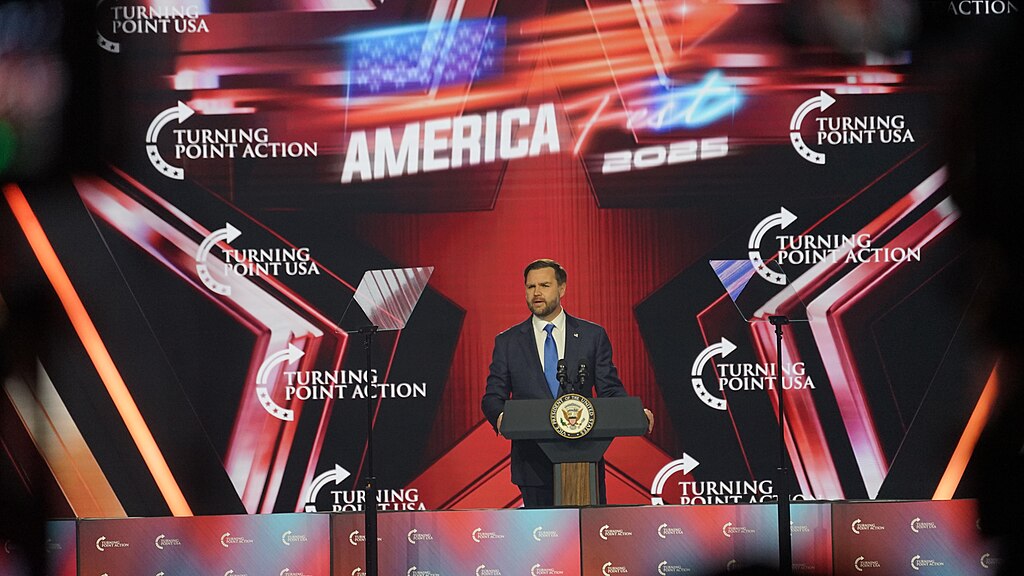
Vice President JD Vance is no longer winning outright support from a majority of Republican voters in early polling, raising new questions about who will lead the MAGA movement after President Donald Trump leaves office.
A new survey from AtlasIntel shows Vance remains the frontrunner in a hypothetical 2028 Republican presidential primary, but his support has slipped noticeably since last fall. According to the poll, 46.7 percent of Republican voters said they would back Vance in a potential primary matchup that included Secretary of State Marco Rubio, Florida Governor Ron DeSantis, and other GOP figures.
That marks a significant drop from September, when more than 54 percent of Republicans said they would support Vance—enough for a clear majority.
Although Vance has not announced any plans to run for president, his high-profile role in the Trump White House has fueled widespread speculation that he could become the movement’s standard-bearer in 2028.
Newsweek reported that it contacted Vance’s office for comment but did not receive a response outside normal business hours.
Trump Cannot Run Again Under the Constitution
Under the 22nd Amendment to the U.S. Constitution, presidents are limited to two terms in office. As a result, President Trump will be barred from running again in 2028, forcing Republicans to confront the question of succession sooner rather than later.
Vance’s dip in polling may reflect early restlessness among GOP voters, many of whom remain deeply loyal to Trump himself rather than any single successor. It may also encourage other Republican leaders to consider entering the race, setting the stage for a crowded primary.
Despite the decline, Vance still holds a commanding lead over his rivals. The AtlasIntel survey shows Rubio in second place with 22.6 percent support, followed by DeSantis at 13.4 percent—giving Vance a lead of more than 20 points.
Earlier polling painted an even stronger picture for the vice president, with DeSantis and Rubio trailing by much wider margins.
Mixed Signals From Conservatives
Some critics have pointed to internal disagreements within the Republican Party and ongoing political controversies as factors influencing voter sentiment. Others argue that economic pressures and constant media scrutiny of the Trump administration continue to shape public opinion.
At the same time, Vance has received notable endorsements from influential conservative figures. Turning Point USA leader Erika Kirk, widow of conservative activist Charlie Kirk, recently voiced support for Vance as a future leader of the movement—an endorsement that could resonate strongly with grassroots conservatives.
However, not all Republicans are unified. Senator Rand Paul said in a recent television interview that he would not support Vance in a 2028 race, citing policy disagreements, including trade and tariffs.
Other Polls Show Similar Trends
Additional surveys suggest a similar pattern nationwide. A YouGov poll conducted in early November found Vance leading potential Republican contenders with 42 percent support. Donald Trump Jr. placed a distant second at 13 percent, reinforcing the idea that while Republicans are not unified behind a single successor, Vance remains the clear frontrunner.
President Trump himself addressed the issue earlier this year, praising Vance’s performance while emphasizing the depth of talent within the Republican Party. Trump said it was “too early” to name a successor but acknowledged that Vance would likely be favored at this point.
Vance has publicly downplayed speculation about his political future. In a recent interview, he said his focus remains on serving as vice president and delivering results for the American people rather than planning a presidential campaign.
Historically, most candidates wait until after the midterm elections to announce presidential bids. With the 2026 midterms still ahead, the battle over who will carry the MAGA banner in 2028 remains unsettled—on both sides of the political aisle.