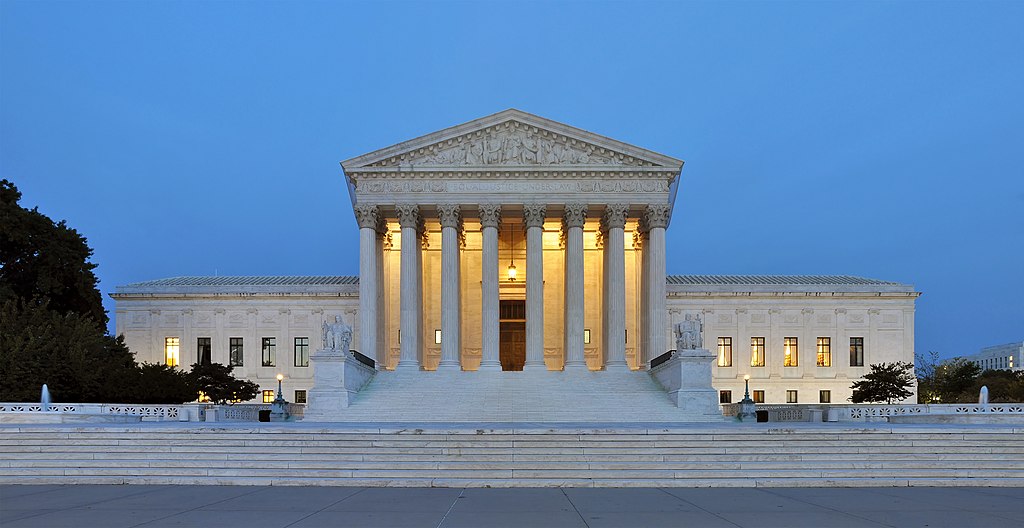
The Supreme Court has a major internal problem.
Justice Samuel Alito sharply criticized the Supreme Court’s majority after the Court voted 6–3 to temporarily block President Donald Trump from deploying the National Guard to Chicago, a move tied to immigration enforcement and public safety concerns.
In a strongly worded dissent, Alito argued that the Court’s decision improperly limited the president’s authority to protect federal officers and facilities during escalating unrest. He warned that the majority’s ruling interferes with the executive branch’s constitutional responsibility to ensure public order and enforce federal law.
According to the Trump administration, protests in Chicago had gone beyond peaceful demonstrations, with federal immigration officers facing obstruction, threats, and physical interference while carrying out their duties. The president authorized the temporary federalization of approximately 300 National Guard members to provide protection—not to engage in law enforcement activities.
Alito emphasized that disagreements over immigration policy should not prevent the federal government from ensuring the safety of its personnel. He wrote that protecting federal officers from potentially dangerous situations should not be blocked simply because immigration enforcement remains politically controversial.
Legal Dispute Over National Guard Authority
The case originated after Illinois officials challenged Trump’s use of a rarely invoked federal statute allowing the president to deploy National Guard forces when state authorities are unable or unwilling to enforce federal law. Lower courts sided with the state, concluding that Trump had not met the statute’s specific requirements.
The Supreme Court allowed those rulings to stand while the case continues. In an unsigned order, the Court’s majority interpreted the law narrowly, stating that the term “regular forces” refers only to active-duty U.S. military personnel—not federal agencies such as Immigration and Customs Enforcement (ICE).
Because the president had not attempted to deploy active-duty troops domestically, the majority argued he failed to exhaust other options before using the National Guard.
Alito Warns of Dangerous Precedent
Justice Alito rejected that interpretation, calling it an unrealistic and last-minute legal theory embraced too quickly by the Court. He was joined in dissent by Justice Clarence Thomas, while Justice Neil Gorsuch issued a separate dissent raising additional concerns.
The majority also cited the Posse Comitatus Act, which limits the military’s role in domestic law enforcement, suggesting the National Guard’s involvement could raise legal issues. Alito dismissed that argument, noting that the Constitution permits the president to deploy military forces during insurrections or serious emergencies.
He warned that the Court’s logic could produce “outlandish results,” including situations where National Guard members could carry out arrests but lack authority to provide basic protection to federal officers and buildings.
“Our country has traditionally been cautious about using soldiers as domestic police,” Alito wrote, “but it has long accepted their use for purely protective purposes.”
Broader Impact on Federal Authority
Alito also cautioned that the ruling could have far-reaching consequences. President Trump has faced similar legal resistance while attempting to deploy National Guard resources in other Democrat-controlled cities amid crackdowns on illegal immigration and rising street crime.
While legal challenges have also emerged in California and Portland, Oregon, the Chicago case is the most advanced and may shape how future administrations respond to unrest tied to federal enforcement efforts.
Illinois officials argued that protests were largely peaceful and claimed local law enforcement had the situation under control. State attorneys also said allowing the National Guard deployment would infringe on Illinois’ authority to manage its own law enforcement resources.
Alito’s dissent made clear, however, that the Court’s ruling risks weakening the president’s ability to act quickly during emergencies—potentially leaving federal officers exposed when political leaders refuse to cooperate.