Here’s what happened.
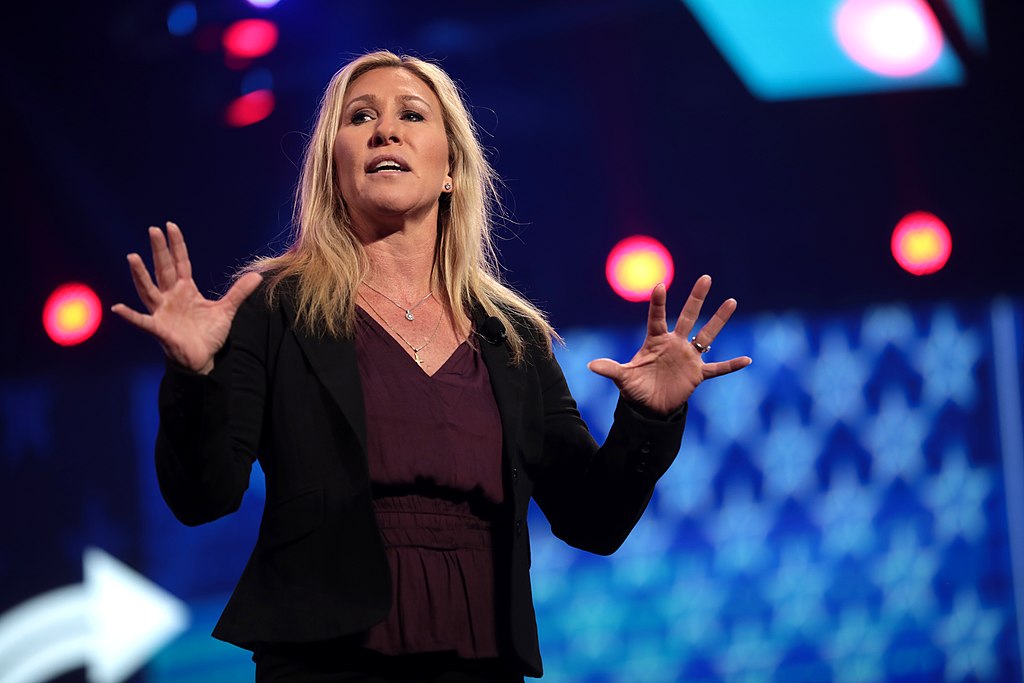
Former Rep. Marjorie Taylor Greene should not expect a warm reception from President Trump anytime soon, as reports suggest their once-close political relationship has deteriorated into deep mistrust.
What began as a powerful alliance inside the conservative movement has reportedly unraveled following a series of private disagreements, public disputes, and growing concerns within the White House over Greene’s political direction.
According to media reports, administration officials were alarmed after a private dinner involving President Trump in Washington, D.C., was disrupted last September by far-left activists. The president had chosen to dine quietly at Joe’s Seafood, Prime Steak & Stone Crab—just steps from the White House—during an evening intended to highlight his crackdown on rising crime in the nation’s capital.
The dinner was not publicly announced. Yet activists associated with the radical group Code Pink appeared inside the restaurant and loudly confronted the president, turning what was meant to be a low-key appearance into a viral spectacle.
The unexpected disruption reportedly triggered internal questions about how the activists knew the president’s location. Sources familiar with the situation say Greene had previously recommended the restaurant, leading some inside the administration to privately question whether security protocols had been compromised.
Those concerns were amplified by Greene’s past public statements acknowledging a personal acquaintance with Code Pink co-founder Medea Benjamin—a figure long associated with anti-Israel demonstrations and left-wing protest movements.
One former senior administration official described Greene as having “drifted away from Trumpworld,” suggesting she no longer aligned herself with the president’s inner circle or broader conservative priorities.
Greene has forcefully denied any role in alerting protesters and pushed back against what she described as false and dangerous accusations. In public statements, she argued that responsibility rested with security officials and insisted she had no knowledge of the president’s dinner plans.
She also rejected claims of a close relationship with Code Pink leadership, calling such suggestions misleading and politically motivated.
The clash marks a sharp turning point for two figures who once appeared politically inseparable. Tensions reportedly began when President Trump urged Greene not to pursue a U.S. Senate bid in Georgia, citing internal polling that showed significant challenges against the Democratic incumbent. Greene later ruled out the race but maintained she never discussed it directly with Trump.
Their relationship worsened further after Greene joined several Republicans in supporting the release of documents related to the Jeffrey Epstein case—a move that reportedly angered the president and widened the divide.
By late fall, the split became public. Trump withdrew political backing, while Greene increasingly criticized the president’s foreign policy decisions and leadership approach. The back-and-forth played out in public statements and media interviews, signaling a complete breakdown in trust.
Greene has since returned to Georgia, where she is planning her upcoming wedding and signaling a shift away from Washington politics. Whether the rift between her and President Trump eventually heals—or becomes a lasting fracture within the conservative movement—remains an open question.
What is clear is that one of the most visible alliances of the Trump era has come to an abrupt and very public end.