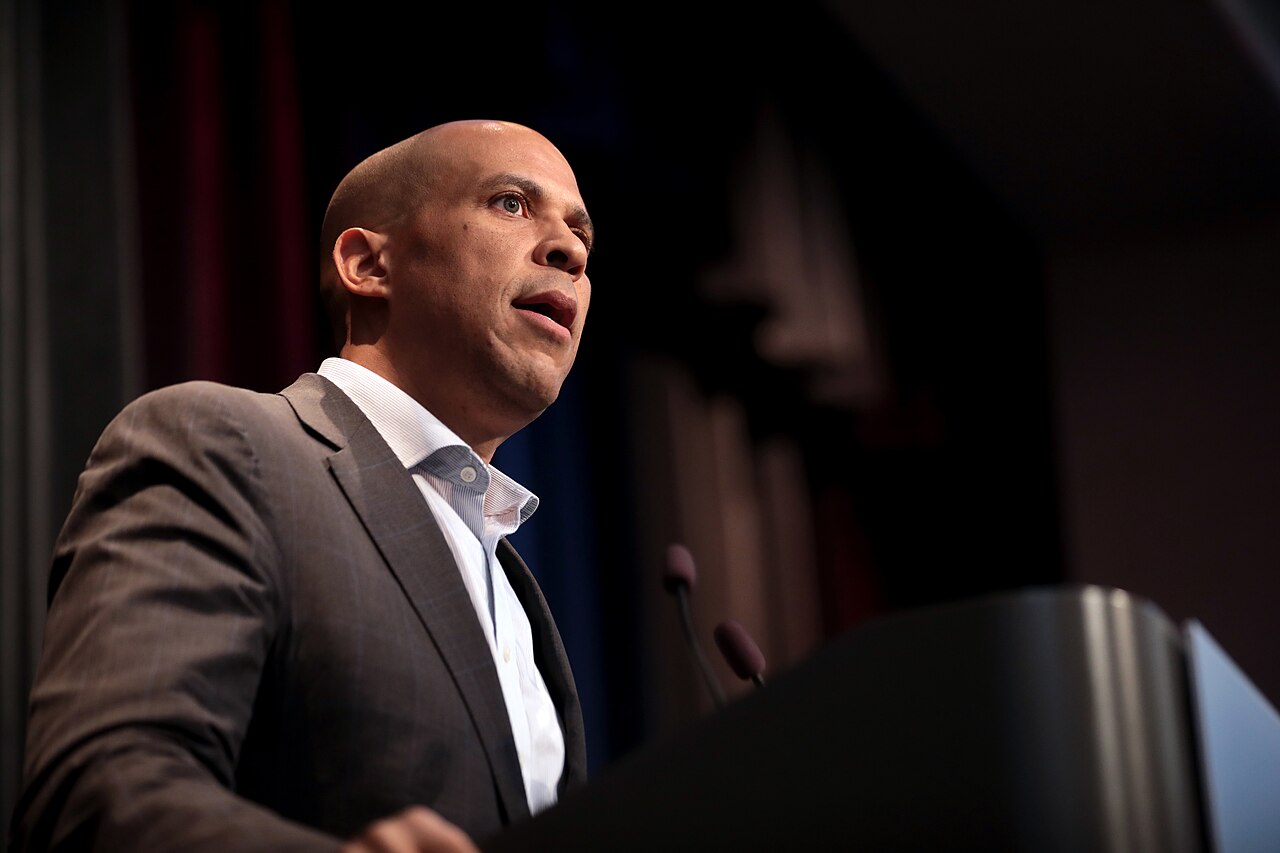
A top Democratic senator is blasting Congress and raising alarms about President Donald Trump’s growing authority as the conflict with Iran continues to unfold.
Sen. Cory Booker (D-N.J.) sharply criticized lawmakers on Sunday, accusing Congress of being “feckless” and failing to push back against the expanding power of the presidency during one of the most serious international conflicts in years.
Speaking during an appearance on CNN’s State of the Union, Booker argued that both Democrats and Republicans share responsibility for allowing the executive branch to gain more control over military decisions.
But he suggested that the current situation involving the Trump administration and the war with Iran represents something far larger than previous conflicts.
“I’m going to be one of those Democrats that says both parties have been feckless in allowing the growth of presidential power,” Booker said. “But nothing we saw under Obama or even during Trump’s first term compares to what we’re seeing right now.”
Democrats Attempted To Block Trump’s Iran Strike
Booker’s criticism comes after Senate Democrats recently attempted to pass a war powers resolution aimed at limiting President Trump’s authority to launch military action against Iran.
The resolution sought to require congressional approval before the United States could become further involved in overseas conflict with Iran.
However, the effort failed after Republicans blocked the measure in the Senate. The vote was largely symbolic, as the GOP had enough support to prevent it from moving forward.
Supporters of President Trump argue that strong leadership is necessary during global crises, especially when American forces and international shipping routes are under threat in the Middle East.
Strait Of Hormuz Crisis Sends Oil Markets Into Turmoil
One of the biggest concerns surrounding the conflict has been disruptions in the Strait of Hormuz, one of the most critical oil shipping routes in the world.
Booker warned that the situation has already created major problems in global energy markets.
“The Strait of Hormuz is seeing some of the biggest disruptions to oil markets we’ve ever seen,” Booker said.
The senator also claimed that the United States moving military assets into the region could create additional risks for American forces stationed in other parts of the world.
Meanwhile, global oil prices have surged as tensions in the Middle East continue to rise. Crude oil recently climbed close to $100 per barrel, sparking fears of higher gasoline prices for consumers.
Several nations have responded by releasing oil from their strategic reserves in an attempt to stabilize markets and prevent further economic disruption.
Booker Says War Is Costing Americans Billions
While rising gas prices remain a concern for many Americans, Booker said the financial and human costs of the conflict go far beyond the pump.
“This is a massive military undertaking,” Booker said during the interview. “It’s costing American taxpayers billions and billions of dollars, and tragically it has already cost American lives.”
According to Booker, Congress has a constitutional responsibility to debate and authorize major military actions, something he believes lawmakers are failing to do.
He questioned why Congress has not taken stronger steps to assert its authority.
“At this scale, at this magnitude, and at this cost, why is Congress just laying down and doing nothing?” Booker asked.
Democrats Warn Of Future Military Actions
Booker also warned that failing to challenge the president’s authority now could lead to additional military interventions in other parts of the world.
“If we allow this to happen, we essentially give the president permission to move from one country to the next,” Booker said. “Today it’s Iran. Tomorrow it could be Venezuela, Cuba, or North Korea.”
The senator called the current situation “outrageous” and argued that such a large military engagement should not occur without direct involvement from Congress.
New Resolution Targets Potential Cuba Intervention
Meanwhile, some Senate Democrats are already preparing another measure aimed at limiting potential future military action.
A small group of lawmakers recently introduced a resolution seeking to block any possible U.S. military intervention in Cuba without congressional approval.
The proposal could receive a vote in the Senate within the next few weeks as tensions continue to rise on multiple global fronts.
Growing Political Battle In Washington
As the conflict overseas continues, the political battle in Washington over presidential war powers appears far from over.
Democrats are increasingly calling for congressional oversight and limits on military authority, while many Republicans argue that President Trump must retain flexibility to respond quickly to threats against the United States and global energy supplies.
With the war in Iran impacting global markets, oil prices, and American foreign policy, the debate over presidential power—and Congress’s role in checking it—is likely to intensify in the weeks ahead.