Trump isn’t playing games and frankly, he never was.
President Donald Trump delivered a powerful message Sunday as the United States took decisive military action against an Iranian vessel attempting to defy a critical U.S. naval blockade in the Strait of Hormuz—a key global oil route.
In a statement that quickly grabbed national attention, Trump revealed that a massive Iranian-flagged cargo ship, known as the TOUSKA, ignored direct warnings from the U.S. Navy and tried to push through restricted waters.
That decision, according to Trump, came with immediate consequences.
U.S. Navy Responds With Force
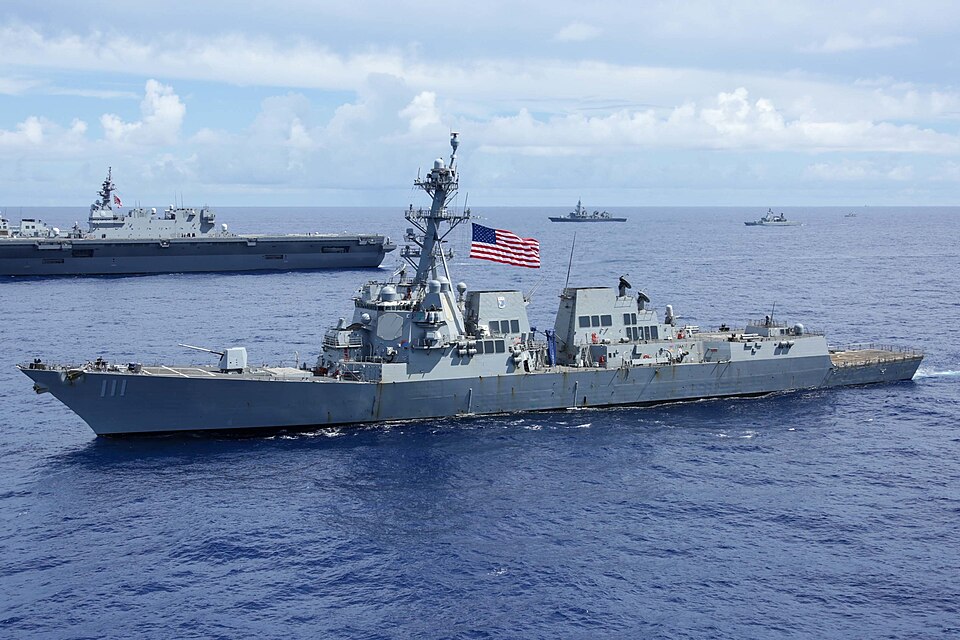
The U.S. Navy guided missile destroyer USS Spruance moved in to stop the vessel in the Gulf of Oman after repeatedly warning it to halt.
When the Iranian crew refused to comply, U.S. forces acted.
Trump stated that the Navy disabled the ship by striking its engine room—bringing the nearly 900-foot vessel to a complete stop. U.S. Marines then boarded the ship and took full control without hesitation.
The message was clear: the United States will not tolerate challenges to its authority in one of the world’s most vital shipping lanes.
Sanctioned Ship Raises Serious Questions
According to Trump, the TOUSKA was already under U.S. Treasury sanctions due to a history of alleged illegal operations.
Now in American custody, officials are actively inspecting the vessel to determine what it was carrying—and whether it posed a larger threat.
This development raises serious concerns about Iran’s activities in the region, especially as tensions remain high over energy security and global trade routes.
High-Stakes Talks Still in Limbo
While military action unfolded, diplomatic efforts continued behind the scenes.
Vice President J.D. Vance is expected to travel to Islamabad for another round of negotiations aimed at preventing further escalation.
Key Trump allies, including Jared Kushner and Steve Witkoff, are also involved in the ongoing discussions.
However, uncertainty remains.
Iran has not confirmed whether it will participate. Its lead negotiator, Mohammad Bagher Qalibaf, made it clear that Tehran has no intention of backing down, signaling that talks could face serious challenges.
No Breakthrough Yet on Iran’s Nuclear Program
The first round of negotiations lasted more than 20 hours but failed to produce a deal.
According to Vice President Vance, the biggest obstacle remains Iran’s nuclear ambitions—a long-standing issue that continues to drive global instability and concern.
A Clear America-First Strategy
Trump’s response highlights a broader strategy: combining military strength with diplomatic pressure to protect American interests, secure global energy routes, and hold adversaries accountable.
With tensions rising in the Middle East and the Strait of Hormuz remaining a flashpoint for global oil supply, the stakes could not be higher.
For now, one thing is certain—this administration is signaling that challenges to U.S. power will be met with swift and decisive action.