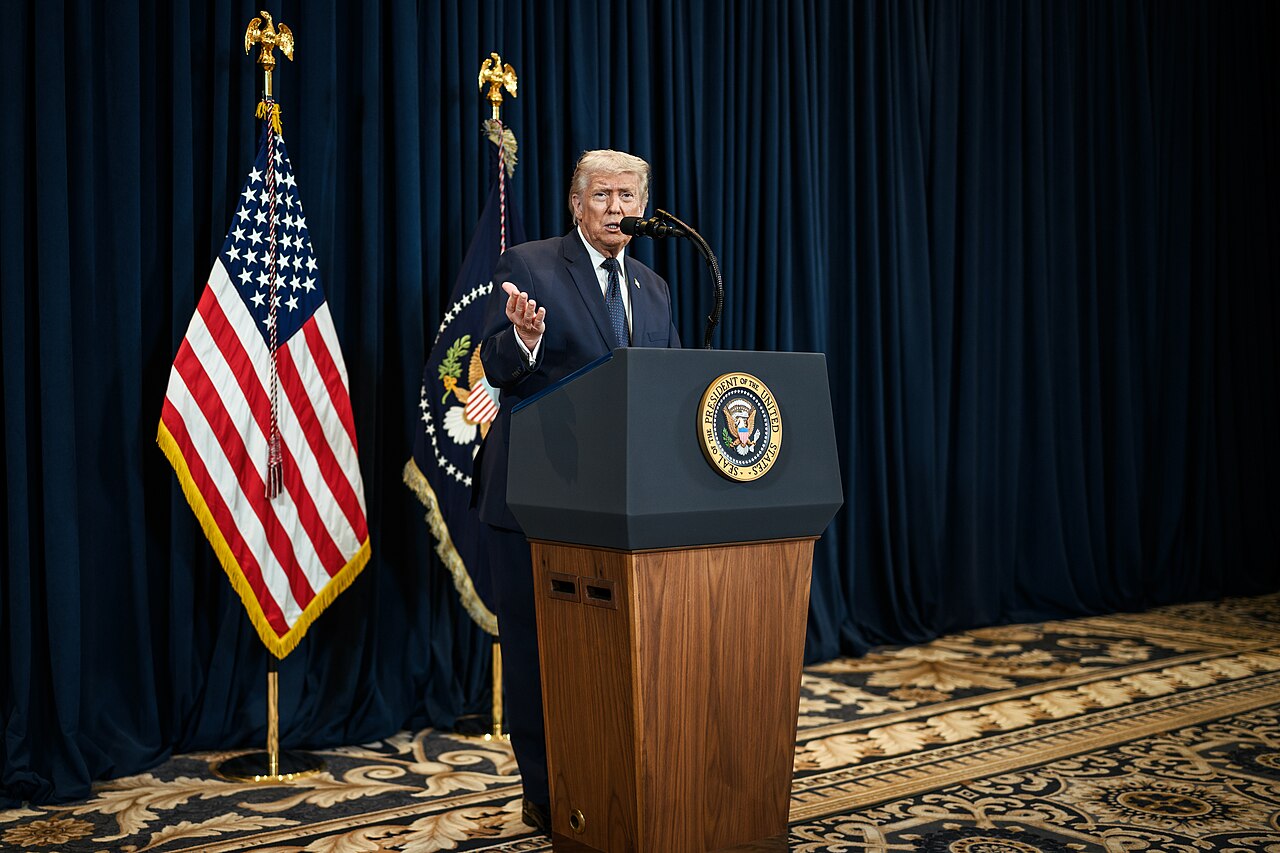
President Donald Trump is once again shaking up Washington—and this time, his comments are raising eyebrows not just among political opponents, but also among America’s closest allies.
During a high-profile press conference on Monday, Trump laid out a bold vision for U.S. foreign policy, one that puts American interests front and center—and challenges decades of globalist thinking.
Trump’s Blunt Message: America Should Benefit From Victory
The discussion began when a reporter pressed Trump on a growing concern among voters: if Americans want troops brought home, why talk about expanding involvement overseas—especially when it comes to Iran’s oil?
Trump’s response was direct and unapologetic.
He argued that if the United States is going to invest blood and treasure in global conflicts, the American people should see real, tangible returns.
In classic Trump fashion, he framed the issue through a business lens—saying that past administrations failed by walking away from victories without securing long-term benefits for the country.
Instead, Trump suggested a different path—one where America protects its interests while also ensuring economic gains that help offset the cost of military action.
A Surprising Target: Germany Under Fire
While discussing strategy, Trump shifted his focus to Europe—and delivered some of his sharpest criticism toward Germany.
He questioned the reliability of certain allies, suggesting that sharing sensitive U.S. military plans could risk leaks and weaken operations.
Trump also revisited a long-standing frustration: that the United States has spent decades defending and rebuilding other nations, while those same countries are often hesitant to fully support American-led efforts.
For many conservatives, this message will sound familiar.
Trump has repeatedly pushed NATO allies to contribute more, arguing that American taxpayers have carried an unfair share of the burden for far too long.
“To the Victor Go the Spoils” — A Different Foreign Policy Doctrine
At the core of Trump’s remarks was a philosophy rarely spoken so openly by modern leaders: victory should come with rewards.
He pointed to history, including America’s role after World War II, arguing that the U.S. chose to rebuild foreign nations rather than prioritize its own long-term strategic and economic advantage.
Trump made it clear—he believes that approach was a mistake.
Instead, he suggested that securing valuable resources, such as energy, could help strengthen America at home while reducing reliance on unstable regions abroad.
Americans Want Troops Home—But Also Want Strength
At the same time, Trump acknowledged a growing reality: many Americans are tired of endless wars.
After decades of overseas conflicts, voters—especially older Americans—are increasingly focused on stability, security, and putting America first.
Trump suggested there is a path forward that balances both priorities:
- Reducing long-term military entanglements
- Protecting U.S. interests
- Ensuring any involvement delivers clear benefits to the American people
Iran Conflict Adds Pressure to Global Alliances
Trump’s comments come at a time of rising tension with Iran, and growing disagreement among Western allies about how to respond.
Some European nations have taken a more cautious approach, resisting deeper involvement—something that has clearly frustrated the White House.
This divide is now becoming more visible, as Trump signals a willingness to act decisively, even without full international backing.
A Clear Message to Allies—and to Voters
Love him or hate him, Trump’s message is consistent:
America should lead—but it should also win.
And in Trump’s view, winning doesn’t just mean military success. It means:
- Strong borders
- Energy independence
- Fair partnerships with allies
- And putting American citizens first
As global tensions continue to rise, one thing is certain—Trump is not backing down from a strategy that challenges the status quo.