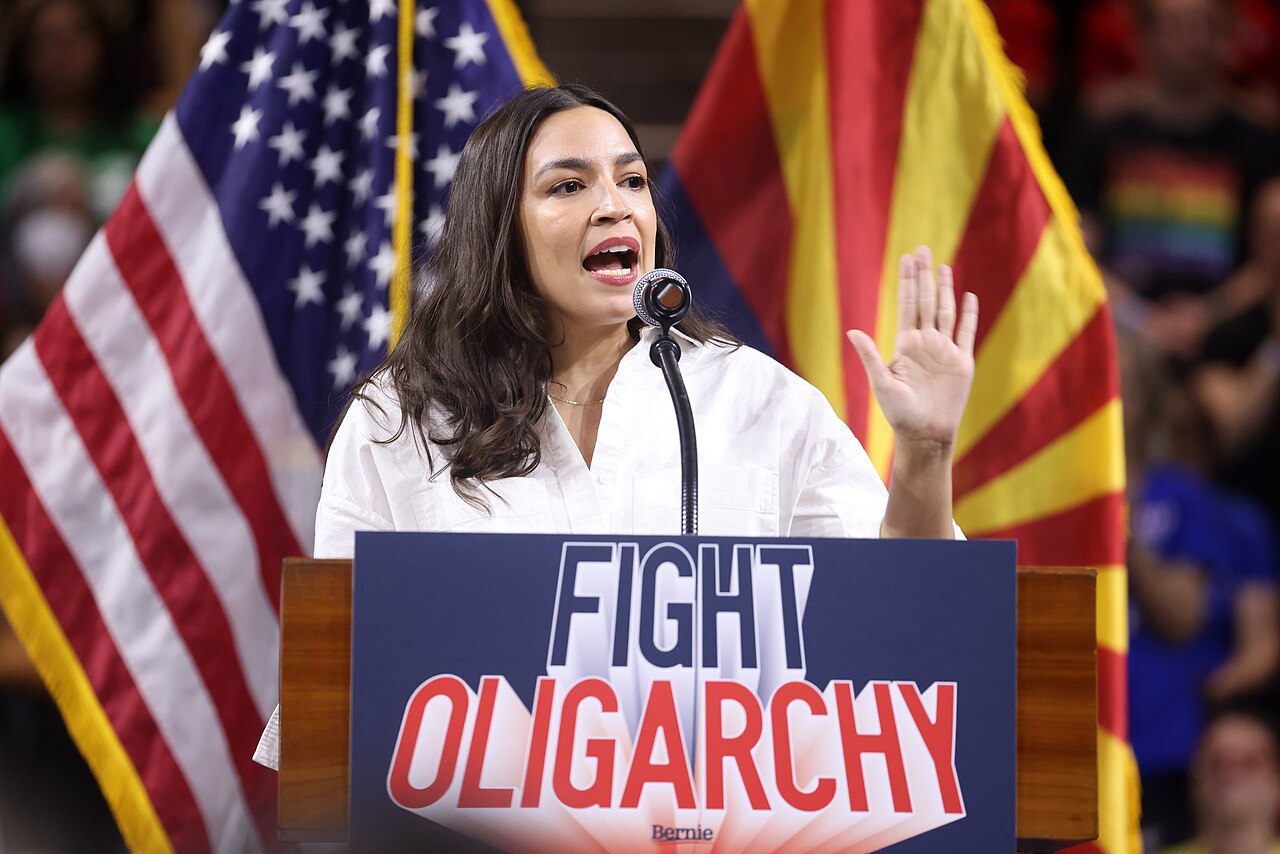
This was an outrageous statement from AOC.
A growing political firestorm erupted Tuesday after Rep. Alexandria Ocasio-Cortez (D-N.Y.) made controversial remarks targeting President Donald Trump—and, more alarmingly, appeared to call on members of the U.S. military to defy their commander-in-chief.
At a time when global tensions remain high and America faces serious threats overseas, critics say her comments risk creating dangerous division within the armed forces.
AOC Sparks Outrage With Call To Military
The controversy began after President Trump issued a strong warning to Iran, signaling that the United States would not tolerate continued threats to global stability—particularly regarding the critical Strait of Hormuz.
While the president emphasized that he hoped to avoid escalation, he made clear that America stands ready to act if necessary.
Instead of supporting a unified front, Ocasio-Cortez responded with a harsh public attack, accusing Trump of making extreme threats and calling for his removal from office.
More concerning to many Americans, however, was her direct message to military personnel.
She urged those in the president’s chain of command to refuse what she described as “illegal orders”—a statement that critics argue undermines military discipline and civilian leadership of the armed forces.
Critics Warn Of Dangerous Political Messaging
For many conservatives, this is where the situation crosses a serious line.
The U.S. military operates under a strict chain of command, with the president serving as commander-in-chief. Encouraging troops to question or defy that authority—especially during a potential international crisis—raises major concerns about national security and military cohesion.
Supporters of President Trump argue that such rhetoric plays directly into the hands of America’s adversaries by signaling internal division.
At a time when strength and unity are critical, they say political leaders should be reinforcing confidence—not sowing doubt.
Democrats Double Down On Criticism
Ocasio-Cortez was not alone in her response.
Sen. Mark Kelly (D-Ariz.) also weighed in, warning that certain types of military action could violate international law if civilian infrastructure were targeted without clear military justification.
Kelly emphasized that the U.S. must maintain professionalism and discipline, even in moments of heightened tension.
Meanwhile, Sen. Jack Reed (D-R.I.), a senior member of the Senate Armed Services Committee, criticized the president’s language and suggested it went beyond what should be expected from an American leader.
These coordinated responses from Democrats highlight a broader divide in Washington over how to handle foreign threats—and how aggressively the United States should respond.
Past Controversy Raises New Questions
This is not the first time Democrats have faced scrutiny for messaging directed at the military.
Last year, several lawmakers—including Kelly—were involved in a video advising troops to carefully evaluate potentially “illegal orders.” That effort drew significant backlash and even prompted a Justice Department review.
Although no charges were ultimately filed, the incident raised lasting concerns about political figures influencing military decision-making.
Now, with tensions once again rising, similar rhetoric is resurfacing—and critics say the stakes are even higher.
Even Some Allies Break Ranks
In an unexpected development, former Trump ally Marjorie Taylor Greene (R-Ga.) also expressed concern over the situation, referencing the 25th Amendment in a social media post.
However, many conservatives have dismissed these reactions as emotional and politically driven rather than grounded in the realities of national security.
For Trump supporters, the bigger issue remains clear: maintaining strength on the world stage while avoiding unnecessary division at home.
Trump Supporters Emphasize Strength And Leadership
Supporters of President Trump argue that strong, unapologetic leadership is exactly what is needed when dealing with hostile regimes like Iran.
They point out that past administrations often relied on weaker diplomatic approaches that failed to deter aggression.
In contrast, Trump’s strategy has consistently focused on peace through strength—sending a clear message that the United States will defend its interests and allies without hesitation.
From this perspective, firm rhetoric is not reckless—it’s necessary.
A Defining Moment For National Unity
As this situation continues to unfold, one thing is certain: the divide in Washington is no longer just about policy—it’s about leadership, loyalty, and the role of the military in a deeply polarized political climate.
For many Americans, especially older voters who value stability and national strength, the idea of politicians encouraging resistance within the military is deeply troubling.
At a time when the world is watching closely, the question remains:
Will America present a united front—or allow political infighting to weaken its position on the global stage?