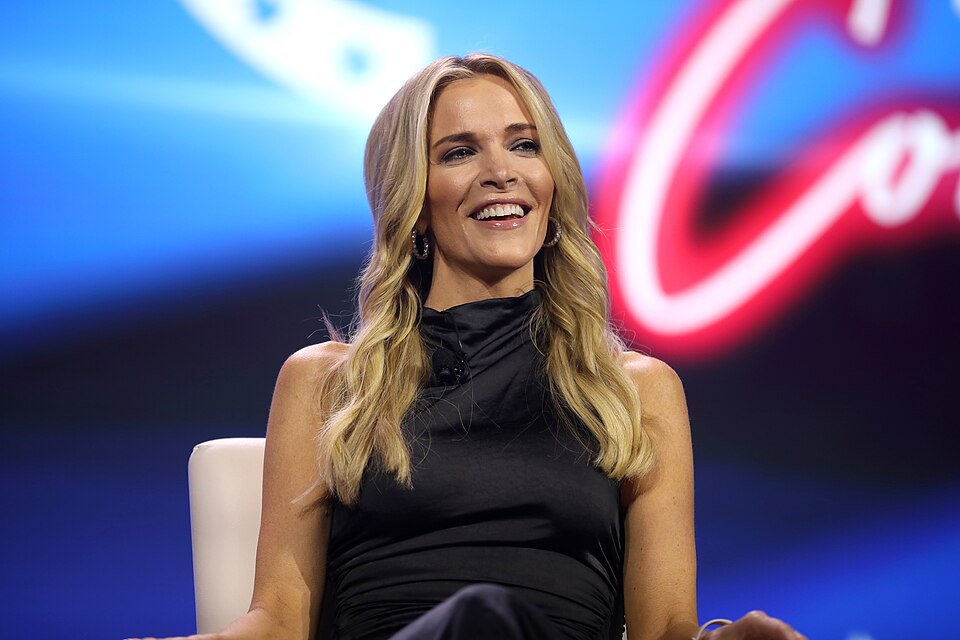
Whoa! Nobody expected to see this one.
A surprising divide is emerging in conservative media, as Megyn Kelly openly criticized Donald Trump over his latest clash with late-night host Jimmy Kimmel.
The moment is raising serious questions about free speech, media bias, and whether the rules are applied fairly in today’s America.
Trump Calls Out Kimmel — And Demands Action
The controversy began after Kimmel made a widely criticized joke during a White House Correspondents’ Dinner-related segment—one that many viewers, especially conservatives, viewed as crossing a clear line.
President Trump didn’t hold back.
In a fiery statement, he blasted Kimmel’s performance, questioned his ratings, and called on ABC to take action—echoing what many frustrated viewers have been saying for years about late-night television’s increasingly one-sided tone.
For millions of Americans, it wasn’t just about one joke—it was about a pattern of disrespect and political bias in mainstream entertainment.
Megyn Kelly Pushes Back — Cites Free Speech Concerns
But that’s where things took an unexpected turn.
During her SiriusXM show, Megyn Kelly broke ranks and criticized Trump’s approach, calling it “inappropriate” for a sitting president to pressure a private company to fire an employee.
Kelly made it clear she didn’t support Kimmel’s joke. In fact, she agreed it went too far.
However, she argued that government figures should not be seen as influencing employment decisions in private media companies, warning that it could undermine core American principles.
For many listeners, it created a rare moment where two conservative-leaning voices diverged sharply on strategy—even while agreeing on the broader cultural problem.
The Double Standard Problem No One Can Ignore
Still, Kelly didn’t let ABC off the hook.
She pointed directly at the network’s parent company, The Walt Disney Company, highlighting what many conservatives have long argued: cancel culture is applied selectively.
Networks have taken swift action in the past when certain groups were offended—but often remain silent when the target is conservative.
That inconsistency, Kelly suggested, is the real issue.
And it’s one millions of Americans—especially older viewers—have noticed over time.
Adam Carolla Weighs In With Reality Check
Comedian Adam Carolla added another layer to the discussion, offering a more strategic perspective.
While acknowledging frustration with Kimmel, Carolla warned that pushing too aggressively for consequences may not resonate with the broader public.
Instead, he suggested that these battles are often decided in the court of public opinion, where credibility and consistency matter more than outrage alone.
Bigger Than One Joke: What This Means for America
This isn’t just about Jimmy Kimmel.
It’s about:
- Who controls the narrative in American media
- Whether free speech applies equally to everyone
- And why double standards continue to dominate public discourse
For many Americans over 50, who have watched media evolve over decades, the frustration is clear:
The rules seem to change depending on who’s speaking—and who’s being targeted.
The Bottom Line
Megyn Kelly’s comments may have surprised some, but they highlight a deeper divide—even among conservatives—about how to handle media bias in today’s climate.
One thing is certain:
The battle over free speech, fairness, and media accountability is far from over.
And stories like this are only fueling the conversation.