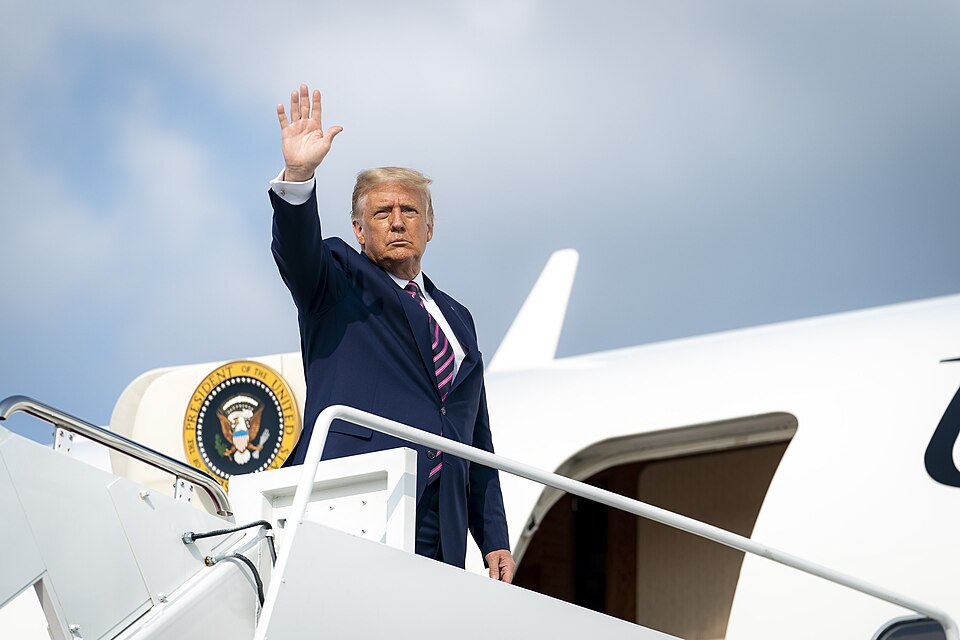
Trump Says US Enemy Has No Choice
President Donald Trump remains confident that Iran will eventually agree to a deal with the United States despite ongoing resistance from leaders in Tehran.
Speaking during an interview in Wisconsin on Friday, Trump said negotiations are moving slowly but argued that Iran’s leadership is facing increasing pressure as the conflict enters its fourth month.
The president said Iranian officials have not yet accepted a settlement because they remain determined to maintain their position.
“They’re strong and they’re proud,” Trump said, while predicting that Iran will eventually decide that reaching an agreement is in its best interest.
His comments come as diplomatic efforts continue alongside heightened tensions across the Middle East.
Trump Defends Strategy Amid Criticism
As the conflict continues, Trump has faced criticism from political opponents who argue that a resolution should have been reached sooner.
The president rejected those concerns, saying the situation involves decades of hostility between Iran and the United States and cannot be solved overnight.
Trump noted that American administrations from both parties have struggled to deal with Iran’s leadership over the years. He argued that expecting a quick solution ignores the complexity of the situation.
Supporters of the president say his administration has maintained a firm approach while continuing to leave the door open for diplomacy.
Critics, meanwhile, have raised concerns about the economic and geopolitical consequences of a prolonged standoff.
Administration Highlights Military Successes
Trump also pointed to what his administration views as major military achievements since the conflict began earlier this year.
According to the president, joint operations involving the United States and Israel significantly weakened Iran’s military capabilities.
While acknowledging that Iran still maintains some missile and drone resources, Trump said the country’s overall military strength has been reduced substantially compared to where it stood before the conflict escalated.
The administration argues that these developments have increased pressure on Tehran to return to the negotiating table.
Military analysts continue to debate the long-term impact of the campaign, but few dispute that the regional balance of power has shifted considerably during the past several months.
Regional Security Remains Fragile
Despite several ceasefire agreements and ongoing negotiations, tensions remain high throughout the region.
Recent drone attacks linked to Iran disrupted operations at Kuwait International Airport, resulting in casualties and renewed concerns about regional stability.
The incident highlighted the challenges facing diplomats seeking a lasting peace agreement.
Many observers believe that even if a formal agreement is eventually reached, restoring stability across the region could take years.
Neighboring countries continue to monitor developments closely, particularly as concerns remain about shipping routes, energy supplies, and broader security issues.
Impact on Energy Prices and American Consumers
One issue receiving growing attention is the economic impact of the conflict.
Disruptions around the Strait of Hormuz, one of the world’s most important oil transportation routes, have contributed to higher energy prices.
As global oil markets react to uncertainty in the region, American consumers have felt the effects through rising gasoline prices and increased transportation costs.
For many families, especially retirees and those living on fixed incomes, higher energy costs remain a significant concern.
Economic experts say energy markets will likely remain sensitive to developments in the Middle East until a long-term resolution becomes clearer.
Marco Rubio Provides Update on U.S. Operations
Secretary of State Marco Rubio recently informed lawmakers that the primary American offensive operation known as “Epic Fury” has concluded.
According to Rubio, more recent U.S. military actions have focused on protecting commercial shipping and responding to threats rather than expanding offensive operations.
The administration has emphasized that maintaining freedom of navigation and protecting international trade routes remain top priorities.
Those shipping routes are critical not only for global commerce but also for energy markets that directly affect consumers around the world.
Trump Signals Pressure Will Continue
While expressing hope for a negotiated settlement, Trump indicated that the United States is prepared to continue applying economic and diplomatic pressure if talks stall.
The president recently suggested that several options remain available should negotiations fail to produce meaningful progress.
At the same time, he expressed optimism that an agreement remains achievable.
Administration officials continue to state that their goal is a solution that protects American interests, promotes regional stability, and reduces the risk of future conflict.
What Happens Next?
The coming weeks may prove critical in determining whether negotiations can move forward.
Iran’s leadership faces growing economic and diplomatic pressure, while the United States continues to balance military preparedness with efforts to achieve a peaceful resolution.
Investors, energy markets, foreign governments, and American consumers are all watching closely for signs of progress.
For now, Trump remains convinced that Iran will eventually decide that reaching an agreement is the best available path forward.
Whether that prediction proves correct could have major consequences for global security, energy prices, and American foreign policy in the months ahead.