President Donald Trump is once again putting America’s allies on notice.
In a sharp criticism aimed at Italian Prime Minister Giorgia Meloni and the NATO alliance, Trump questioned whether some of America’s closest partners are truly willing to stand with the United States when major threats emerge.
The latest clash comes after growing tensions over the recent conflict involving Iran and renewed debates about whether America is carrying too much of the burden for global security.
Trump Questions NATO Loyalty
In a Truth Social post Sunday, Trump argued that the United States has spent enormous amounts of money protecting NATO countries for decades, only to find many of those same nations unwilling to support America during a time of crisis.
Without directly naming Meloni, Trump pointed to Italy’s refusal to participate in actions related to Iran’s nuclear threat.
According to Trump, the situation revealed an uncomfortable reality about some U.S. allies.
After years of American military spending, security guarantees, and financial support, Trump suggested that many NATO members still expect Washington to do the heavy lifting while contributing little when difficult decisions must be made.
For many conservatives, it was a familiar complaint.
Trump has long argued that American taxpayers have spent billions defending wealthy nations that are fully capable of doing more for their own security.
The Dispute With Meloni Escalates
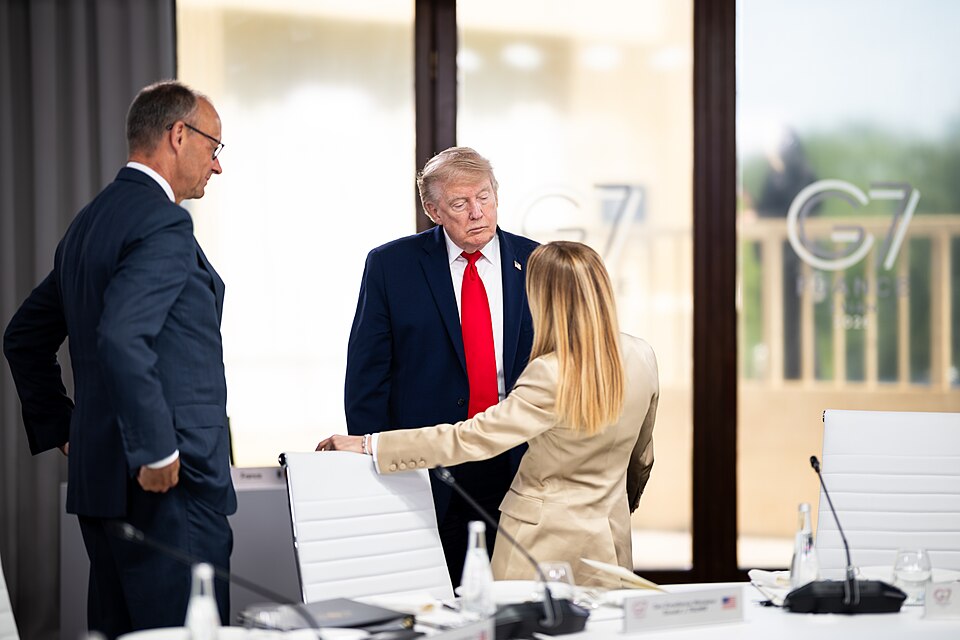
Trump’s comments followed another public exchange involving Meloni after last week’s G7 Summit in France.
The president claimed the Italian leader sought to repair relations following disagreements over military cooperation during the Iran conflict.
Trump also expressed frustration with restrictions involving American access to certain military facilities in Italy, which he said created logistical challenges during operations.
The disagreement quickly turned personal.
Trump suggested Meloni wanted to rebuild their relationship for political reasons, while making it clear he was not interested in changing course.
Meloni Fires Back
Meloni responded forcefully.
The Italian prime minister rejected Trump’s criticism and defended her decisions as actions taken to protect Italy’s national interests.
She emphasized that Italy remains a sovereign nation and that agreements governing American military facilities must be respected.
Meloni also pushed back against the idea that her political standing depends on maintaining a close relationship with Trump.
Instead, she argued that Italian voters judge her based on how effectively she defends her country’s interests.
The exchange marks one of the most public disagreements between two leaders who were once considered close political allies.
What Changed?
The tension is surprising because Trump and Meloni previously shared one of the strongest relationships among conservative leaders in the Western world.
Trump frequently praised Meloni’s leadership style and often highlighted her as an example of a European leader willing to challenge the political establishment.
Many conservatives viewed their partnership as evidence that nationalist and populist movements were gaining strength on both sides of the Atlantic.
Now, however, disagreements over military policy and NATO responsibilities appear to be testing that relationship.
Why This Matters
The feud is about much more than a disagreement between two political leaders.
At its core, the dispute reflects a larger debate about America’s role in the world.
Should the United States continue paying the largest share of NATO’s defense costs?
Should European nations take greater responsibility for defending themselves?
And when America faces threats from countries such as Iran, should allies be expected to provide more direct support?
These questions have become central issues for many voters who believe Washington has spent too much money overseas while neglecting problems at home.
Trump’s message is simple: If America is expected to defend its allies, those allies should be prepared to stand with America when it counts.
NATO Under Renewed Pressure
The president has spent years demanding that NATO members increase defense spending and reduce their dependence on American military power.
The recent Iran conflict has only intensified those concerns.
Trump’s latest criticism signals that he remains committed to pushing allies for greater accountability and burden-sharing.
Whether NATO leaders agree with him or not, the debate over who pays, who contributes, and who takes the risks is unlikely to disappear anytime soon.
As tensions continue between Trump and Meloni, many voters will be watching closely to see whether America’s allies are willing to do more—or whether Washington will continue carrying the load alone.