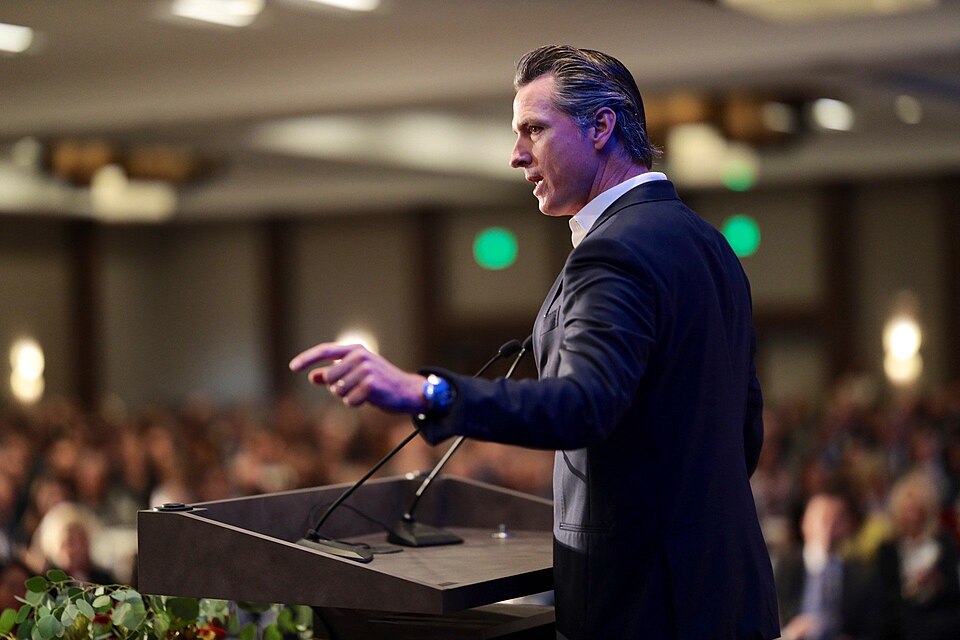
Here’s what Newsom is doing now.
California will soon have the highest statewide minimum wage in America after Gov. Gavin Newsom announced that the state’s minimum wage will increase to $17.40 per hour beginning January 1, 2027.
The new wage will be nearly two-and-a-half times higher than the federal minimum wage of $7.25 per hour, further widening the gap between California’s labor policies and those of many other states.
Unlike a newly passed law, the increase is automatically triggered under California’s existing minimum wage law, which adjusts worker pay each year based on inflation.
Newsom Highlights California’s Different Approach
In announcing the increase, Newsom used the opportunity to contrast California’s economic policies with those of President Donald Trump and congressional Republicans.
The governor argued that California has chosen to increase wages while federal lawmakers have left the national minimum wage unchanged for years. He said the state’s goal is to reward workers, strengthen the economy, and help families cope with rising living costs.
The announcement also comes as Newsom continues to attract national attention ahead of a potential 2028 presidential campaign, making the minimum wage increase likely to become part of a broader debate over the economy and workers’ pay.
Critics Say Higher Wages Come With Higher Costs
Republicans and business advocates quickly criticized the announcement, arguing that raising California’s minimum wage does little to solve the state’s affordability problems.
Republican gubernatorial candidate Scott Meyer told the New York Post that Newsom’s comparison to the federal minimum wage ignores the fact that California businesses are already required to pay state wages, making the federal rate largely irrelevant inside the state.
Meyer also argued that continually raising labor costs encourages employers to invest in automation rather than hiring new workers. He pointed to the growing number of self-service kiosks at restaurants, grocery stores, and retail chains as evidence that businesses are increasingly replacing entry-level positions with technology.
According to Meyer, higher minimum wages can reduce opportunities for teenagers, first-time workers, and others trying to enter the workforce, ultimately making it more difficult for small businesses to expand.
California Businesses Face Additional Labor Costs
The statewide increase follows another scheduled wage hike that took effect on July 1 for many California healthcare workers. Depending on the type of healthcare facility, minimum pay now ranges from $19.28 to $25 per hour.
California has consistently adopted some of the nation’s highest wage standards under Newsom’s administration.
One of the most closely watched policies was the state’s $20 per hour minimum wage for many fast-food workers, which supporters said would provide better pay while critics warned it would increase operating costs for restaurants.
Business groups have argued that higher payroll expenses have contributed to restaurant closures, reduced hiring, and higher prices for consumers throughout California.
Employment Experts Raise Concerns
Rebekah Paxton, research director at the Employment Policies Institute, said Newsom may celebrate having the nation’s highest statewide minimum wage, but she believes previous wage mandates have placed significant pressure on employers.
Paxton argued that earlier increases have coincided with job losses, business closures, reduced hiring, and rising prices, particularly in industries that employ large numbers of hourly workers.
Supporters of higher wages, however, maintain that increasing worker pay helps families better manage inflation and the state’s high cost of living while giving employees greater financial stability.
Republicans Focus On California’s Cost Of Living
California Republicans said the governor’s announcement overlooks the broader financial challenges facing residents.
The California Assembly GOP Caucus argued that while higher pay is welcome, many families continue to struggle because housing, groceries, utilities, insurance, and other everyday expenses continue rising.
Republican lawmakers said state leaders should focus more heavily on lowering the overall cost of living instead of relying on wage increases to offset higher expenses.
State Sen. Tony Strickland echoed those concerns, saying California remains one of the most difficult states in which to operate a business.
According to Strickland, many family-owned restaurants and small employers have already struggled to absorb previous wage increases, and another scheduled hike could place additional financial pressure on businesses already operating on thin profit margins.
The Debate Over California’s Economy Continues
The upcoming increase ensures California will continue leading the nation in statewide minimum wage levels, but the debate over its long-term economic impact remains far from settled.
Supporters argue the higher minimum wage will help workers keep pace with inflation and improve financial security for working families.
Critics counter that continually increasing labor costs can accelerate automation, discourage hiring, raise prices for consumers, and make California even less attractive for small businesses.
As the January 2027 implementation date approaches, the state’s latest minimum wage increase is expected to remain a central issue in debates over inflation, job growth, small business challenges, and the future direction of California’s economy.