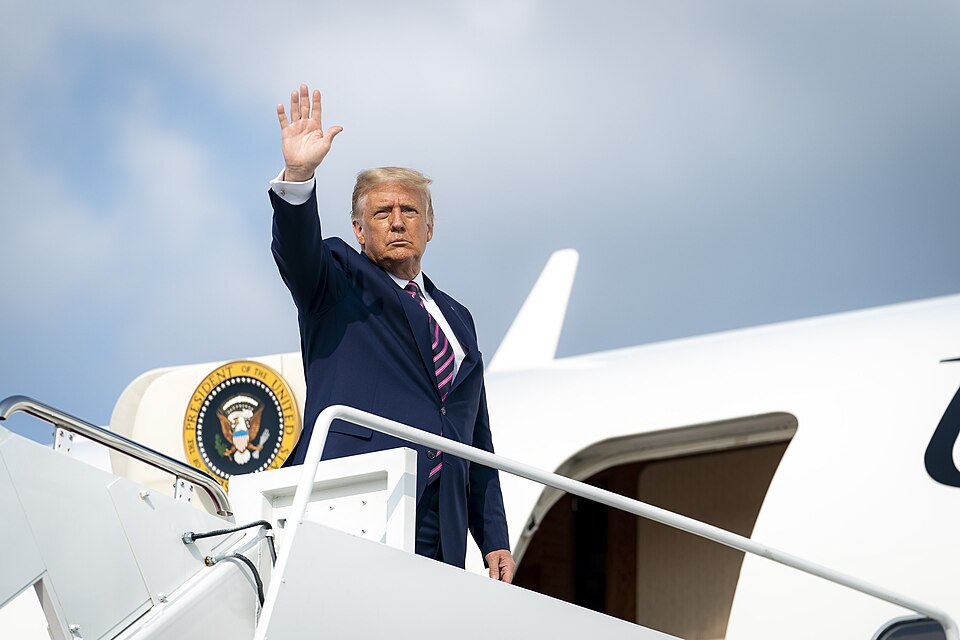
President Donald Trump has received one of the most unusual international honors of his political career.
Morocco officially named a major highway after him, recognizing the foreign policy decision that reshaped U.S.-Morocco relations and helped pave the way for the historic Abraham Accords.
The newly designated Donald J. Trump Highway stretches more than 655 miles (1,055 kilometers) across Morocco and serves as one of the country’s most important transportation routes. The highway links southern Morocco with major trade corridors that connect businesses and commerce throughout Africa.
The announcement highlights Morocco’s appreciation for Trump’s 2020 decision to recognize Moroccan sovereignty over the disputed Western Sahara region—a move that dramatically strengthened diplomatic ties between Washington and Rabat.
Morocco Praises Trump’s Leadership
In a letter dated July 2, King Mohammed VI praised Trump’s leadership and said relations between the United States and Morocco reached unprecedented levels during his presidency.
The king wrote that although the two nations have enjoyed a longstanding friendship, cooperation became more productive than ever during Trump’s time in office.
As a lasting symbol of that partnership, King Mohammed VI announced that one of Morocco’s most significant highways would officially bear President Trump’s name.
The honor is rare for a foreign leader and reflects Morocco’s view that Trump’s policies fundamentally strengthened the relationship between the two countries.
Why The Highway Matters
The Donald J. Trump Highway connects Tiznit to Dakhla, an area Morocco considers part of its southern territory.
Beyond its symbolic significance, the roadway serves as a major economic corridor that supports trade, tourism, and transportation while linking Morocco to other African markets.
Officials view the route as a key piece of infrastructure that encourages regional commerce and long-term economic growth.
The Western Sahara Dispute
Western Sahara has remained one of the world’s longest-running territorial disputes.
Morocco maintains that the territory is an integral part of the kingdom, while the Polisario Front, backed by neighboring Algeria, supports the self-declared Sahrawi Arab Democratic Republic (SADR) and continues to seek independence.
The United Nations still classifies Western Sahara as a non-self-governing territory and has encouraged negotiations for decades in hopes of reaching a permanent political settlement.
Trump’s decision in 2020 marked a major shift in U.S. policy by formally recognizing Morocco’s sovereignty over the region.
The Abraham Accords Changed The Region
Trump’s recognition of Morocco’s claim to Western Sahara came as part of the Abraham Accords, the historic diplomatic agreements that normalized relations between Israel and several Arab nations.
Supporters argue the agreements helped improve stability in the Middle East while expanding economic cooperation and security partnerships among longtime U.S. allies.
The Morocco agreement became one of the signature achievements of the Abraham Accords and remains a defining moment of Trump’s foreign policy record.
Trump Reacts To The Honor
President Trump expressed his gratitude after learning about the highway dedication.
In a recent Truth Social post, Trump thanked King Mohammed VI for what he called a tremendous honor and said he hopes to visit Morocco and travel the full length of the highway in the future.
The announcement underscores the lasting impact of Trump’s diplomatic initiatives abroad, particularly in North Africa and the Middle East, where several governments continue to point to the Abraham Accords and strengthened bilateral relationships as significant milestones.
For supporters, Morocco’s decision to dedicate one of its most important highways to President Trump serves as a lasting symbol of the close partnership forged during his administration and the international recognition of one of its most consequential foreign policy achievements.