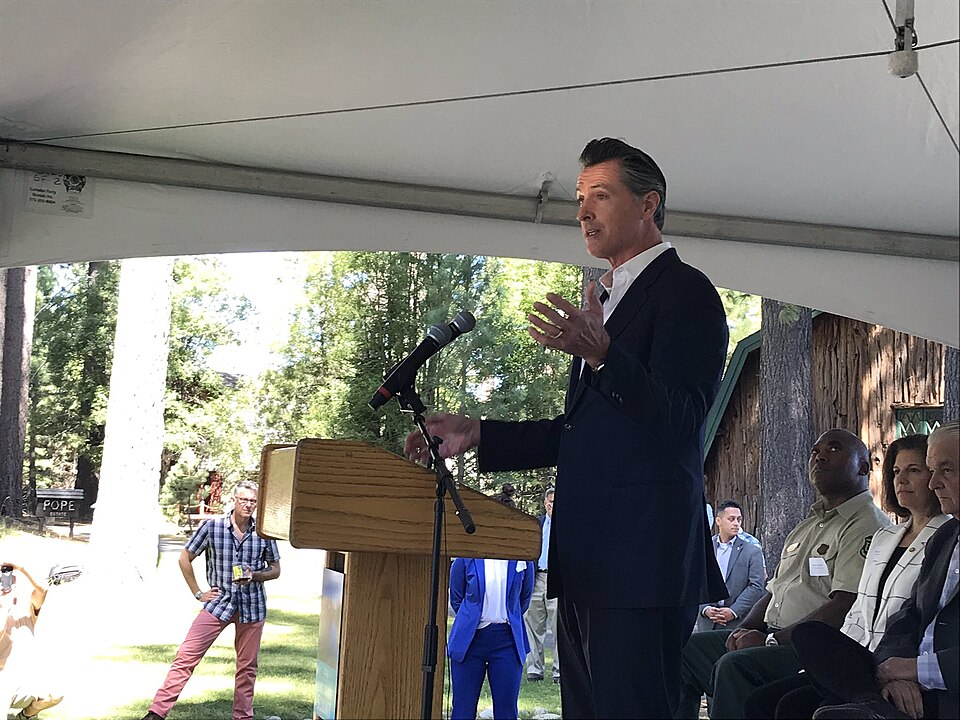
Newsom won’t be happy about this.
President Donald Trump’s administration is redirecting billions of dollars once committed to California’s controversial high-speed rail project, putting the money toward railroad safety, new Amtrak trains and infrastructure improvements across the United States.
But there is an interesting twist: California itself will receive more than $200 million from the broader federal rail package.
Transportation Secretary Sean Duffy announced a massive $5.3 billion investment in passenger rail and safety projects across 23 states. Roughly $2 billion of the package comes from federal money the Trump administration recovered after canceling unspent funding previously committed to California’s high-speed rail system.
The decision represents another major chapter in the long-running battle between the Trump administration and California Gov. Gavin Newsom over government spending, infrastructure and the future of the state’s costly bullet-train project.
Trump Administration Redirects Billions From California Rail Project
The Federal Railroad Administration will distribute $5.3 billion for 41 projects across the country, according to the Department of Transportation.
The money will be used to replace aging passenger trains, modernize locomotives, eliminate dangerous railroad crossings and improve critical rail infrastructure.
Duffy says the administration is prioritizing projects that can provide measurable safety and transportation benefits to American communities.
“It’s simple: Boondoggles are OUT and safety is IN,” Duffy said while announcing the funding.
The Transportation secretary specifically targeted Newsom’s high-speed rail program, which has faced years of criticism over its rising projected costs, construction delays and funding challenges.
Duffy argued that money previously tied to the California project can instead be used to address railroad crossings and other infrastructure needs across the country.
He also praised the administration’s new investment in Amtrak, saying President Trump wants to improve passenger rail service while demanding greater accountability over how taxpayer money is spent.
Newsom Team Pushes Back Against Trump Administration
Newsom’s office wasted little time responding.
A spokesperson accused Duffy of having “California Derangement Syndrome” and argued that Newsom is building a transportation network intended to serve the future needs of one of the world’s largest economies.
The governor’s team also criticized Duffy for highlighting projects that received funding through infrastructure legislation enacted under former President Joe Biden.
The heated exchange reflects the larger political rivalry between Trump and Newsom, but underneath the rhetoric is a serious debate over billions of dollars in taxpayer-funded infrastructure spending.
Why Trump Administration Canceled California Funding
The latest announcement follows a major decision made in July 2025, when the Federal Railroad Administration terminated roughly $4 billion in unspent federal funding for California’s high-speed rail project.
Federal officials determined that the California High-Speed Rail Authority was not meeting obligations connected to its federal grant agreements.
The administration said terminating the funding would protect taxpayers and allow Washington to consider putting the money toward other transportation priorities.
Now, roughly $2 billion of that money is being directed toward other passenger rail and safety projects.
For the Trump administration, the move provides an opportunity to contrast its transportation priorities with California’s handling of its high-speed rail system.
$2 Billion Going Toward New American-Made Amtrak Trains
One of the largest portions of the new funding package will modernize Amtrak’s aging passenger rail fleet.
The federal government is investing approximately $2.05 billion to purchase 43 new American-made Amtrak trainsets.
The trains will replace aging equipment operating on heavily traveled routes across the country.
Another $140 million will be spent overhauling 41 Amtrak locomotives serving Midwest and Pacific routes.
The administration says the new equipment should improve passenger service while replacing trains and locomotives that have been operating for decades.
For Americans concerned about domestic manufacturing, the administration is also emphasizing that the 43 replacement trainsets will be made in the United States.
Hundreds Of Millions Going Toward Dangerous Rail Crossings
A significant portion of the money will address highway-rail crossings, where accidents can result in serious injuries and deaths.
Florida is receiving $356 million for repairs and improvements covering as many as 910 highway-rail crossings.
North Carolina will receive $299 million to eliminate nine grade crossings, construct sections of double track and support efforts aimed at preventing people from illegally entering railroad property.
Texas is set to receive $189 million to remove nine railroad crossings across Fort Worth, Dallas, and Terrell.
Hays County, Texas, is receiving an additional $39 million for a grade-separated bridge.
Fairfield, Ohio, will receive $40 million to close two existing rail crossings and build a bridge over a CSX rail line.
New Orleans will receive $2.5 million for repairs to aging platforms and canopies at the New Orleans Union Passenger Terminal.
Crete, Nebraska, meanwhile, will receive $1.1 million to examine eight at-grade crossings and determine what safety improvements may be necessary.
California Gets More Than $200 Million Despite Trump-Newsom Fight
Although the administration canceled billions connected to California’s high-speed rail system, the state is still receiving substantial federal rail funding.
More than $200 million will go toward three California projects focused on passenger rail infrastructure and safety.
The largest award is approximately $124.4 million for the Eastbrook-to-Shell Double Track project.
The funding will be used to design and build an additional section of double track, replace a bridge, enhance pedestrian infrastructure, and improve rail-crossing safety in Oceanside, Marine Corps Base Camp Pendleton, and surrounding areas.
The project forms part of a larger effort to double-track portions of the LOSSAN Corridor, an important passenger rail route in Southern California.
Another $43 Million Heading To California Rail Project
The Cherry Avenue Grade Separation project in Shafter will receive approximately $43 million.
Funding will support development, final design, property acquisition and construction needed to separate the existing BNSF-owned railroad crossing at Cherry Avenue.
The project is expected to benefit Amtrak’s San Joaquin passenger rail service.
Another $33.6 million is going toward railroad safety improvements in Encinitas.
Those upgrades cover approximately six miles of the LOSSAN Corridor and include new vehicle and pedestrian gates at three crossings.
Plans also call for closing one pedestrian crossing, adding two pedestrian and bicycle crossings and constructing a new pedestrian and bicycle undercrossing.
Railroad Crossing Deaths Remain A National Problem
The administration says safety concerns played an important role in determining which projects received federal funding.
California recorded 46 grade-crossing fatalities in 2025.
Across the United States, more than 2,000 incidents occur at railroad crossings annually, resulting in roughly 200 deaths.
The Federal Railroad Administration placed particular emphasis on crossings with troubling accident histories when evaluating projects.
Overall, the $5.3 billion package is expected to close more than 30 grade crossings and improve more than 1,000 others.
That means the political battle over California’s high-speed rail project is now translating into infrastructure changes affecting drivers, railroad passengers and communities thousands of miles away.
California High-Speed Rail Still Moving Forward
California officials have not abandoned the high-speed rail project.
Construction continues in the Central Valley, where approximately 80 miles of guideway and 58 major structures have been completed.
The project is also moving toward track installation as state officials attempt to advance the first operating segment.
But substantial financial questions remain.
An inspector general warned of an estimated $9.5 billion funding gap and raised concerns that the project could run short of money by late 2027 without additional financing or borrowing.
California is currently targeting passenger service around 2033 for the planned 171-mile route connecting Merced and Bakersfield.
That is a far more limited system than the sweeping statewide high-speed rail network originally envisioned.
Trump And Newsom Clash Over Taxpayer Spending
The funding battle ultimately comes down to two very different visions for transportation spending.
Newsom and California officials argue that high-speed rail is a long-term investment that could transform transportation in the state. They point to construction already completed in the Central Valley as evidence that the project is making progress.
Trump administration officials argue that taxpayers deserve faster and more measurable results from federal transportation spending.
Duffy has repeatedly criticized California’s high-speed rail project over its cost increases, delays and funding problems, while presenting the administration’s new nationwide rail investments as an alternative approach.
The demand for federal rail money is substantial.
The Federal Railroad Administration received 103 eligible applications seeking more than $11.6 billion through the National Railroad Partnership Program — more than twice the amount ultimately awarded.
Billions Redirected As Trump Changes Rail Priorities
The bottom line is that billions of dollars once associated with California’s high-speed rail ambitions are now being put toward projects across the country.
The $5.3 billion package includes $2.05 billion for 43 new American-made Amtrak trainsets, $140 million for locomotive overhauls and hundreds of millions more for railroad crossing and infrastructure projects.
Even California will receive more than $200 million for separate rail improvements.
For Trump and Duffy, the announcement is an opportunity to make a broader argument about fiscal responsibility: taxpayer money should be directed toward projects the administration believes can deliver clear safety and transportation benefits.
For Newsom, it is another front in his continuing fight with the Trump administration and another challenge for California’s ambitious high-speed rail plans.
With billions of taxpayer dollars at stake, the dispute is about much more than trains. It raises a question Americans have debated for decades: What should taxpayers expect in return when Washington spends billions of their dollars on major infrastructure projects?