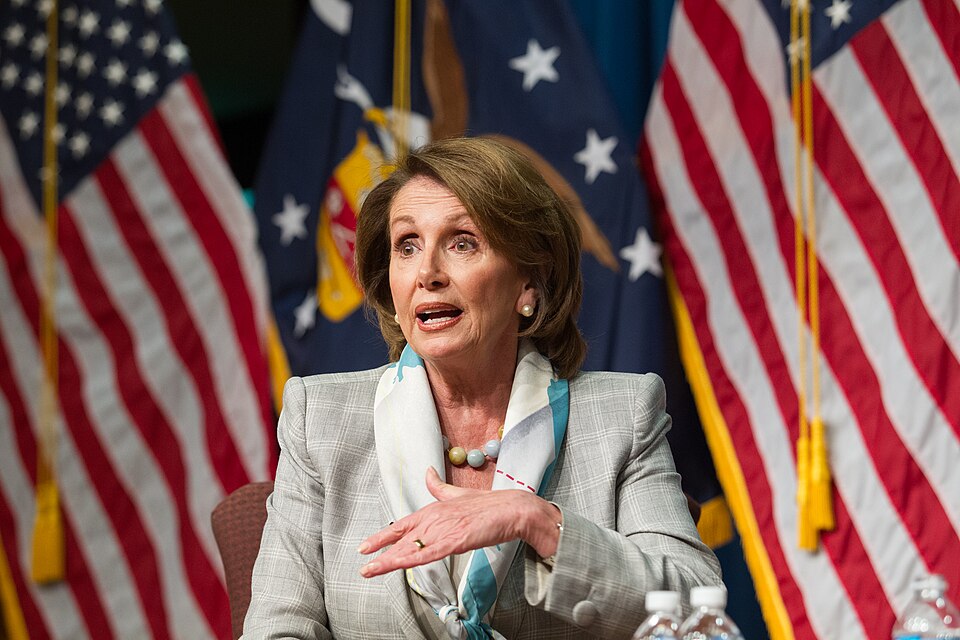
Does the Democrat Party have a new Nancy Pelosi?
Rep. Ro Khanna has emerged as one of the Democratic Party’s most vocal advocates for taxing billionaires.
But now the wealthy California congressman is facing scrutiny of his own after financial disclosures revealed an eye-popping amount of stock-market activity involving his family’s trusts.
The numbers are enormous.
Khanna’s family trusts reported 5,402 trades in 2025, with transactions taking place during nearly every active trading day of the year.
Altogether, the disclosures showed as much as $165.4 million in total trading volume, including up to $70.6 million in sales involving stocks and other investments.
The activity is now drawing comparisons to another famous California Democrat: Nancy Pelosi.
Khanna’s Family Trusts Made Thousands Of Trades
According to Khanna’s latest financial disclosure, his family trusts were remarkably active in the market throughout 2025.
The reported 5,402 transactions occurred during 244 active trading days.
That works out to an average of more than 22 trades per trading day on the days when transactions occurred.
The activity also increased from the previous year.
In 2024, Khanna reported approximately $137 million in total trading volume, including just under $50 million in securities sales.
For 2025, the disclosed trading volume climbed as high as $165.4 million.
The sheer scale of the activity is putting a new spotlight on Khanna at a time when congressional stock trading remains a major concern for many Americans.
Is Ro Khanna The ‘New Pelosi’?
Nancy Pelosi and her husband, Paul Pelosi, have faced years of public scrutiny over their investment activity.
Now Khanna is finding himself under a similar microscope.
One reason is his family’s exposure to the booming artificial-intelligence industry.
Among the investments attracting attention is Nvidia, the semiconductor giant that has become one of the biggest beneficiaries of America’s artificial-intelligence boom.
Khanna previously disclosed that his wife’s trust purchased Nvidia shares, with some investments producing substantial gains as the company’s stock price soared.
That is particularly noteworthy because Khanna represents Silicon Valley, home to some of America’s most powerful technology companies.
There is no evidence presented by the disclosures themselves that Khanna used nonpublic information to direct those trades.
Khanna also insists he does not control the investments.
Khanna Says He Has No Control Over The Trades
Khanna has pushed back against suggestions that he personally makes his family’s investment decisions.
He says the assets belong to trusts established by his wife’s family and are independently managed.
“My household’s only investments are held in a diversified trust my in-laws set up before marriage for my wife and children, managed independently by a third-party trustee,” Khanna has explained.
He has separately said he has “zero say” and “zero knowledge” regarding trades made within the trusts.
That distinction is important.
The financial disclosures show investment activity connected to Khanna’s household, but they do not establish that Khanna personally selected or executed the trades.
Khanna has also supported efforts to restrict members of Congress from trading individual stocks.
Still, the staggering volume of transactions is giving critics plenty to talk about.
Khanna’s Family Wealth Draws Attention
Khanna entered Congress in 2017.
At the time, financial disclosure data placed his estimated net worth somewhere between approximately $29 million and $78 million.
By the end of 2025, estimates based on his disclosures put that range at roughly $69 million to $167 million.
Those figures are estimates because congressional disclosure rules generally require lawmakers to report assets within ranges rather than provide exact values.
Much of the family’s wealth reportedly originates with Khanna’s in-laws, who built a fortune in the automotive-parts industry.
The trusts benefiting Khanna’s wife and children hold substantial investments.
According to Khanna’s 2025 disclosure, the family received as much as $10.8 million in dividends and business distributions during the year.
A Multimillion-Dollar Lifestyle
Khanna’s considerable family wealth has also attracted attention because of his political message.
The Washington Free Beacon reported that Khanna’s family owned an approximately 8,000-square-foot Washington, D.C., home valued around $6 million.
The property reportedly featured a four-story elevator and two laundry rooms.
His children are also beneficiaries of trusts with ownership interests in three private golf clubs in Ohio, according to the report.
None of that is inherently improper.
But critics argue that the congressman’s considerable wealth deserves additional scrutiny when viewed alongside his campaign to impose higher taxes on some of America’s wealthiest citizens.
And that brings the controversy directly into politics.
Khanna Backs California’s Billionaire Tax
Khanna has become an outspoken supporter of California’s proposed billionaire wealth tax.
The ballot initiative would impose a one-time 5% tax on certain billionaire wealth.
Supporters say billionaires who have accumulated extraordinary fortunes should contribute more toward public services and programs.
Opponents warn that a wealth tax could encourage entrepreneurs and investors to leave California, potentially taking businesses, jobs and tax revenue with them.
The proposal has already generated fierce opposition from parts of Silicon Valley.
For Khanna, however, the debate has become more personal.
Critics are asking how a politician associated with tremendous family wealth can simultaneously become one of the country’s most prominent voices for aggressively taxing the rich.
Mark Cuban Pushes Back
Billionaire entrepreneur Mark Cuban has publicly clashed with Khanna over the California proposal.
Khanna suggested a mechanism that could allow certain billionaires without enough available cash to satisfy the tax through arrangements involving ownership shares in their companies.
Cuban strongly criticized the idea and warned about its potential consequences for entrepreneurs and businesses.
The disagreement illustrates a growing divide between Khanna and some wealthy members of the technology community he represents.
Khanna argues that America’s wealthiest citizens have a responsibility to contribute more.
Opponents argue that policies like California’s proposed wealth tax could punish investment and encourage capital to flee the state.
Critics See A Political Contradiction
Khanna’s opponents have seized on the contrast.
On one side is a progressive congressman advocating higher taxes on billionaires and speaking frequently about economic inequality.
On the other is a household associated with tens of millions of dollars in investments, thousands of annual trades and substantial passive income.
Critics call that hypocrisy.
Khanna’s defense is straightforward: the wealth largely comes from his wife’s family, the assets are held in trusts, and professional managers — not Khanna himself — make the trading decisions.
Those competing arguments are likely to follow him as his national political profile continues to grow.
Congressional Stock Trading Isn’t Going Away
The controversy also highlights a much larger problem facing Washington.
Americans have spent years questioning whether members of Congress and their families should be permitted to trade individual stocks while lawmakers routinely receive sensitive briefings and vote on legislation capable of moving financial markets.
Politicians from both parties have proposed restrictions.
Yet the issue remains unresolved.
Khanna himself has supported restrictions on congressional stock trading, which makes the enormous amount of activity disclosed by his family trusts particularly notable.
Whether the trades were independently managed or not, critics argue that the situation demonstrates why Congress needs clearer rules that leave less room for public suspicion.
Another California Democrat Faces Stock-Market Scrutiny
For years, Pelosi was the name most closely associated with congressional stock-trading controversy.
Now Khanna is facing some of the same uncomfortable questions.
His family’s trusts reported more than 5,400 trades in a single year and as much as $165.4 million in trading volume, all while Khanna champions a political agenda that includes higher taxes on billionaires.
Khanna maintains that he does not direct the trades and that the investments are independently managed.
But in politics, appearances can matter almost as much as explanations.
And as the debate over wealth, taxes and congressional stock trading intensifies, Democrats may have found themselves a new name at the center of the controversy.