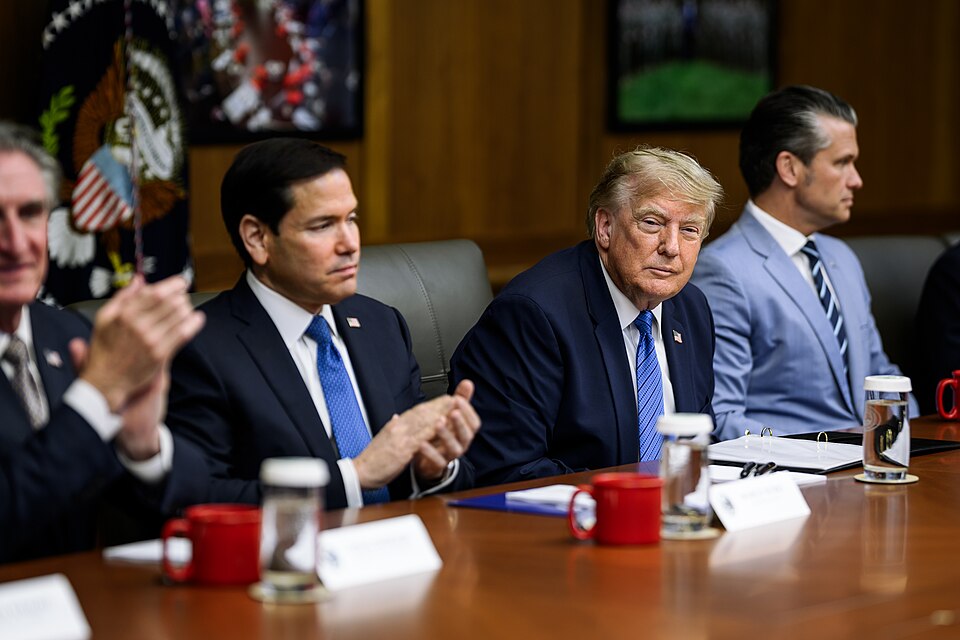
President Donald Trump delivered a new warning to the Federal Reserve on Friday, demanding lower interest rates after a stronger-than-expected August jobs report showed continued strength in the U.S. labor market.
The latest numbers immediately intensified the debate over interest rates, inflation and the direction of the American economy — issues that directly affect mortgages, credit cards, auto loans, businesses and household budgets.
According to the Bureau of Labor Statistics, the U.S. economy added 162,000 jobs in August while the unemployment rate remained unchanged at 4.1%.
The employment gain came in well above economists’ expectations and provided fresh evidence that employers are still hiring despite higher borrowing costs and persistent inflation.
Trump quickly celebrated the report.
Trump celebrated the latest employment figures on Truth Social, saying the results dramatically exceeded expectations and predicting that even stronger economic numbers are still to come.
But the president also used the strong report to renew his pressure campaign against the Federal Reserve.
Trump argued that America’s economic strength should allow the central bank to lower interest rates, potentially reducing borrowing costs for consumers and businesses.
“A STRONG COUNTRY MEANS A LOWER INTEREST RATE – IT’S A BETTER CREDIT,” Trump wrote.
Trump Raises The Stakes With Trade Warning
Trump went considerably further than simply calling for lower rates.
The president threatened to halt trade with countries where the United States runs trade deficits if the Federal Reserve does not lower interest rates.
“LOWER THE RATE OR I’LL STOP TRADING WITH COUNTRIES WITH WHICH WE HAVE A DEFICIT,” Trump wrote.
The United States runs trade deficits with numerous major trading partners, making such a move potentially significant for the American and global economies.
Trump argued that America’s massive consumer market gives Washington substantial negotiating power with countries that sell more goods to the United States than they purchase from it.
“IT’S BETTER THAN TARIFFS!” Trump wrote.
He also argued that high interest rates put American businesses and consumers at a disadvantage compared with countries where borrowing costs are lower.
Trump expanded on his position while speaking to reporters in the Oval Office later Friday.
“We could do tremendous good for ourselves by just not trading with countries,” Trump said.
The president specifically discussed America’s trading relationships with Canada, Mexico and the European Union while arguing that the United States could use access to its market as economic leverage.
Trump has frequently used tariffs and the possibility of trade restrictions as negotiating tools. Whether the latest threat results in actual restrictions remains to be seen.
Strong Jobs Report Creates A Fed Dilemma
There is one major complication for Trump’s demand: The strong employment report could give Federal Reserve officials another reason not to lower interest rates.
The Federal Reserve is working to bring inflation down without putting undue pressure on jobs or slowing the broader economy more than necessary.
The Consumer Price Index was 3.4% higher in July than a year earlier. Although inflation has declined from previous highs, it remains above the Federal Reserve’s 2% longer-run target.
A strong labor market can give policymakers more room to keep borrowing costs elevated while they focus on bringing inflation under control.
The August employment report therefore presents an unusual situation.
Trump sees America’s economic strength as justification for lower rates.
Federal Reserve policymakers could look at the same economic strength and conclude that the economy can tolerate higher rates while inflation remains elevated.
That disagreement could become increasingly important as the central bank considers its next move.
Kevin Warsh Keeps Focus On Inflation
Federal Reserve Chairman Kevin Warsh has recently emphasized the importance of price stability.
“The Fed’s predominant focus right now should be on prices,” Warsh said at the central bank’s annual gathering in Jackson Hole, Wyoming.
Warsh also warned about the consequences for ordinary Americans when policymakers fail to properly judge inflation or employment conditions.
Those concerns are particularly relevant because inflation can reduce household purchasing power even when the broader economy continues creating jobs.
The Federal Reserve must therefore balance two major objectives: maintaining a healthy labor market while bringing inflation under control.
Friday’s jobs report suggests the employment side of that equation remains relatively strong.
Why Interest Rates Matter To American Families
The dispute between Trump and the Federal Reserve may sound like a Washington policy battle, but interest rates have real consequences for millions of households.
Federal Reserve policy can influence borrowing costs throughout the economy.
Higher rates can contribute to more expensive mortgages, home-equity borrowing, credit-card debt, auto financing and business loans.
For retirees and savers, however, higher rates can also mean better returns on certain savings accounts, certificates of deposit and other interest-bearing investments.
Lower rates can reduce borrowing costs and potentially encourage investment, housing activity and economic growth. But cutting rates while inflation remains elevated can carry risks if easier financial conditions contribute to renewed price increases.
That is why the Fed’s decision matters well beyond Wall Street.
Inflation Remains The Biggest Obstacle
Inflation continues to complicate the case for lower interest rates.
Consumer prices were 3.4% higher in July than they were one year earlier. Energy costs were particularly elevated, while food prices also remained higher than a year before.
For households already dealing with higher grocery, utility, insurance and transportation expenses, the direction of inflation remains an important economic concern.
The Federal Reserve has repeatedly emphasized price stability as a central part of its mission.
Trump, meanwhile, argues that maintaining high interest rates creates its own economic burden by increasing financing costs for households, businesses and the federal government.
The disagreement boils down to a difficult question: How long should Americans tolerate higher borrowing costs in an effort to bring inflation down?
What Happens Next?
Financial markets reacted quickly to the August employment numbers.
The stronger labor report increased expectations that the Federal Reserve could maintain higher rates or potentially raise them rather than deliver the reduction Trump is demanding.
That makes the central bank’s next policy decision even more closely watched.
Trump has made his preferred outcome clear.
“We should have the LOWEST RATE of any country in the World, like ‘the old days,’” the president wrote.
Federal Reserve officials must now weigh that political pressure against the economic data in front of them.
With 162,000 jobs added in August, unemployment holding at 4.1%, and inflation still running above the Fed’s target, policymakers face a consequential decision.
For Americans watching mortgage rates, credit-card bills, savings accounts, retirement income and everyday prices, the outcome could ultimately matter far more than the political battle surrounding it.