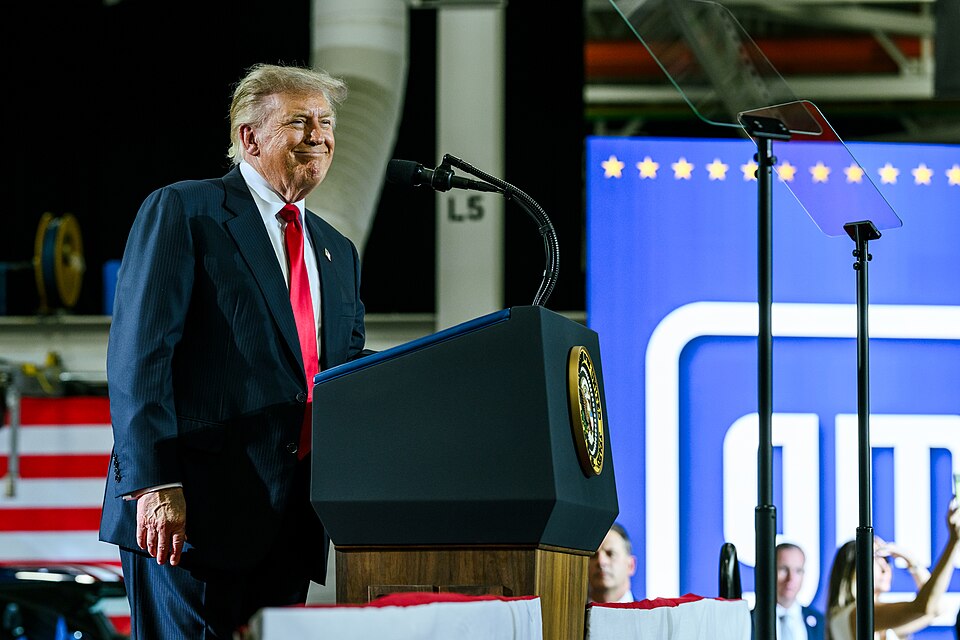
The mainstream media isn’t raving about this. Maybe because it makes Trump look good.
A closely watched report on the U.S. labor market delivered surprisingly strong numbers this week, giving the Trump administration a favorable economic headline as Americans continue watching jobs, inflation and the cost of living.
New applications for unemployment benefits fell sharply to 196,000 for the week ending September 12, according to the latest figures from the U.S. Department of Labor.
That was a decline of 10,000 claims from the previous week’s 206,000 and marked the lowest level since mid-July.
The four-week moving average, which economists often use to smooth out short-term fluctuations, also moved lower to 203,250.
Those figures suggest layoffs remain relatively limited across the U.S. economy.
Jobless Claims Deliver Better-Than-Expected News
Weekly unemployment claims are one of the economic indicators analysts watch for early signs of weakness in the labor market.
When claims rise sharply for an extended period, it can indicate that employers are cutting more workers. When claims remain low, it generally suggests businesses are continuing to hold onto employees.
The latest report therefore provides an encouraging signal for millions of Americans concerned about job security.
The Department of Labor reported that the four-week average declined by 2,750 from the previous week’s level, reinforcing the broader trend of comparatively low layoffs.
American Workers Are Holding Onto Their Jobs
The labor market has faced a complicated economic environment throughout 2026.
Consumers and businesses have dealt with elevated energy costs, inflation concerns, changing interest rates and uncertainty surrounding international conflicts.
Despite those pressures, employers have so far avoided widespread layoffs.
That may partly reflect lessons businesses learned during the labor shortages that followed the pandemic. Companies that struggled to find qualified employees during that period may now be more reluctant to reduce their workforces unless absolutely necessary.
As a result, the American job market has increasingly developed a distinctive pattern: companies are not necessarily hiring at the extraordinary pace seen after the pandemic, but they are also not firing workers in large numbers.
A Positive Economic Number For Trump
For President Donald Trump, the report provides a positive economic data point at a politically important moment.
Jobs and the cost of living remain among the economic issues closely watched by American households.
Low unemployment claims do not mean every part of the economy is strong, and a single weekly report should not be viewed in isolation.
Reuters noted that seasonal complications surrounding the Labor Day holiday may have contributed to the unusually sharp decline in claims. Even so, the broader data continue to show a labor market characterized by relatively low layoffs.
That distinction matters.
The latest figures do not show an economy suddenly entering a hiring boom. Instead, they suggest that employers remain hesitant to let existing workers go.
For families depending on steady paychecks, that is an important difference.
Hiring Remains More Cautious
While layoffs remain limited, hiring has been considerably slower than during the post-pandemic recovery.
Businesses have generally taken a more cautious approach toward adding workers, reflecting uncertainty over borrowing costs, inflation, consumer demand and global economic conditions.
That means two things can be true at once:
The United States can have relatively few layoffs while still experiencing slower job creation.
Understanding that distinction provides a more complete picture of the labor market than focusing on any single economic statistic.
Why Unemployment Claims Matter
Initial unemployment claims measure how many people are newly applying for state unemployment benefits.
Economists pay close attention to the report because it is released every week, making it one of the most frequent snapshots available of conditions in the American workforce.
A sustained surge in claims can provide an early warning that businesses are beginning to cut jobs.
A sustained period of low claims, meanwhile, generally indicates employers are retaining their workers.
That is why Thursday’s reading attracted attention.
At 196,000 claims, the latest number remains low by historical standards and continues a pattern of relatively limited layoffs.
What It Means For American Families
Economic statistics can often seem disconnected from everyday life, but unemployment claims have a direct connection to household finances.
For most families, maintaining stable employment is one of the most important factors in managing mortgage payments, groceries, utility bills, health expenses and retirement savings.
A labor market in which employers continue holding onto workers can therefore provide an important layer of financial stability—even when consumers are dealing with higher prices elsewhere in the economy.
That does not eliminate concerns about inflation or household expenses.
It does, however, mean that widespread layoffs have not emerged as another major pressure on American families.
What To Watch Next
One weekly report cannot determine where the economy is headed.
Economists will continue watching several key indicators in the months ahead, including:
- Monthly job creation
- The national unemployment rate
- Weekly unemployment claims
- Wage growth
- Inflation
- Consumer spending
- Interest rates
- Gasoline and energy prices
If unemployment claims remain near current levels, it would suggest employers are continuing to retain workers.
A sustained increase, however, could indicate that businesses are becoming more cautious.
For now, the latest government figures provide a clear takeaway: new unemployment claims dropped to their lowest level since mid-July, while the broader trend continues to point toward relatively limited layoffs.
For American workers worried about the stability of their jobs, that is welcome economic news.