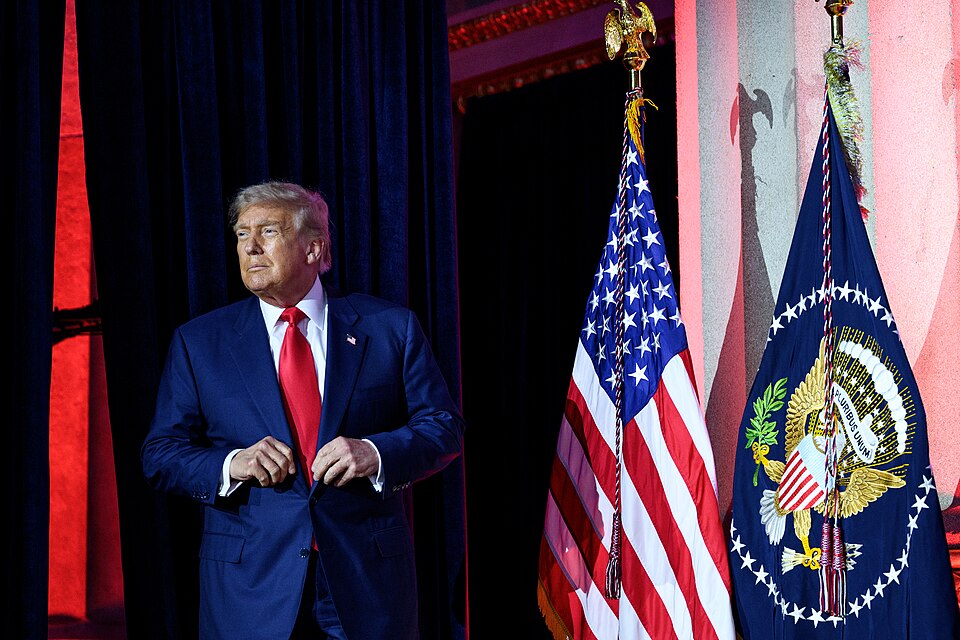
Trump Considering Travel Limits
The Trump administration is considering new restrictions on Cuban government officials traveling to New York for United Nations business, adding another layer of tension to the long-running dispute between Washington and Havana.
The State Department is reportedly weighing tighter controls on Cuban representatives expected to return to New York for an upcoming U.N. vote on the longstanding U.S. economic embargo against Cuba.
No final decision has been announced, but the proposal comes as the administration increases economic and diplomatic pressure on Cuba’s communist government.
Trump Administration Steps Up Pressure on Cuba
The possible travel restrictions are part of a broader effort by the Trump administration to push Havana toward political and economic change.
President Donald Trump used his recent address to the United Nations to criticize Cuba’s government and call for major changes on the island.
Trump described Cuba as a “failed state” and said his administration was seeking a fundamental change in the country’s direction.
He also told the U.N. that communism would not come to the United States and that freedom would eventually come to Cuba.
The remarks reflected the administration’s continued hard-line approach toward Havana.
Cuban Government Blasts U.S. Sanctions
Cuban Foreign Minister Bruno Rodríguez strongly criticized the latest U.S. policies during his visit to New York for the U.N. General Assembly.
Rodríguez argued that American economic and energy restrictions are harming ordinary Cuban citizens and making the country’s economic crisis worse.
He also criticized what he described as a lack of progress in talks between Havana and Washington.
The Cuban government has been especially critical of restrictions affecting its access to fuel.
Rodríguez said the policies have created severe economic pressure and compared the restrictions to a blockade.
U.S. officials, however, have defended tougher measures as part of a broader strategy aimed at pressuring Cuba’s government to make political and economic reforms.
Cuba Faces Serious Power and Energy Problems
The diplomatic dispute comes as Cuba continues to struggle with major electricity shortages and an aging power system.
The country’s electrical grid has suffered repeated failures, leaving large numbers of residents without reliable power.
Fuel shortages have added to the problem because many of Cuba’s power plants depend on imported energy supplies.
Much of the country’s electricity infrastructure is also old and in need of repairs, replacement parts and additional investment.
Extended power outages can affect everyday activities including cooking, water service, transportation, businesses, internet access and telephone service.
The worsening energy situation has become one of the most serious challenges facing the Cuban government.
Washington and Havana Remain Far Apart
Despite the increasingly tense public relationship, Rodríguez said Cuba remains open to communication with the United States.
He said previous discussions with American officials had at times been respectful, even though public statements and policy decisions from Washington have remained highly critical of Havana.
There are currently no publicly announced meetings between Rodríguez and senior U.S. officials.
That leaves the future of direct negotiations uncertain.
Cuba Expands Its Private Sector
Cuba has also introduced economic reforms that allow greater participation by privately owned businesses.
For decades, Cuba’s economy was dominated by state-controlled companies and government institutions.
The expansion of private enterprise represents a significant change, although Cuban officials say the reforms are being made because of the country’s own economic needs rather than pressure from Washington.
The changes nevertheless move parts of the Cuban economy in a direction that U.S. officials have encouraged for years.
Whether those reforms will improve relations between the two countries remains unclear.
New Restrictions Could Affect U.N. Visit
The immediate disagreement now centers on Cuba’s planned participation in an upcoming United Nations vote regarding the U.S. economic embargo.
Cuban diplomats already face significant travel restrictions while visiting the United States.
Their movements are generally limited in and around New York because of the difficult diplomatic relationship between the two countries and Washington’s designation of Cuba as a state sponsor of terrorism.
Additional restrictions could make it more difficult for Cuban officials to participate in future U.N. events, depending on the final rules approved by the State Department.
U.N. Has Repeatedly Criticized the U.S. Embargo
The United Nations General Assembly has held votes on the U.S. embargo against Cuba for more than three decades.
Historically, large majorities of participating countries have supported resolutions criticizing the American policy.
The resolutions are not legally binding.
That means the United Nations cannot force the United States to change its sanctions or trade policies.
Instead, the votes serve as a public measure of where U.N. member governments stand on the issue.
Some Countries Have Changed Their Position
Although the United States has often found itself in a small minority during previous U.N. votes on Cuba, some countries have recently taken a different position.
Governments including Argentina, Ukraine and Hungary have opposed Cuban-backed resolutions criticizing the U.S. embargo.
Cuban officials have accused Washington of encouraging allied governments to vote against the measures.
The United States has rejected that criticism and argued that democratic governments should not support policies backed by Havana.
U.S.-Cuba Relations Enter Another Difficult Period
The latest dispute highlights the fundamental disagreement that has shaped relations between the United States and Cuba for decades.
The Trump administration argues that economic and diplomatic pressure can encourage greater political and economic freedom on the island.
Cuba’s government argues that American sanctions damage the country’s economy and place additional hardship on ordinary citizens.
Those competing views are likely to remain at the center of future negotiations between Washington and Havana.
The possible new restrictions on Cuban officials attending United Nations events could become the next major test in the relationship.
For now, both governments remain far apart on sanctions, economic policy and Cuba’s political system.
And with Cuba still facing serious economic and energy problems, U.S.-Cuba relations are likely to remain a significant foreign policy issue in the months ahead.