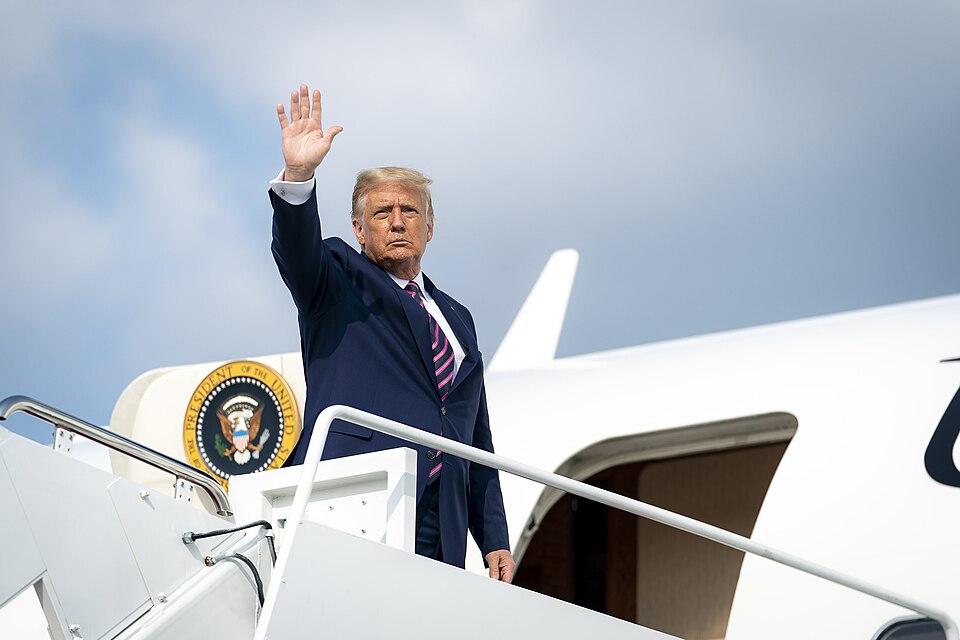
President Donald Trump had a tense exchange with a White House reporter Saturday after she repeatedly questioned him about restrictions involving several major news organizations.
The confrontation unfolded as Trump prepared to travel to Tennessee for a college football game. MS NOW White House reporter Akayla Gardner asked the president whether he wanted only media outlets that supported him participating in the presidential press pool.
Trump rejected that suggestion and quickly pushed back.
“No, no, no,” Trump responded, before saying he wanted what he considers “real news” rather than “fake news.”
The president then defended his position on press freedom while sharply criticizing CNN and MS NOW.
“I love an open, free press,” Trump said.
But the conversation grew increasingly tense when Gardner pressed him on whether he was willing to face difficult questions.
“Do you not want tough questions, sir?” she asked.
Trump interrupted her.
“Wait, wait. Quiet,” he responded before continuing his criticism of news organizations whose coverage he considers unfair.
The exchange highlighted an escalating battle between the Trump White House and several national media organizations over presidential access, press credentials and the role of the White House press pool.
Trump Pressed Over CNN Exclusion
Gardner’s question came after CNN was excluded from covering Trump’s Saturday departure.
LindellTV, which is owned by longtime Trump ally Mike Lindell, and Real America’s Voice were designated as secondary television pool outlets for the day, according to Gardner’s account.
Gardner explained that the regular television pool involves ABC, NBC, CBS, Fox and CNN.
CNN did not provide the planned coverage of Trump’s departure because the network was barred from covering his travel that day, Gardner said.
The controversy comes only days after Trump moved to restrict White House access for CNN, MS NOW and Politico.
The president has repeatedly accused the three organizations of publishing inaccurate or unfair coverage. Those accusations represent Trump’s characterization of their reporting.
Trump Says He Supports a Free Press
Gardner directly challenged Trump over whether the restrictions were connected to favorable or unfavorable coverage.
“Do you only want outlets that support you to be a part of the press pool?” she asked.
Trump said no.
He argued instead that his objection concerned what he describes as inaccurate reporting.
Trump specifically criticized CNN and MS NOW before declaring that he supports a free press.
Gardner then attempted to redirect the discussion toward whether the president objected to challenging questions.
Trump told her to be quiet and continued arguing that the organizations he was criticizing had treated him unfairly.
Gardner asked the question again.
Trump responded by claiming that the outlets had rarely produced positive coverage of him during the previous two years.
The full exchange underscored the distinction at the center of the dispute: Trump says his actions are about combating what he considers inaccurate journalism, while the affected news organizations argue that the administration is retaliating against them because of their reporting.
CNN, MS NOW and Politico Challenged White House Restrictions
Trump announced restrictions against CNN, MS NOW and Politico earlier in September, and reporters from those organizations were subsequently denied access to White House grounds.
The three news organizations filed a federal lawsuit challenging the move.
Their lawsuit argued that the administration violated constitutional protections by revoking access because Trump objected to their coverage.
The White House has defended its actions and maintained that access to certain presidential events and spaces can be restricted.
The dispute quickly became a significant press-freedom case because it raised questions about when the government may limit journalists’ access and whether officials can consider the content of an outlet’s reporting when making those decisions.
Judge Orders Credentials Temporarily Restored
The legal challenge produced an important development this week.
On September 24, U.S. District Judge Timothy Kelly temporarily ordered the White House to restore credentials for journalists from CNN, MS NOW and Politico.
Reporters from all three organizations were eventually allowed back onto White House grounds after initially encountering additional problems gaining entry following the court order.
That ruling did not end the broader legal dispute, but it restored access while the case continued.
The situation therefore remained unresolved when Gardner confronted Trump on Saturday.
Gardner Says Trump Pointed Toward Her
Gardner later described the encounter during an appearance with MS NOW host Jacob Soboroff.
She said Trump pointed toward her while criticizing what he called “fake news.”
Gardner interpreted the gesture as another indication that the president continued to object strongly to her network’s coverage.
She had also been among the journalists previously denied White House access during the administration’s attempt to restrict MS NOW, CNN and Politico.
Despite that earlier episode, Gardner was permitted to attend Saturday’s open press event and question Trump directly.
Trump’s Media Fight Shows No Sign of Disappearing
Trump has maintained a combative relationship with several major news organizations for years, frequently accusing outlets of treating him unfairly or publishing inaccurate information.
His critics argue that restricting access based on unfavorable reporting threatens the independence of the press.
Trump and his supporters counter that presidents have the right to challenge news organizations they believe are publishing misleading coverage and contend that criticism of the media is itself protected political speech.
The current dispute goes beyond verbal criticism because it involves access to the White House and presidential press operations.
That distinction is why the federal court battle is receiving significant attention.
A Heated Moment Captures the Larger Dispute
Saturday’s confrontation lasted only a short time, but it captured the central disagreement surrounding Trump’s latest fight with the media.
Gardner wanted to know whether outlets critical of the president were being excluded because of their coverage.
Trump insisted they were not being punished for asking difficult questions. Instead, he said his objection was to reporting he considers false.
When Gardner continued pressing him, the president told her to be quiet and returned to his criticism of CNN and MS NOW.
With the affected organizations back inside the White House following a federal court order, the immediate access dispute has changed.
But the larger confrontation between Trump and some of the country’s biggest news organizations appears far from over.