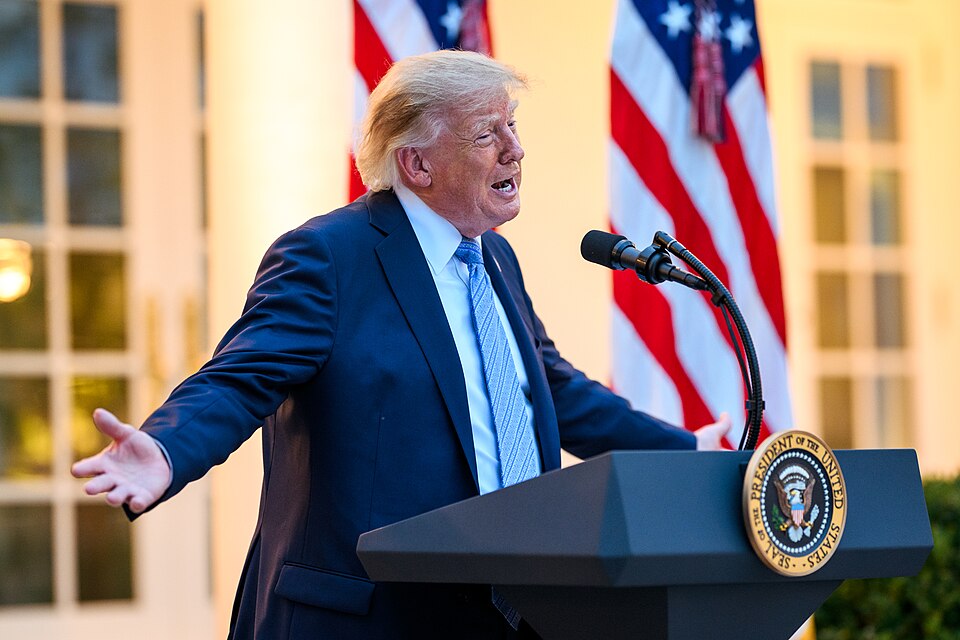
Here’s what Trump is planning.
The Trump administration is preparing to release millions more barrels of crude oil from America’s Strategic Petroleum Reserve as high gas prices, diesel costs and global energy disruptions continue putting pressure on American consumers.
The Department of Energy announced that private energy companies will be able to apply for loans of up to 40 million barrels of U.S. emergency oil from the Strategic Petroleum Reserve, better known as the SPR.
That does not mean the government is simply giving the oil away.
Under the program, companies that receive crude oil from the reserve must return oil to the federal government later — along with additional barrels as a premium.
The administration says the exchange is intended to increase oil supplies in the short term, help stabilize energy markets and eventually return more crude to America’s emergency stockpile than was originally released.
Why Is Trump Releasing More Oil From the Strategic Petroleum Reserve?
The latest release is part of a larger international effort to deal with energy market disruptions following the war involving Iran.
Earlier this year, the United States agreed to make 172 million barrels of oil available from the Strategic Petroleum Reserve as part of a coordinated agreement involving roughly 30 countries in the International Energy Agency.
Together, participating nations pledged to release approximately 400 million barrels of emergency petroleum supplies.
The United States previously offered this final batch of 40 million barrels, but energy companies agreed to borrow only a small portion of what was available.
The Trump administration is now offering the crude again as officials look for additional ways to increase supplies and address elevated gasoline and diesel prices.
Who Actually Gets the U.S. Oil?
The oil is being offered to qualifying energy companies through an exchange program administered by the Department of Energy.
Companies can submit proposals to borrow crude stored inside the Strategic Petroleum Reserve.
Those companies are then required to return oil to the government at a later date.
The agreements can also require borrowers to return additional crude beyond what they initially received.
That means the government is temporarily moving federally owned oil into the commercial energy market rather than permanently transferring the crude to private companies without compensation.
Trump Administration Pressures Europe Over Oil and Diesel Supplies
Energy Secretary Chris Wright has also criticized some European countries for failing to release as much emergency petroleum as they previously pledged.
According to Wright, the United States and Japan have fulfilled their commitments under the international agreement.
He said several European members of the International Energy Agency had released only a fraction of their promised oil and petroleum products.
The White House has also encouraged European governments to tap emergency diesel inventories as officials try to increase fuel supplies and ease pressure on global energy prices.
That issue is especially important because diesel prices affect far more than motorists.
Diesel fuel is widely used by trucking companies, farmers, construction firms and other businesses responsible for moving goods throughout the U.S. economy.
When diesel prices rise sharply, transportation and production costs can increase as well.
America’s Emergency Oil Reserve Has Fallen to Historic Lows
The latest oil exchange comes as the Strategic Petroleum Reserve sits near levels not seen in decades.
The SPR recently held fewer than 284 million barrels of crude oil, placing the emergency stockpile near its lowest level since 1982.
That decline has renewed questions about how much oil the United States should keep available for future national emergencies.
The Strategic Petroleum Reserve was created to protect the country from severe energy supply disruptions.
Presidents from both political parties have tapped the reserve during periods of war, geopolitical instability and major disruptions to global oil markets.
President Donald Trump has authorized large releases during the conflict involving Iran.
Former President Joe Biden also ordered major releases following Russia’s invasion of Ukraine in 2022.
Those actions have kept the future of the SPR at the center of the national debate over U.S. energy security, oil production and fuel prices.
Gas Prices Are Becoming a Major Economic Issue
The administration’s latest move comes as Americans continue dealing with sharply higher prices at the gas pump.
Gasoline prices are around $4.45 per gallon, according to the figures cited in the original reporting, while diesel prices have climbed to roughly $6.50 per gallon.
Those increases can have a significant effect on household budgets.
For Americans who drive to work, operate small businesses, own farms or rely on fixed retirement incomes, higher fuel costs can quickly become a major monthly expense.
Rising diesel prices can also affect the cost of groceries, shipping, construction materials and other everyday goods because transportation expenses are built into many consumer prices.
That makes energy prices closely connected to broader concerns about inflation and the cost of living.
Energy Prices Could Matter in the Midterm Elections
Fuel prices are also becoming a major political issue ahead of the November midterm elections.
Republicans are campaigning to maintain their narrow majorities in Congress, while Democrats are highlighting household costs and economic conditions.
For the Trump administration, bringing gasoline and diesel prices down could become an important part of its economic message.
The White House has emphasized domestic energy production, deregulation and increased oil supplies as key parts of its broader energy agenda.
The administration is now hoping that additional crude entering the market can help reduce some of the pressure created by the international conflict.
Is Trump Giving Away America’s Oil?
No.
The arrangement is structured as an oil exchange rather than a traditional giveaway.
Private energy companies receive crude from the Strategic Petroleum Reserve now and are required to return crude later.
In some cases, companies must return substantially more oil than they borrowed.
The Energy Department says previous SPR exchanges have generated significant premiums, meaning the government eventually received more barrels than it initially released.
Officials argue that this approach can provide additional oil to the market during a period of high prices while strengthening the reserve over the longer term.
What Does the Oil Exchange Cost Taxpayers?
The Energy Department says the exchange structure is designed to avoid additional costs for U.S. taxpayers.
Instead of purchasing replacement barrels directly with federal funds, the government requires participating energy companies to repay the oil they borrowed.
Those companies may also have to return additional barrels as part of their agreements.
Supporters of the strategy argue that this allows the government to respond to an immediate energy shortage without permanently reducing the SPR by the full amount released.
However, rebuilding the reserve takes time.
Some replacement barrels are not expected to be fully returned until late 2028.
Could the Strategic Petroleum Reserve Fall Too Low?
That question could become increasingly important.
Federal law places restrictions on certain routine SPR drawdowns once the reserve falls below approximately 252.4 million barrels.
The president can still authorize releases during qualifying national emergencies, but additional restrictions can apply to smaller, non-emergency drawdowns.
With the reserve already below 284 million barrels, another large release could move U.S. emergency oil supplies significantly closer to that threshold.
That creates a difficult balancing act for policymakers.
Releasing oil can increase supply and potentially ease fuel prices today.
Keeping oil underground, however, preserves more emergency capacity for future wars, hurricanes, supply shortages or other disruptions.
What Happens Next?
Energy companies have until October 6 to submit proposals to borrow oil under the latest Strategic Petroleum Reserve offering.
Companies selected by the Department of Energy could receive crude from federal storage facilities, placing additional U.S. oil into the commercial market.
The broader question is whether another 40 million barrels will be enough to make a noticeable difference in gasoline and diesel prices.
For American households, truckers, farmers and small businesses, even modest changes in fuel costs can matter.
And with the Strategic Petroleum Reserve already near multi-decade lows, the debate over how much emergency oil America should release — and how quickly it should be replaced — is unlikely to disappear anytime soon.