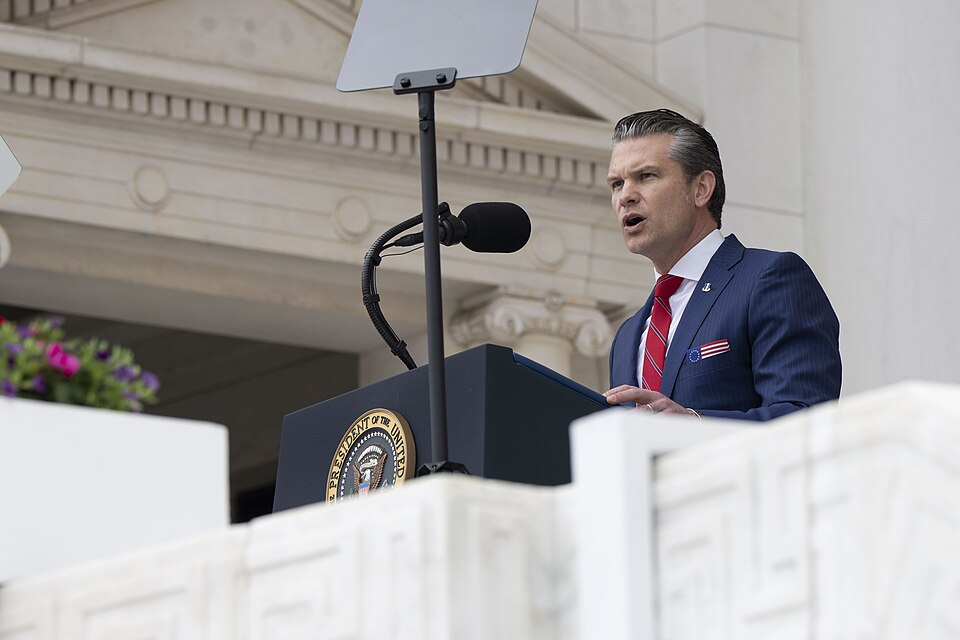
Here’s what happened.
President Donald Trump reportedly questioned Defense Secretary Pete Hegseth about the condition of America’s military weapons stockpiles during the ongoing conflict with Iran, according to a new report.
The reported exchange has sparked renewed speculation about the relationship between Trump and one of his most important national security officials. However, both the White House and Pentagon have pushed back strongly against claims of serious friction between the two men.
At this time, there is no official announcement suggesting Trump intends to fire Hegseth.
Trump Reportedly Pressed Hegseth Over Military Supplies
According to TIME, Trump summoned Hegseth and other senior military officials to the Oval Office in April for an update on the Iran conflict and the condition of U.S. military supplies.
One subject reportedly drew particular attention: the pace at which America was using expensive missiles and other advanced weapons.
During the meeting, Trump reportedly showed Hegseth a New York Times article that raised concerns about declining U.S. munitions inventories.
The article claimed American forces had used more than 1,200 Patriot interceptor missiles during the early weeks of the conflict.
Patriot interceptors are among the military’s most sophisticated air-defense weapons and can cost millions of dollars each.
Trump reportedly demanded an explanation for the figures.
According to TIME, Hegseth disputed the newspaper’s characterization and argued that the report exaggerated the situation.
The alleged conversation has become part of a broader debate over whether America’s defense industry can manufacture sophisticated weapons quickly enough to replace those being used during extended military operations.
White House Says Trump Has Confidence in Hegseth
The Trump administration has publicly rejected suggestions that the president has lost confidence in his defense secretary.
White House spokeswoman Anna Kelly said Trump continues to support Hegseth and receives accurate information from him.
“President Trump has full confidence in Secretary Hegseth, who always gives him fulsome, accurate information,” Kelly said.
The administration also disputed claims that the U.S. military is running dangerously short of ammunition.
“The United States Military has enough munitions and ammo to serve all of the Commander-in-Chief’s strategic goals and beyond,” Kelly said.
That statement directly challenges speculation that Hegseth could soon be removed because of concerns surrounding military readiness.
For now, the administration’s official position is clear: Hegseth remains in Trump’s cabinet and continues to have the president’s backing.
Concerns Grow Over U.S. Weapons Stockpiles
The larger question surrounding America’s weapons supply is unlikely to disappear.
Modern warfare relies heavily on expensive precision-guided missiles, air-defense systems and long-range weapons that can take months or even years to replace.
Reports have suggested that the Iran conflict has placed additional pressure on inventories of air-defense interceptors, cruise missiles and other sophisticated equipment.
The New York Times also reported that the United States had used large numbers of Tomahawk cruise missiles during the conflict.
According to reported Defense Department estimates, more than 1,000 Tomahawks may have been used, far above the number the military traditionally purchases during a typical year.
Those figures have increased attention on America’s defense manufacturing capacity.
Why Military Readiness Matters
The debate is not limited to the war in Iran.
The United States must maintain sufficient military supplies to respond to potential emergencies elsewhere in the world.
Defense planners must consider possible threats involving China, Russia, North Korea and other adversaries while also supporting ongoing military missions.
That creates a difficult balancing act.
Using large quantities of advanced weapons in one conflict could potentially reduce the inventory available for another crisis unless manufacturers can replace them quickly enough.
Congress and Pentagon officials have increasingly focused on expanding domestic weapons production, strengthening supply chains and ensuring the military has adequate reserves.
For taxpayers, the issue also has a major financial component.
Advanced missiles and defense systems can cost millions of dollars per unit, meaning prolonged military operations can quickly result in billions of dollars in additional defense spending.
Another Reported Trump-Hegseth Disagreement
The April meeting was reportedly not the only time Trump questioned Hegseth about weapons supplies.
The Washington Post reported in August that another tense discussion occurred at Camp David.
According to the report, Trump pressed Hegseth about ammunition shortages and questioned why the issue had not already been resolved.
The White House and Pentagon denied that account as well.
The conflicting reports highlight an important distinction for readers: anonymous-source accounts describe disagreements behind closed doors, while administration officials publicly maintain that Trump continues to trust his defense secretary.
Without additional documentation or public confirmation, claims about serious tension between Trump and Hegseth remain disputed.
Trump Takes Aim at Government Leaks
Trump has also become increasingly outspoken about unauthorized disclosures from inside the federal government.
In August, the president warned on Truth Social that individuals responsible for leaking sensitive information could face serious consequences.
Trump has long argued that anonymous leaks can produce misleading narratives about internal White House discussions.
Administration officials have similarly suggested that private disagreements are sometimes exaggerated when reported publicly.
Presidents routinely question military commanders and cabinet officials during national security crises, especially when decisions involve American troops, expensive weapons and potentially lengthy conflicts.
The central issue is whether those discussions represent ordinary policy disagreements or deeper divisions inside the administration.
Iran War Puts Pentagon Under Pressure
The continuing conflict with Iran has placed Hegseth and the Pentagon under intense scrutiny.
As defense secretary, Hegseth is responsible for overseeing military operations while ensuring that American forces remain supplied and prepared for additional threats.
That responsibility becomes more difficult as conflicts continue for longer periods.
Air-defense missiles, cruise missiles and precision-guided weapons are not unlimited resources. Replacing them requires manufacturing capacity, specialized materials and significant federal spending.
The situation has therefore raised broader questions about the long-term strength of America’s defense industrial base.
Trump Warns Iran Could Face Further Military Action
Trump has also suggested that military operations against Iran could escalate if diplomatic negotiations fail.
The president has argued that Iran must not be allowed to threaten American interests or destabilize the Middle East.
Trump told TIME that he believes U.S. military action has dramatically weakened Iran and changed the balance of power in the region.
However, continued military operations would likely increase pressure on American weapons inventories and defense spending.
That makes the Pentagon’s ability to replenish ammunition an increasingly important national security issue.
Is Trump Really Considering Firing Hegseth?
Despite the dramatic speculation surrounding the reported meetings, there is currently no confirmed evidence that Trump is preparing to remove Hegseth.
The White House has explicitly stated that the president continues to have confidence in him.
Reports of tense conversations between presidents and defense secretaries are also not unusual during wartime. Commanders-in-chief regularly demand detailed answers about military readiness, spending and battlefield strategy.
Still, the reports highlight the enormous pressure facing Hegseth as the Iran conflict continues.
If weapons shortages worsen or military operations expand, questions about Pentagon leadership could grow.
For now, however, Hegseth remains defense secretary, and the Trump administration insists that America has enough military equipment to accomplish the president’s strategic objectives.
The bigger question may ultimately be less about Hegseth’s job and more about whether the United States can rebuild its military stockpiles quickly enough to remain prepared for future threats.