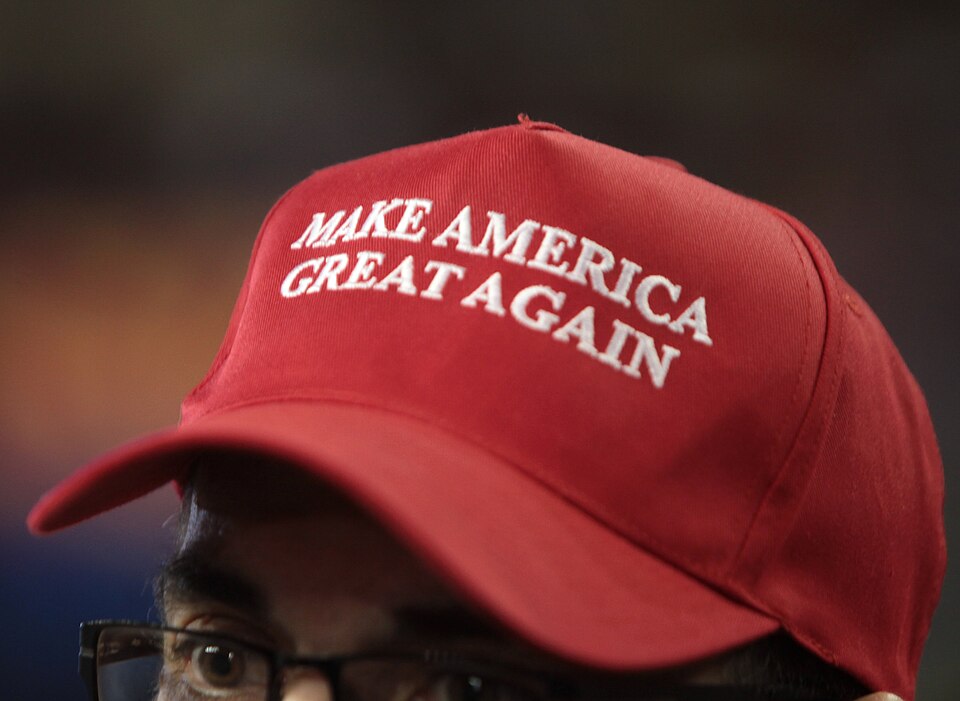
This was surprising to see.
President Donald Trump is seeing a notable improvement in his standing with some of America’s youngest voters, according to recent polling that could have important implications for the upcoming midterm elections.
A Harvard CAPS/Harris Poll found that Trump’s approval rating among registered voters ages 18 to 24 increased to 41% in September, up sharply from 25% in July.
While Trump still does not have majority approval among these younger voters, the change represents a significant improvement over the course of the summer and challenges the idea that young Americans are moving uniformly away from the president.
The results could become especially important as Republicans and Democrats compete for control of Congress.
Trump Approval Rises Among Young Voters
The September Harvard CAPS/Harris survey found that 41% of registered voters between the ages of 18 and 24 approved of Trump’s job performance.
Another 54% disapproved.
That leaves Trump with a net approval rating of negative 13 percentage points among the youngest voters surveyed.
Although Trump remains underwater with the group, his position has improved considerably since July.
In August, 38% of voters ages 18 to 24 approved of Trump, while 57% disapproved.
That produced a net approval rating of negative 19 points.
The July numbers were considerably weaker.
At that time, just 25% of voters in the same age group approved of Trump’s performance, compared with 67% who disapproved.
Trump’s net approval rating among younger voters was therefore negative 42 points in July.
Over roughly two months, his approval increased by 16 percentage points while his disapproval dropped by 13 points.
For political strategists preparing for the midterms, that is a trend likely to receive considerable attention.
Trump Performs Better With Young Voters Than Some Older Americans
One of the more surprising findings from the September poll involves Trump’s standing with older voters.
According to the survey, voters ages 55 and older gave Trump a 39% approval rating and a 58% disapproval rating.
That means Trump’s 41% approval among voters ages 18 to 24 was actually slightly higher than his approval among respondents ages 55 and above.
The comparison does not mean young Americans have suddenly become overwhelmingly supportive of Trump.
A majority of the youngest voters surveyed still disapproved of his performance.
But it does indicate that political attitudes among younger Americans may be more complicated than traditional assumptions suggest.
Young Voters Remain Politically Unpredictable
Young Americans have increasingly become one of the most difficult voting groups for political analysts to predict.
Many younger voters do not have the same long-term loyalty to either major political party that is common among older generations.
Their political views can also be influenced by economic conditions, social media, cultural issues, foreign policy and concerns about their financial future.
That creates an electorate capable of shifting quickly.
The latest polling suggests Trump may be benefiting from some of that movement.
However, it remains unclear whether his improvement will continue through Election Day.
Cost Of Living Could Be A Major Factor
Economic concerns remain one of the most important issues affecting voters of nearly every age.
For younger Americans, those concerns can include the cost of rent, gasoline, groceries, housing and employment.
Many younger workers are also trying to build savings, begin careers and determine whether homeownership is financially realistic.
Melissa R. Michelson, interim chief academic officer and dean of arts and sciences at Menlo College, said younger adults are concerned about many of the same financial pressures affecting older Americans.
Those concerns include affordability, gasoline prices, rent and access to good-paying jobs.
That makes the economy one possible explanation for changing attitudes toward Trump.
However, the polling does not prove that economic issues caused the increase in his approval rating.
Social Media Could Influence Younger Voters
Another major difference between younger and older voters is where they receive political information.
Many younger Americans now rely heavily on social media, podcasts, online video and other digital platforms.
That differs from older generations that historically depended more heavily on television, radio and newspapers.
The result is a political environment in which opinions can change rapidly.
Michelson suggested that increased exposure to political information as elections approach could strengthen partisan feelings among younger voters.
That could influence attitudes toward Trump as well as candidates running for Congress.
Polling Numbers Come With An Important Limitation
As with all polling, the results should be interpreted carefully.
The September Harvard CAPS/Harris survey questioned 2,200 registered voters between September 26 and September 28.
The full survey carried a margin of error of approximately plus or minus 2.1 percentage points.
However, that margin applies to the entire sample rather than specifically to voters ages 18 to 24.
Because younger respondents represent only part of the overall survey, the margin of uncertainty for that subgroup is larger.
That means some movement from month to month may reflect differences in who participated in each survey.
Still, the overall direction of the numbers shows a significant improvement for Trump compared with July.
Other Polling Shows A More Complicated Picture
Not every survey has shown positive movement for Trump among younger Americans.
An earlier Navigator survey found that 31% of Generation Z respondents who voted for Trump in 2024 said they regretted their decision.
Trump’s approval among Generation Z respondents in that survey stood at 33%.
However, the Navigator and Harvard CAPS/Harris surveys cannot be directly compared.
They were conducted during different periods and used different age categories and sampling methods.
Someone can also regret a previous vote while still approving of certain aspects of a president’s performance.
The conflicting surveys reinforce a larger point: younger voters remain politically unsettled.
Neither Republicans nor Democrats can safely assume that young Americans will vote the same way from one election to the next.
Midterm Turnout Could Be The Bigger Story
Improving approval ratings will only help Republicans if younger voters actually participate in the election.
That remains one of the biggest challenges.
Young Americans have traditionally voted at lower rates than older Americans in midterm elections.
An Economist/YouGov survey conducted from August 28 through August 31 found that 34% of adults ages 18 to 29 said they would definitely vote in the midterms.
By comparison, 78% of Americans ages 65 and older said they definitely planned to participate.
That gap illustrates why older voters often have greater influence in midterm elections.
Even a large improvement in presidential approval among young voters may have limited electoral impact if turnout remains low.
Could Lower Trump Disapproval Reduce Youth Turnout?
There is another possibility that could affect the election.
Midterm elections often attract voters who are dissatisfied with the party controlling Washington and want to send a political message.
If younger voters become less unhappy with Trump, some may feel less urgency to vote against Republican candidates.
Michelson suggested that reduced dissatisfaction could potentially lower youth turnout instead of creating a major increase in Republican votes.
If that happens, improving approval numbers could still indirectly benefit Republicans.
Democrats, meanwhile, will likely need to convince younger voters that participation in the midterms remains important.
Republicans Face The Challenge Of Turning Approval Into Votes
The real test for Trump and Republican candidates will be whether improving sentiment translates into higher turnout.
Trump has repeatedly emphasized that Republican victories in Congress are necessary to advance his administration’s agenda.
That message could become increasingly important as Election Day approaches.
If younger voters who approve of Trump become motivated enough to participate, Republican congressional candidates could benefit.
If those voters remain politically disengaged, however, improved polling numbers may not significantly affect the final results.
Democrats Also Have Reason To Pay Attention
The latest numbers could also serve as a warning for Democrats.
Younger Americans have often been viewed as a key Democratic constituency.
But weaker party loyalty among younger generations means that support cannot necessarily be taken for granted.
Economic concerns and dissatisfaction with political institutions can push voters toward different candidates from one election to another.
Both parties therefore have strong incentives to compete aggressively for young voters.
The White House Points To Trump’s Economic Agenda
The White House has argued that the most important measure of public opinion came during the November 5, 2024 presidential election.
Administration officials have pointed to Trump’s efforts involving employment, inflation, housing affordability and the broader economy as evidence that his policies are producing results.
Those issues could become central to Republican outreach as the midterm campaign intensifies.
For many younger voters, the question may ultimately come down to whether they believe their personal financial situation and future prospects are improving.
Why The Latest Trump Polling Matters
Trump’s movement with younger voters does not amount to a complete political realignment.
Most voters ages 18 to 24 in the September poll still disapproved of his job performance.
The more important story is the direction of the numbers.
Trump went from 25% approval among the youngest voters surveyed in July to 41% in September.
That is a substantial increase in a relatively short period.
Republicans will now attempt to turn that improvement into votes.
Democrats will try to determine whether the change represents temporary polling volatility or evidence of a larger shift.
What To Watch Before The Midterms
Several factors could determine whether Trump continues gaining ground with young voters.
The economy will likely remain central, particularly concerns involving housing, jobs, wages, gasoline prices and everyday expenses.
Turnout will also be critical.
Young voters may express changing opinions in surveys without necessarily showing up on Election Day.
For that reason, campaign enthusiasm could ultimately matter more than presidential approval alone.
The latest Harvard CAPS/Harris numbers nevertheless provide Republicans with an encouraging development heading into the final stretch of the midterm campaign.
Trump is still unpopular with a majority of the youngest voters surveyed, but the gap has narrowed sharply.
Whether that trend continues — and whether younger Americans actually turn out to vote — could become one of the more important political stories of the election.