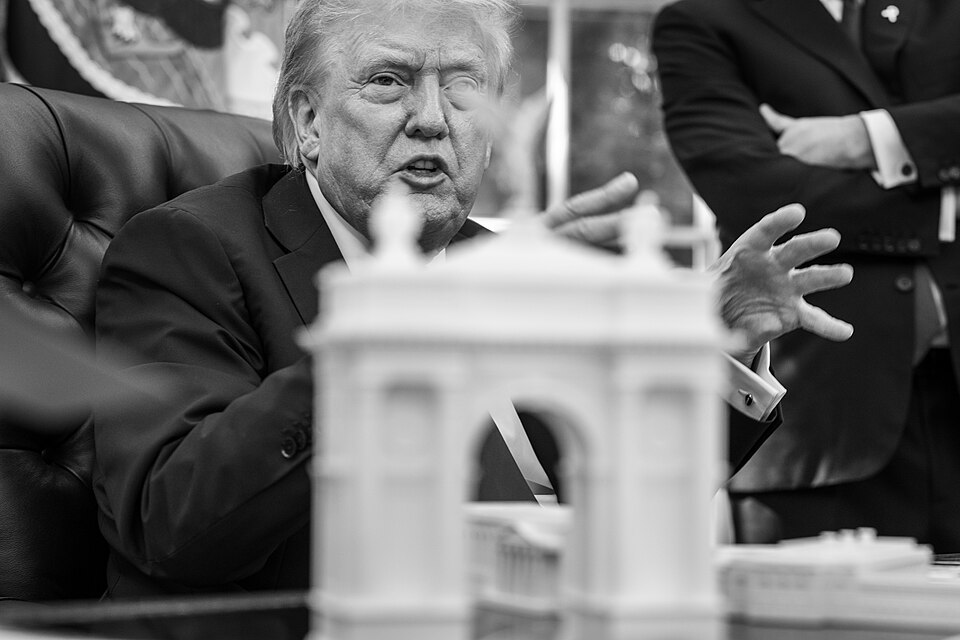
President Donald Trump’s plans to build a massive new monument near Arlington National Cemetery have encountered another major obstacle, and the latest opposition is coming from an unexpected direction.
Local government officials in Virginia are taking legal action to stop Trump’s proposed 250-foot Triumphal Arch, arguing that federal agencies have failed to properly review the project’s potential impact on nearby communities and historic landmarks.
On Thursday, October 8, the Arlington County Board filed a federal lawsuit against the Trump administration, becoming the first local government body to formally challenge the monument in court.
The move adds another legal complication to a project Trump has promoted as a new symbol of American history and national pride.
Arlington County Takes Trump To Court
The lawsuit targets the National Park Service and the Department of the Interior, two federal agencies involved in advancing the construction plans.
Arlington County officials claim the administration has moved too quickly without completing the environmental reviews required under federal law.
The proposed monument would stand at Memorial Circle, a historic location between Arlington National Cemetery and Arlington Memorial Bridge.
County leaders argue that building such a large structure could create problems involving traffic, public safety, aviation, and the preservation of surrounding landmarks.
The lawsuit seeks a court order preventing construction from moving forward until the government completes an adequate environmental review.
The county is working with the legal organization Democracy Forward in its effort to challenge the project.
Trump Wants A Monument Celebrating America’s History
Trump’s proposed Triumphal Arch has drawn national attention because of its enormous size and prominent location.
Standing approximately 250 feet tall, the structure would be inspired by the Arc de Triomphe in Paris, one of the world’s most recognizable monuments.
The project is connected to Trump’s broader effort to reshape parts of Washington, D.C., and establish new landmarks celebrating American achievement.
The arch was proposed during preparations surrounding America’s 250th anniversary.
Its location would place it near Arlington National Cemetery, where generations of American service members have been laid to rest.
For many Americans, the surrounding area carries tremendous historical significance.
Supporters see the proposed monument as an opportunity to create another recognizable national landmark. Critics, however, question whether such a large structure belongs near an already historic setting.
County Officials Raise Major Safety Concerns
One of the biggest disputes involves whether the proposed monument could interfere with transportation and emergency services.
Memorial Circle sits along heavily traveled routes connecting Virginia and Washington, D.C.
Arlington County officials warn that construction and potential changes to the surrounding area could create additional traffic problems.
The county also questions whether emergency vehicles could face delays navigating the area.
Another major concern involves nearby Ronald Reagan Washington National Airport.
Because the proposed arch would rise 250 feet above the surrounding area, aviation safety has become an important part of the discussion.
The Federal Aviation Administration has issued a safety determination allowing the project with certain modifications, but opponents continue to question whether all potential risks have been adequately addressed.
The disagreement underscores the complicated approval process surrounding major construction projects near sensitive federal sites.
White House Pushes Back Against The Lawsuit
The Trump administration is defending its plans and rejecting claims that the project is moving forward improperly.
White House spokesman Davis Ingle dismissed the county’s legal challenge as lacking merit.
Administration officials maintain that the proposed monument complies with applicable legal requirements.
The dispute highlights a fundamental disagreement over whether federal agencies have satisfied their responsibilities before beginning construction.
Arlington officials believe additional review is necessary.
The administration maintains that its existing process is legally sufficient.
Ultimately, the courts may have to determine whether the federal government can proceed under its current approvals.
Veterans And Preservation Groups Have Also Challenged The Project
Arlington County is not alone in questioning the construction plans.
A separate lawsuit brought by military veterans and an architectural historian argues that the Trump administration must receive congressional authorization before building the monument.
That case raises a different legal question concerning the federal government’s authority to construct the arch.
A federal judge has already required the administration to provide 48 hours’ advance notice before undertaking construction-related activities.
Meanwhile, the U.S. Commission of Fine Arts has granted the project preliminary approval.
However, that approval does not automatically resolve the pending legal disputes.
The combination of challenges means the administration still faces obstacles as it works to advance the proposal.
Could Trump’s Arch Still Be Built?
Despite the legal opposition, Trump’s monument has not been permanently canceled.
Arlington County is asking the courts to pause construction until additional environmental and safety reviews are completed.
The administration could still move forward if it prevails in court or satisfies any additional legal requirements imposed by a judge.
The dispute also raises broader questions about how major federal projects should balance national symbolism, historic preservation, local concerns, and government oversight.
With the proposed site located near Arlington National Cemetery, those questions carry particular importance.
Both supporters and opponents recognize that changes to such a prominent location could have lasting consequences.
What Happens Next For Trump’s Monument?
The next major developments are expected to come through the federal court system and the remaining government approval process.
Arlington County will continue pressing its argument that the administration failed to conduct an adequate review.
Trump administration officials, meanwhile, remain committed to defending the proposal.
For now, the legal challenge has added uncertainty to the president’s plans for a towering new landmark near the nation’s capital.
Whether Trump’s Triumphal Arch becomes a permanent symbol of American history or remains tied up in court could depend on the outcome of these lawsuits.
The larger question is whether the administration can satisfy the legal challenges while maintaining the president’s original vision for the monument.