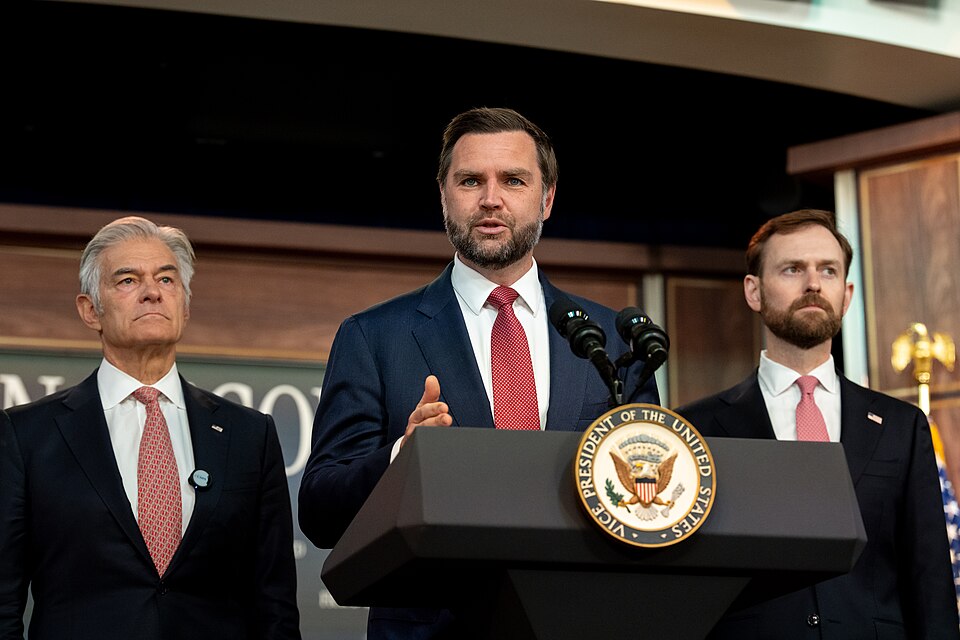
Vice President JD Vance has found himself at the center of a heated religious controversy after a Democratic Senate candidate accused him of attacking his Christian faith during a high-profile political showdown in Kansas.
The disagreement involves Adam Hamilton, a prominent United Methodist pastor running against Republican Sen. Roger Marshall in the upcoming midterm elections.
Hamilton responded to Vance’s criticism during a Sunday interview on ABC’s This Week, describing the vice president’s remarks as “pathetic” and suggesting they reflected political desperation.
The dispute has quickly become more than an ordinary campaign disagreement, raising questions about Christianity, traditional religious values, and the role of faith in American politics.
Vance Takes Aim At Democratic Pastor
The controversy began when Vance traveled to Kansas to campaign for Marshall, who is seeking another term in the United States Senate.
During a September campaign rally, Vance strongly criticized Hamilton’s religious and political positions, accusing the Democratic candidate of promoting liberal ideology under the banner of Christianity.
The vice president specifically questioned Hamilton’s church for sponsoring Kansas City PrideFest, an event that included participation by groups whose activities have drawn objections from religious conservatives.
Vance argued that Christians should be concerned when religious institutions financially support events involving organizations accused of mocking Christian traditions.
He described Hamilton’s political and religious views as “left-wing radicalism dressed in the skin suit of our religion.”
The vice president also questioned whether Hamilton’s positions reflected traditional Christian teachings.
For many Americans who consider religious liberty and biblical values important, the disagreement touches on a familiar debate about the direction of churches and their involvement in modern political movements.
Hamilton Fires Back At Vice President
Hamilton rejected Vance’s characterization of his religious beliefs during his October 11 interview with ABC News correspondent Jonathan Karl.
The pastor said he was disappointed that the vice president would publicly question the sincerity of another person’s Christianity.
Hamilton called the attacks “really sad” and “pathetic,” arguing that Vance did not personally know him or understand his faith.
The Democratic candidate also disputed several additional accusations made during Vance’s campaign appearance.
Among them were suggestions that Hamilton believed Americans should repent for being white or for raising cattle and eating meat.
Hamilton denied holding those positions and argued that his past religious teachings had been misrepresented.
He maintained that his ministry has focused on helping people understand one another, encouraging compassion, and following the teachings of Jesus Christ.
Hamilton also emphasized his personal religious commitments, including prayer and Bible study.
Despite their political disagreements, both men identify as Christians, although their interpretations of certain religious and social issues differ considerably.
Religious Values Become Political Flashpoint
One of the central disagreements involves the relationship between Christianity and contemporary social issues.
Vance, a Catholic, has frequently emphasized the importance of religious traditions, family values, and the influence of Christian teachings on American society.
Hamilton, meanwhile, has advocated an approach to ministry that emphasizes inclusion and engagement with people who hold different beliefs.
The pastor’s church has faced criticism from some religious conservatives over its involvement with Kansas City PrideFest.
During his campaign appearance, Vance pointed to the participation of the Sisters of Perpetual Indulgence, an activist organization known for using religious imagery in satirical performances.
Some Christian organizations have condemned the group’s activities as disrespectful toward religious traditions.
Hamilton’s supporters, however, argue that criticism of his church’s activities does not justify questioning the sincerity of his personal faith.
The disagreement illustrates a broader division over how churches should balance traditional religious teachings with changing cultural expectations.
Kansas Senate Race Takes Unexpected Turn
The religious controversy comes at a critical moment in the battle for control of the United States Senate.
Kansas has historically been a dependable Republican state in federal elections, but the race between Marshall and Hamilton has attracted growing national attention.
Hamilton is the founding pastor of the Church of the Resurrection, which has grown into the largest United Methodist congregation in the country.
His religious background and reputation among Kansas residents have helped distinguish him from more conventional Democratic candidates.
Hamilton has also attempted to appeal to independent voters and moderate Republicans who may be dissatisfied with the current political climate.
A September Emerson College poll showed Hamilton with 45 percent support compared with Marshall’s 43 percent, although the narrow difference was within the survey’s margin of error.
Republicans remain determined to defend the seat, and Vance’s campaign appearance demonstrated the importance party leaders place on securing another victory in Kansas.
The race also presents an unusual political challenge: a Republican incumbent defending a traditionally conservative seat against a Democratic pastor with a substantial religious following.
Why The Religious Dispute Matters
For many American voters, religious beliefs remain an important consideration when choosing political leaders.
Questions involving religious freedom, traditional family values, and the relationship between churches and government have influenced national elections for generations.
Vance’s criticism reflects concerns among some conservative Christians who believe religious institutions should remain committed to longstanding biblical teachings.
Hamilton’s response reflects a different argument: that political disagreements should not automatically lead to accusations that another person’s faith is illegitimate.
Both perspectives have found supporters, demonstrating how deeply religion remains connected to American political life.
The First Amendment protects the freedom of religion, but it does not prevent political candidates from debating religious teachings or criticizing the public positions of religious leaders.
Ultimately, voters must decide which candidate’s policies, values, and qualifications best represent their interests.
What Happens Next?
With the November midterm elections approaching, the confrontation between Vance and Hamilton could become a significant issue in the Kansas Senate race.
Marshall and his Republican supporters are expected to continue emphasizing concerns about Hamilton’s political positions, while Hamilton is seeking support from Democrats, independents, and Republicans willing to cross party lines.
The dispute also illustrates how discussions about Christianity and traditional values can generate intense disagreements even among people who share a religious identity.
For Kansas voters, the election will ultimately involve more than questions of faith. Economic conditions, government spending, national security, and the direction of the country will also influence the outcome.
Whether the religious controversy helps Republicans defend the seat or gives Hamilton additional attention remains uncertain.
What is clear is that the exchange has placed religious values at the center of an increasingly competitive Senate contest, ensuring that the disagreement between Vance and Hamilton will remain part of the political conversation heading into Election Day.