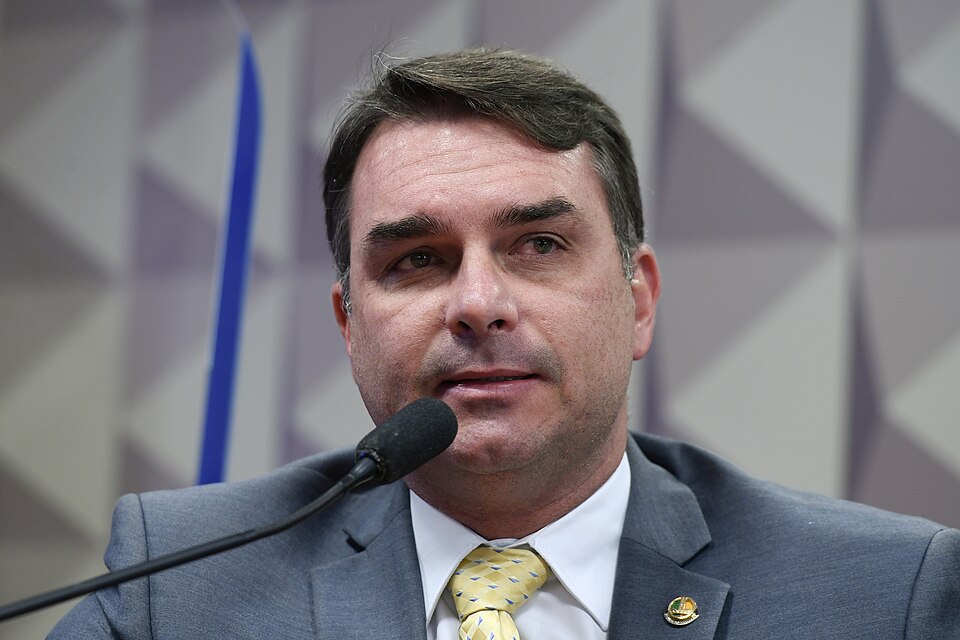
Here’s what Trump just decided to do.
President Donald Trump has welcomed a controversial foreign political figure into the United States just days after he lost a major presidential election and became the subject of an escalating legal battle.
The decision involves Flávio Bolsonaro, the son of former Brazilian President Jair Bolsonaro, who arrived in Miami on Wednesday after leaving Brazil despite a court order requiring him to surrender his passports.
Bolsonaro is facing investigations involving allegations of corruption, money laundering, and other financial misconduct.
He denies wrongdoing and maintains that he is being unfairly targeted.
But with the Trump administration approving his entry into the United States, the situation has raised questions about international law, political persecution, and America’s relationship with one of South America’s largest countries.
And the controversy could become an unexpected diplomatic headache for the White House.
Trump Administration Welcomes Bolsonaro Into The United States
Flávio Bolsonaro, 45, arrived at Miami-Opa Locka Executive Airport on October 28, accompanied by his wife and two daughters.
His arrival followed an unusual journey through Argentina and Ecuador after his defeat in Brazil’s presidential runoff election.
According to the Associated Press, a senior State Department official confirmed that the Trump administration had authorized visas for Bolsonaro and his family.
President Trump also publicly expressed his willingness to allow Bolsonaro into the country.
The decision is significant because Bolsonaro left Brazil while facing a judicial order concerning his passports.
Brazilian authorities had ordered the senator to surrender his travel documents as part of ongoing criminal investigations.
Instead, Bolsonaro departed the country and eventually reached American soil.
Reports indicate that he used an Italian passport while traveling through Argentina.
Although the Trump administration authorized his entry, that does not necessarily mean Bolsonaro has received political asylum or permanent protection from Brazilian authorities.
Those legal distinctions could become increasingly important as the controversy develops.
Brazilian Supreme Court Takes Action Against Bolsonaro
Bolsonaro’s departure came amid growing scrutiny from Brazil’s highest court.
Supreme Court Justice Alexandre de Moraes had ordered the politician to surrender his passports in connection with an investigation into suspected financial misconduct.
The senator failed to meet the court’s Tuesday deadline.
According to reporting from Reuters and the Associated Press, Bolsonaro is being investigated over allegations involving money laundering and financial relationships connected to individuals accused of misconduct.
Other investigations have examined alleged corruption and tax-related violations.
Bolsonaro has denied the allegations, and the investigations should not be confused with a criminal conviction.
His supporters argue that the Brazilian legal system has become politicized and that prominent opponents of President Luiz Inácio Lula da Silva face unfair treatment.
Brazilian authorities, meanwhile, have continued pursuing investigations involving Bolsonaro and other political figures.
The disagreement raises a broader question about how governments should respond when a foreign politician claims persecution while facing criminal allegations.
For now, the legal proceedings against Bolsonaro remain unresolved.
Bolsonaro Flees Brazil After Losing Presidential Election
The controversy unfolded almost immediately after Brazil’s October 25 presidential election.
Bolsonaro lost the runoff to incumbent President Luiz Inácio Lula da Silva, ending his attempt to follow his father into Brazil’s highest political office.
Following the election, Bolsonaro challenged the outcome and questioned the fairness of the voting process.
He called for the result to be annulled, although no evidence has been established demonstrating widespread fraud sufficient to reverse the election.
Brazil’s election results showed Lula winning by more than four million votes.
The defeated candidate’s refusal to immediately accept the outcome intensified political tensions across the country.
Within days, Bolsonaro had left Brazil.
His unexpected departure created confusion about his whereabouts before American officials confirmed that he and his family would be permitted to enter the United States.
What began as a contentious election quickly turned into an international dispute involving courts, immigration policy, and foreign relations.
Trump’s Relationship With The Bolsonaro Family Runs Deep
President Trump’s involvement is particularly noteworthy because of his longstanding political relationship with the Bolsonaro family.
Former Brazilian President Jair Bolsonaro developed close ties with Trump during their overlapping time in office.
Both leaders became known for emphasizing national sovereignty, tougher immigration policies, and opposition to established political institutions.
Their political alliance continued even after Jair Bolsonaro left office.
However, the former Brazilian president subsequently faced serious legal problems of his own.
In 2025, Jair Bolsonaro was convicted over his role in a plot to overturn Brazil’s 2022 presidential election and received a 27-year prison sentence.
His supporters have criticized the proceedings, while Brazilian authorities have maintained that the legal actions were justified.
Now his son faces a separate set of criminal investigations.
The younger Bolsonaro’s arrival in Florida has placed Trump in the middle of a politically sensitive situation involving an allied family and Brazil’s judiciary.
Is Trump Granting Bolsonaro Political Asylum?
One of the biggest unanswered questions concerns Bolsonaro’s immigration status.
Although the Trump administration approved visas for Bolsonaro and his family, that authorization does not automatically constitute a grant of political asylum.
Under American law, asylum and visa admission are separate legal processes.
A person may receive permission to enter the country without being granted permanent residence or protection against removal.
Political asylum generally involves a determination that someone qualifies for protection based on legally recognized grounds of persecution.
It remains unclear whether Bolsonaro has formally applied for asylum or intends to pursue another immigration arrangement.
That distinction matters because Bolsonaro is currently the subject of Brazilian criminal investigations.
Being investigated abroad does not automatically prevent someone from entering the United States, but receiving a visa does not provide blanket immunity from legal proceedings.
If Brazilian authorities pursue additional measures, the Trump administration could face difficult questions about how to handle the case.
Could Brazil Demand Bolsonaro’s Return?
Bolsonaro’s arrival in Miami may complicate relations between Washington and Brasília.
Brazilian authorities have already taken judicial action concerning his travel documents.
However, any attempt to secure his return from the United States would involve additional legal considerations.
An extradition request, if one were made, would be evaluated through established legal procedures.
The outcome would depend on the particular allegations, applicable treaties, and decisions by the relevant American authorities.
There is also a diplomatic dimension.
President Lula’s government has criticized Bolsonaro’s departure, while Trump has openly questioned the Brazilian election result without presenting evidence of widespread electoral fraud.
The two governments could find themselves at odds over the handling of the defeated presidential candidate.
The issue also highlights the complicated intersection of political alliances and international criminal investigations.
What Happens Next For Trump And Bolsonaro?
For now, Flávio Bolsonaro is in the United States, and his political and legal future remains uncertain.
Several important questions have yet to be answered.
Will Bolsonaro seek formal asylum in America?
Will Brazilian authorities take further action over his failure to surrender his passports?
And could the Trump administration’s decision to welcome him create additional diplomatic problems with Brazil?
The answers could determine whether this remains a short-lived international controversy or becomes a prolonged legal dispute.
Bolsonaro continues to deny wrongdoing, and the criminal allegations against him have not been resolved through a conviction.
President Trump, meanwhile, has made clear that the Brazilian politician is welcome in the United States.
What is certain is that a defeated presidential candidate facing serious legal scrutiny has arrived on American soil with the approval of the Trump administration.
Whether that decision ultimately becomes a legal challenge, a diplomatic dispute, or a new chapter in the Bolsonaro family’s political future remains to be seen.