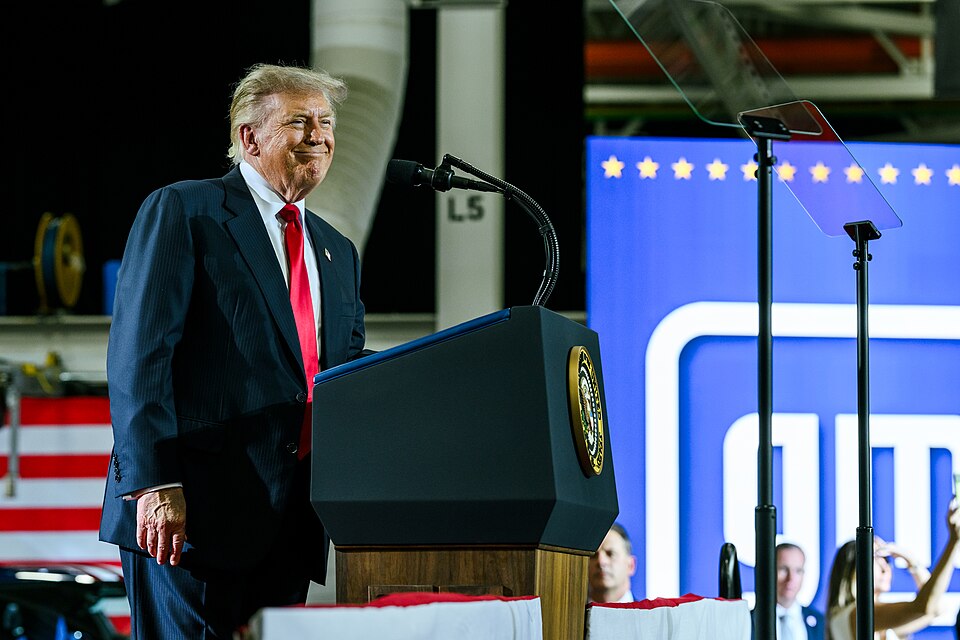
Here’s what Trump is dealing with.
President Donald Trump is facing a serious new economic challenge just one day before the November 3 midterm elections, as a new analysis reveals that average gasoline prices during his second term have surpassed levels recorded under former President Joe Biden.
The development comes at a difficult moment for Republicans, who are fighting to maintain control of Congress while Americans continue expressing frustration over the rising cost of everyday necessities.
According to an analysis of federal energy data by the Financial Times, average gasoline prices during Trump’s second administration have climbed above $3.46 per gallon, narrowly exceeding the average recorded throughout Biden’s presidency.
The news represents an unwelcome milestone for Trump, who has repeatedly emphasized lowering energy costs as a major priority of his administration.
And with millions of Americans still paying considerably more at the pump than they were a year ago, the issue could carry significant political consequences.
Gas Prices Deliver Unwelcome News for Trump
The latest figures highlight the continuing financial pressure facing American drivers.
According to AAA, the national average price of regular gasoline reached approximately $4.17 per gallon on November 2, 2026.
That represents a substantial increase from the approximately $3.04 Americans were paying at the same time last year.
For a household purchasing 40 gallons of gasoline every week, that difference translates into roughly $45 in additional weekly expenses.
Over an entire year, those additional fuel costs could exceed $2,300 if prices remain at current levels.
Although gasoline prices have declined in recent weeks, they remain significantly higher than before the military conflict involving Iran began earlier this year.
The new presidential record concerns average gasoline prices over an administration, not the highest single-day price in American history.
The national daily record for regular gasoline remains approximately $5.02 per gallon, reached in June 2022 during Biden’s presidency.
Nevertheless, the comparison creates an uncomfortable political situation for Trump as Republicans prepare for a closely watched election.
Middle East Conflict Sends Energy Costs Higher
A major factor behind the increase in gasoline prices has been the ongoing military conflict involving the United States, Israel, and Iran.
Since hostilities began in late February, disruptions to international oil shipments have created considerable uncertainty throughout global energy markets.
One of the biggest concerns involves the Strait of Hormuz, a strategically important waterway through which approximately one-fifth of the world’s oil consumption normally passes.
Restrictions and disruptions affecting this shipping route have contributed to higher crude oil prices and tighter global energy supplies.
Because gasoline prices are closely connected to the international oil market, Americans can experience higher fuel costs even when domestic oil production remains strong.
The Trump administration has defended its military actions against Iran as necessary for American national security.
However, the conflict’s economic consequences have created new challenges for the White House.
Energy analysts say meaningful and sustained relief at the pump will likely depend on improvements in international oil supplies and greater stability in the Middle East.
Diesel Prices Raise Concerns for Farmers and Truckers
While gasoline prices have received considerable attention, diesel fuel costs have created an even greater challenge for several major American industries.
AAA reported that diesel prices averaged approximately $6.29 per gallon nationwide on November 2.
That compares with about $3.68 per gallon one year earlier.
The increase is particularly concerning for farmers, trucking companies, construction businesses, and manufacturers that depend heavily on diesel-powered equipment.
Higher diesel expenses can affect the broader economy because trucks transport much of the food, clothing, household supplies, and other merchandise Americans purchase every day.
When transportation becomes more expensive, businesses may face pressure to increase prices to cover their operating costs.
Farmers also rely on diesel to operate tractors, harvesters, and other essential agricultural machinery.
For agricultural producers already dealing with fluctuating commodity prices and other financial pressures, expensive fuel creates another difficult expense.
These additional costs can eventually affect consumers, making diesel prices an important economic issue even for Americans who never personally purchase the fuel.
Rising Fuel Expenses Put Pressure on Household Budgets
For families living on fixed incomes, higher energy prices can be particularly challenging.
Retirees and older Americans often depend on carefully planned monthly budgets, making unexpected increases in transportation expenses more difficult to absorb.
Gasoline remains a necessary purchase for millions of Americans who drive to work, attend medical appointments, shop for groceries, or visit family members.
Unlike certain discretionary expenses, transportation costs cannot always be easily reduced.
Higher gasoline prices can also affect vacation plans, family road trips, and other activities that require significant driving.
Meanwhile, elevated diesel costs may contribute to higher delivery and transportation expenses throughout the economy.
Although gasoline prices have recently shown signs of declining, many households are still waiting for more substantial relief.
That concern has become increasingly important as voters evaluate the administration’s economic performance.
White House Says Lower Gas Prices Are Coming
Despite the disappointing figures, the Trump administration remains confident that fuel prices will decline as international conditions improve.
White House officials have argued that resolving the conflict with Iran and restoring energy shipments would help ease pressure on global oil markets.
The administration has also pursued measures intended to increase available fuel supplies.
Trump continues to emphasize expanding American energy production and reducing unnecessary barriers to domestic energy development.
Supporters of the president argue that international conflicts and disruptions to global shipping routes have played a significant role in the recent increase in fuel costs.
They also point out that gasoline prices can fluctuate sharply because of geopolitical developments outside the direct control of any American president.
Still, the administration faces the difficult task of demonstrating that its policies can produce meaningful financial relief.
For many voters, improvements in gasoline prices will ultimately be judged by what they pay at their local gas station rather than by long-term economic projections.
Republicans Face Difficult Questions Ahead of Midterms
The timing of the latest gasoline figures creates an additional political challenge for congressional Republicans.
With voters heading to the polls on November 3, the economy and cost of living remain central issues in competitive House and Senate races.
Republican candidates have highlighted Trump’s efforts to strengthen domestic energy production, protect American industries, and address international security threats.
Democrats have focused on higher consumer prices and questioned whether the administration has fulfilled its promises to make everyday necessities more affordable.
The debate could prove especially important in closely contested districts where relatively small changes in voter preferences may influence election results.
Gasoline prices have historically been a politically sensitive issue because they provide consumers with a highly visible reminder of economic conditions.
Drivers see the numbers displayed at gas stations every day, making fuel costs an immediate concern regardless of broader economic statistics.
Whether the recent increase will significantly influence Tuesday’s results remains uncertain.
However, the issue has clearly become another challenge for Republicans seeking to convince voters that the economy is moving in the right direction.
Could Gas Prices Finally Start Falling?
There are some signs that American motorists could receive relief.
National gasoline prices have declined from their October levels, while recent developments involving diplomatic efforts with Iran have contributed to hopes that global oil supplies could improve.
However, energy analysts caution that the outlook remains uncertain.
A lasting reduction in fuel prices will likely require greater stability in international energy markets, dependable shipping routes, and sufficient supplies to meet demand.
Any renewed escalation in the Middle East could reverse recent progress and place additional pressure on oil prices.
For the Trump administration, lowering gasoline and diesel costs remains an important economic and political priority.
For Americans struggling with transportation expenses, the concern is much more immediate.
They want to know when filling their vehicles will become affordable again.
As the country approaches a consequential midterm election, rising energy expenses serve as another reminder that decisions made in Washington and developments overseas can have a direct impact on household finances.
The coming weeks could determine whether Americans finally see sustained relief at the pump or face another extended period of expensive fuel.