What changed?
A newly elected Democratic senator who fiercely criticized President Donald Trump during his campaign is now expressing a willingness to work directly with the Republican president on healthcare reform.
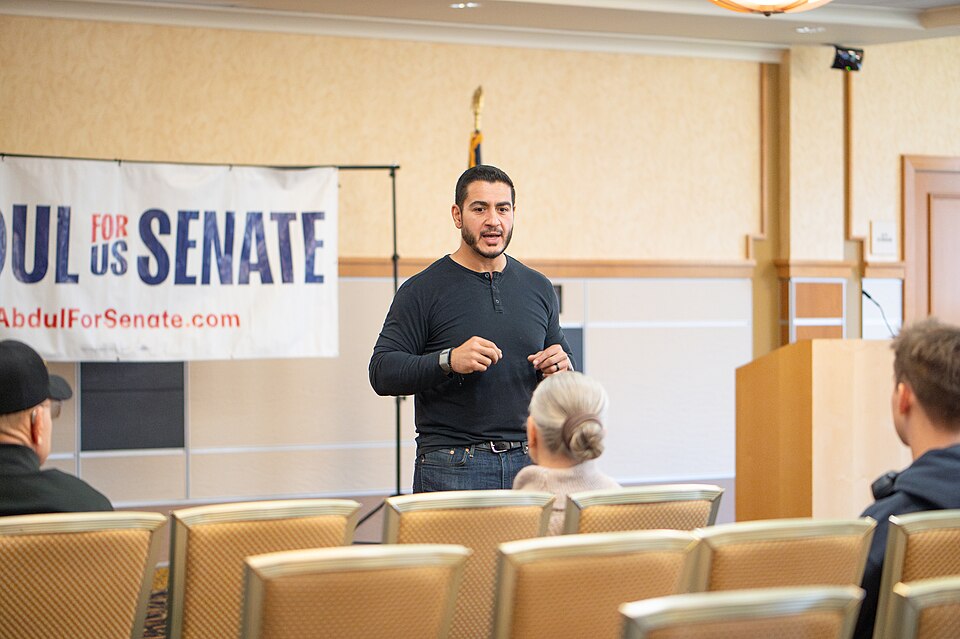
Michigan Senator-elect Abdul El-Sayed surprised political observers Sunday when he suggested that he would support a major healthcare initiative bearing Trump’s name, provided the legislation delivered the sweeping changes he has long advocated.
The unexpected offer comes just days after El-Sayed defeated Republican Mike Rogers in Michigan’s closely watched Senate election, giving Democrats another seat in their newly secured Senate majority.
Despite their sharp political disagreements, El-Sayed now says he is willing to meet with Trump to discuss potential cooperation.
However, the Democrat’s proposal comes with significant conditions that could make any eventual agreement difficult to achieve.
Democrat Makes Surprising Offer To Trump
During a November 8 appearance on ABC News’ This Week, El-Sayed told host Jonathan Karl that he would consider working with President Trump if doing so helped advance his legislative priorities.
The incoming senator explained that his campaign centered on reducing the influence of money in politics, improving household finances, and establishing Medicare for All.
He then raised the possibility of allowing Trump to attach his own name to a universal healthcare proposal.
“If he wants to pass Trump care for all,” El-Sayed said, suggesting that he would welcome cooperation on legislation guaranteeing healthcare coverage to everyone.
He also acknowledged Trump’s preference for putting his name on major initiatives, indicating that the president could receive public recognition for such a proposal.
The statement was particularly striking because El-Sayed has been an outspoken critic of the Trump administration and several of its major policies.
Still, the Michigan Democrat acknowledged that he has never personally met Trump and has not received an invitation from the White House.
That means no negotiations have been announced, and there is currently no indication that Trump supports the healthcare proposal El-Sayed described.
Campaign Rivalry Gives Way To Political Reality
El-Sayed’s willingness to work with Trump represents an interesting development following a contentious election season.
Throughout the Michigan Senate campaign, Trump and El-Sayed stood on opposite sides of several major national issues.
Trump supported Republican Mike Rogers, while El-Sayed built his campaign around a progressive platform that included government-financed universal healthcare.
El-Sayed also criticized the president’s handling of foreign policy, tariffs, and federal healthcare spending.
Those disagreements have not disappeared.
During Sunday’s interview, El-Sayed continued attacking Trump’s leadership and questioned several decisions made by the administration.
He specifically criticized the president’s approach to the Iran conflict, trade relations with Canada, and Medicaid policy.
The incoming senator also took aim at Trump’s decision to elevate Stephen Miller to White House chief of staff.
Nevertheless, he left open the possibility of working with the administration on issues where their objectives might overlap.
For Americans accustomed to partisan disagreements in Washington, the development raises an important question: Can politicians who strongly oppose one another find common ground on major domestic policies?
What Would ‘Trump Care For All’ Actually Mean?
The healthcare proposal El-Sayed discussed would represent a major departure from the country’s current insurance system.
Medicare for All generally refers to proposals establishing a government-financed national health insurance program covering Americans regardless of age.
Currently, traditional Medicare primarily serves people 65 and older, along with certain younger individuals who qualify because of disabilities or specific medical conditions.
Expanding federal healthcare coverage to the entire population would require significant changes to how medical services are financed and administered.
Supporters of Medicare for All argue that universal coverage could reduce administrative complexity and improve access to medical care.
Critics, meanwhile, have raised concerns about federal spending, potential tax increases, the future of private insurance, and the government’s ability to administer such an extensive program.
Those questions would become central to any serious negotiations involving Congress and the White House.
Importantly, Trump has not announced support for Medicare for All.
The president has pursued other healthcare priorities, including efforts to lower prescription drug prices, but those initiatives are different from the comprehensive restructuring El-Sayed has proposed.
Simply placing Trump’s name on a healthcare bill would not resolve those substantial policy differences.
What Could This Mean For Medicare And Older Americans?
For millions of Americans over the age of 50, healthcare affordability remains a major financial concern.
Those approaching retirement often face difficult decisions involving insurance premiums, prescription drug costs, and future medical expenses.
Retirees already enrolled in Medicare also have a direct interest in proposals that could reshape the federal healthcare system.
Any serious effort to establish Medicare for All would raise questions about how existing Medicare benefits would be affected, whether Americans could retain private insurance, and how additional federal spending would be financed.
The answers would depend on the specific legislation Congress considered.
No such agreement between Trump and El-Sayed has been announced.
For now, Americans should understand that the senator-elect’s comments represent a political proposal, not a change to existing Medicare benefits or eligibility rules.
Nevertheless, the discussion illustrates why healthcare reform could become a significant issue in the next Congress.
Democrats Face A New Challenge In Washington
El-Sayed’s remarks also highlight the complicated political environment Democrats face following their victories in the 2026 midterm elections.
With Democrats gaining control of Congress, party leaders will have greater opportunities to advance their legislative priorities.
However, Trump remains president, meaning major legislation generally must either receive his signature or attract enough congressional support to overcome a presidential veto.
That creates a powerful incentive for lawmakers to consider negotiations, even when they disagree sharply with the White House.
El-Sayed has made clear that his willingness to cooperate is conditional.
He has not backed away from his criticism of Trump, nor has he indicated that he would support the administration’s broader agenda.
Instead, the Michigan Democrat appears willing to explore whether the president might support particular policies that El-Sayed considers important.
Whether that approach produces meaningful results remains to be seen.
Trump Could Hold The Key To Any Healthcare Deal
Although Democrats will control Congress, the president’s position remains critical to the future of any major healthcare legislation.
Trump could choose to explore negotiations on prescription drug prices, insurance affordability, or other healthcare reforms.
He could also reject El-Sayed’s universal coverage proposal outright.
The senator-elect’s invitation does not mean the administration is preparing to embrace a government-financed healthcare system.
In fact, the substantial differences between the two politicians suggest that reaching an agreement would require difficult negotiations and potentially major compromises.
For Republicans, the debate could also revive longstanding concerns over the cost and scope of government involvement in healthcare.
For Democrats, it could test whether campaign promises can translate into legislation that gains the necessary support in Washington.
Both sides would face pressure to demonstrate how their proposals would affect working families, retirees, taxpayers, and the federal budget.
Will Political Cooperation Replace Campaign Attacks?
El-Sayed’s comments reveal how quickly political circumstances can change after an election.
During the campaign, the Michigan Democrat positioned himself as a strong opponent of Trump and his administration.
Now, with a Senate seat secured, he is publicly expressing interest in meeting with the same president he criticized.
That does not necessarily signal a change in his political beliefs.
Rather, it suggests that the practical demands of governing may require conversations between political rivals who otherwise share little common ground.
Whether Trump accepts the invitation remains an open question.
The White House has not announced an agreement with El-Sayed, and there is no confirmed plan for the two to meet.
Still, the offer introduces an intriguing possibility as Washington prepares for a new balance of power.
For now, the biggest development is that a newly elected Democrat who campaigned against Trump is willing to discuss putting the president’s name on a sweeping healthcare proposal.
Whether the idea ever moves beyond political talk will depend on what Trump, congressional Democrats, and Republicans are willing to support.
And for Americans concerned about healthcare costs, the real question is not whose name appears on a proposed reform, but whether Washington can deliver affordable coverage without creating new financial burdens for taxpayers.