This was shocking to see.
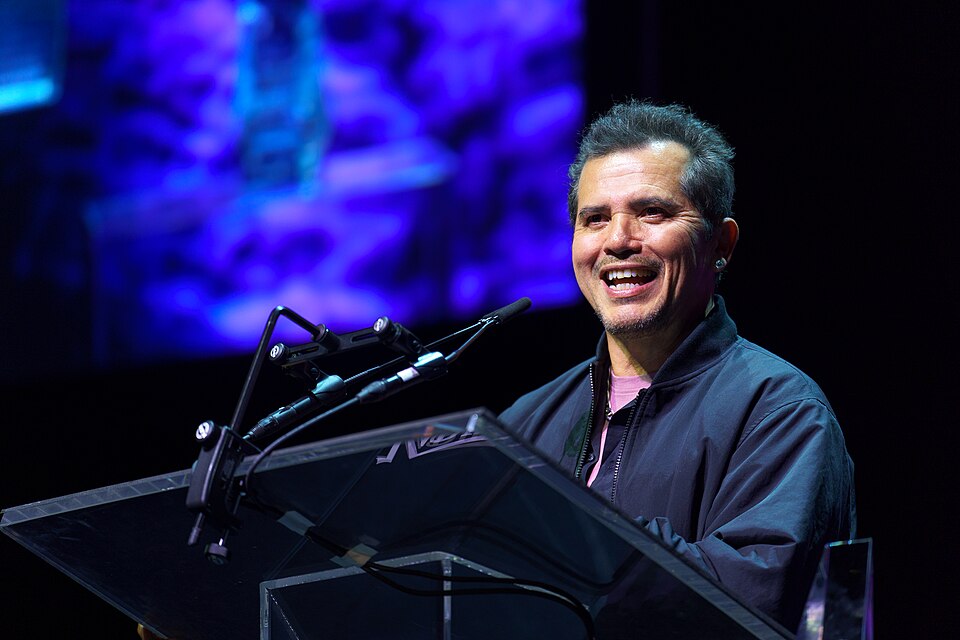
Hollywood actor John Leguizamo is taking aim at President Donald Trump’s immigration enforcement agenda, calling on congressional Democrats to eliminate a major federal law enforcement agency and shut down immigration detention facilities across the United States.
The actor, who appears in Christopher Nolan’s film The Odyssey, recently unveiled an extensive political wish list that includes abolishing U.S. Immigration and Customs Enforcement (ICE), protecting sanctuary cities, and making sweeping changes to the federal government.
His demands have sparked renewed attention to the growing disagreement over immigration enforcement, public safety, and the future of border security.
The Trump administration has responded with sharp criticism, defending federal immigration officers and rejecting the actor’s proposals.
Hollywood Star Demands Democrats Abolish ICE
Leguizamo outlined his demands in a social media video, describing his political agenda as “Project 2027.”
The actor urged Democrats to begin pursuing his proposals when the new Congress convenes on January 3, 2027.
Among his most significant demands was the complete elimination of ICE, the federal agency responsible for enforcing numerous immigration laws within the United States.
He also called for closing immigration detention centers, ending family separation practices, and expanding protections for sanctuary cities.
These proposals would represent a substantial departure from the immigration enforcement priorities established under President Trump.
ICE plays an important role in locating, arresting, detaining, and removing foreign nationals who are subject to immigration enforcement.
Abolishing the agency would require lawmakers to determine how those responsibilities would be handled moving forward.
Supporters of strong immigration enforcement maintain that federal authorities need the resources and personnel necessary to uphold immigration laws and protect American communities.
Advocates of eliminating ICE argue that immigration enforcement should be fundamentally restructured to prioritize alternative approaches.
The disagreement highlights one of Washington’s most contentious policy debates.
Trump’s Immigration Policies Face Hollywood Opposition
Leguizamo has become an outspoken critic of immigration enforcement under the Trump administration.
His latest demands follow previous comments in which he discouraged supporters of ICE from attending his performances or watching his movies.
Now, the actor is directing his criticism toward Democratic lawmakers, demanding that they take concrete legislative action.
His proposals extend beyond immigration detention and enforcement.
Leguizamo also called for legal action against White House adviser Stephen Miller, accusing him of responsibility for alleged wrongdoing involving immigration operations.
The actor’s accusations do not establish criminal wrongdoing, and any prosecution would require evidence and appropriate legal proceedings.
His comments nevertheless illustrate how sharply some Hollywood figures oppose the administration’s immigration priorities.
Trump, meanwhile, has repeatedly emphasized enforcing existing immigration laws, deporting individuals subject to removal, and prioritizing public safety.
The administration argues that its policies are necessary to maintain an effective immigration system.
White House Fires Back at Leguizamo
The White House responded forcefully to the actor’s demands.
White House spokeswoman Lauren Bis criticized Leguizamo’s position and defended the work performed by ICE officers.
The administration maintained that immigration officers help protect American communities by locating and arresting individuals with serious criminal histories.
The Department of Homeland Security also defended its enforcement operations.
In comments reported by Fox News, a DHS spokesperson emphasized the administration’s efforts to arrest and deport criminal illegal immigrants.
The spokesperson additionally raised concerns about threats and attacks directed at federal immigration personnel.
Administration officials argue that political criticism of ICE can undermine confidence in officers responsible for enforcing federal law.
Critics of the administration, however, continue to raise concerns about detention conditions and the treatment of immigrants.
The competing positions demonstrate why immigration enforcement remains a major issue in national politics.
Democrats Already Considering Major ICE Changes
Leguizamo’s demands are not entirely disconnected from proposals circulating in Congress.
Democratic Representatives Delia Ramirez of Illinois and Yvette Clarke of New York have backed legislation known as the Melt ICE Act.
The proposal would eliminate certain federal immigration detention authorities and phase out existing detention contracts over two years.
It would also redirect funding toward community-based services, including housing and health care assistance.
Ramirez has separately promoted broader changes to the Department of Homeland Security.
Her Reimagining Safety Act proposal would eliminate ICE and Customs and Border Protection in their current forms while reorganizing certain federal responsibilities under a different structure.
These proposals demonstrate that at least some Democratic lawmakers favor sweeping changes to immigration enforcement.
However, such positions are not universally supported within the party.
Texas Democratic Representative Henry Cuellar has previously spoken against defunding ICE, underscoring the divisions among Democrats on immigration policy.
Whether proposals to eliminate or restructure federal immigration agencies can attract sufficient congressional support remains uncertain.
Actor Also Wants Changes to Elections and the Supreme Court
Leguizamo’s political agenda extends well beyond immigration.
The actor also wants lawmakers to pursue major changes involving presidential authority, federal elections, and the nation’s highest court.
His proposals include eliminating the Electoral College, limiting presidential pardon powers, changing presidential immunity protections, and establishing term limits for Supreme Court justices.
Each of these proposals could have significant constitutional or legal implications.
For example, eliminating the Electoral College would require a constitutional amendment or another legally viable approach to changing how presidential elections are decided.
Establishing Supreme Court term limits would also raise constitutional questions about judicial tenure.
Leguizamo’s demands therefore involve more than ordinary policy disagreements.
Some would require substantial changes to longstanding American governing institutions.
Social Security and Economic Policies Also Make His List
The actor also outlined several economic priorities that could affect workers, businesses, taxpayers, and retirees.
He called for strengthening Social Security, implementing Medicare for All, establishing a $20 federal minimum wage, and imposing additional taxes on billionaires.
His proposals also included paid maternity leave and a 10% limit on credit card interest rates.
Social Security and Medicare remain particularly important subjects for older Americans, many of whom depend on these programs during retirement.
Leguizamo did not provide a comprehensive funding plan for his entire agenda.
Any major expansion of federal benefits or changes to taxation would require lawmakers to consider the potential financial consequences.
For example, a higher federal minimum wage could increase earnings for some workers while also raising labor costs for employers.
Similarly, significant changes to Medicare would require detailed decisions about eligibility, funding, and the relationship between government programs and private insurance.
These questions would likely become central to congressional debate if lawmakers attempted to advance the actor’s proposals.
Leguizamo Takes Aim at Democratic Leaders
The actor also expressed frustration with prominent members of his own preferred political party.
His criticism targeted House Democratic leader Hakeem Jeffries, Senate Democratic leader Chuck Schumer, and former House Speaker Nancy Pelosi.
Leguizamo argued that Democrats need stronger leadership and greater determination to advance their legislative priorities.
He suggested that party leaders who are unwilling to pursue his agenda should make way for new leadership.
His comments reflect ongoing disagreements over how aggressively Democrats should challenge the Trump administration.
While some Democratic figures favor major structural reforms, others have expressed reservations about proposals such as eliminating ICE.
Those differences could influence the party’s legislative strategy in 2027.
What Would Abolishing ICE Mean for America?
One of the biggest questions raised by Leguizamo’s demands is what would happen if Congress actually eliminated ICE.
The agency currently handles important immigration enforcement responsibilities, including investigations, arrests, detention, and removal operations.
Ending ICE would not automatically repeal federal immigration laws.
Congress and the executive branch would still need to address how immigration enforcement responsibilities would be assigned, funded, and carried out.
Supporters of abolishing the agency argue that a redesigned system could reduce reliance on detention and improve accountability.
Opponents warn that dismantling an established enforcement agency could disrupt immigration operations unless a workable replacement system were created.
The issue also involves broader questions about the relationship between federal immigration authorities and state and local governments.
Sanctuary jurisdictions, for example, generally limit certain forms of cooperation with federal immigration enforcement, although their policies vary considerably.
Leguizamo wants additional protections for such jurisdictions, a proposal that could further intensify disagreements over immigration policy.
Immigration Debate Could Shape Washington in 2027
Leguizamo’s comments arrive as lawmakers prepare for another round of debates over federal spending, immigration enforcement, and the direction of national policy.
His demands illustrate the divide between those calling for stronger immigration enforcement and those seeking fundamental changes to the existing system.
The actor’s influence within Hollywood does not automatically translate into legislative support on Capitol Hill.
Even with sympathetic lawmakers, proposals involving the elimination of major federal agencies would face complicated legal, financial, and administrative questions.
The Trump administration has made clear that it intends to defend its immigration enforcement priorities.
Meanwhile, Democrats remain divided over how far immigration reforms should go.
For American voters, the debate raises important questions about public safety, government accountability, federal spending, and the enforcement of existing laws.
The central issue is whether Washington should preserve and reform the nation’s immigration enforcement system or pursue the sweeping changes Leguizamo is demanding.
As the 2027 congressional session approaches, that disagreement is unlikely to disappear.
And while Leguizamo is urging Democrats to take ICE away from the Trump administration, whether Congress will embrace his proposal remains an open question.