Here’s what happened.
A resurfaced video of President Donald Trump and Transportation Secretary Sean Duffy is creating fresh controversy in Washington, as media outlets revisit an earlier discussion about America’s aging air traffic control system following a nationwide aviation shutdown.
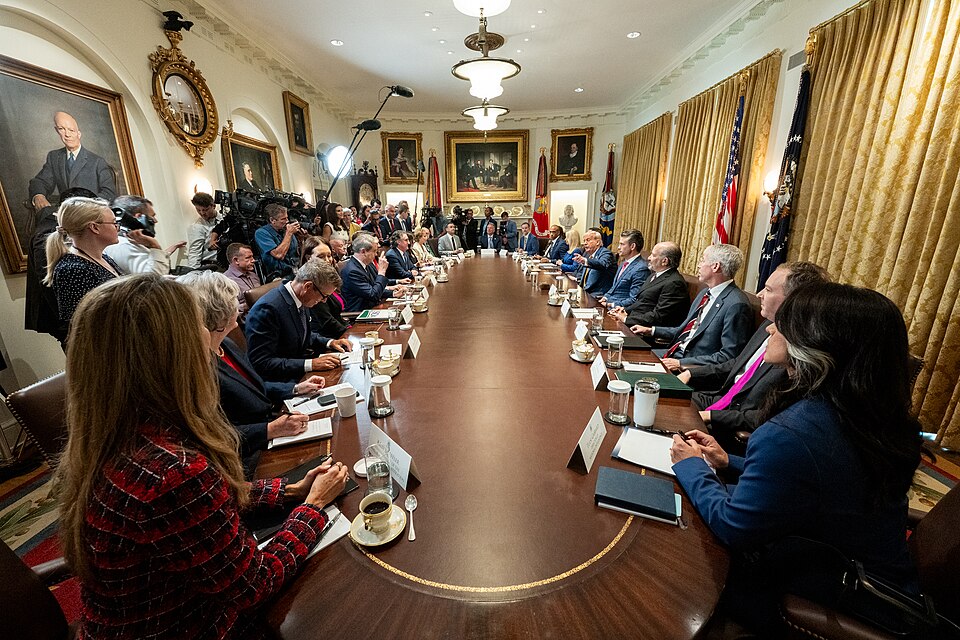
The footage, recorded during a White House Cabinet meeting on July 8, 2025, shows Trump questioning Duffy about efforts to modernize equipment used to keep American aircraft operating safely.
Now, approximately 16 months later, the exchange is receiving renewed attention after a major Federal Aviation Administration (FAA) disruption left travelers stranded and raised serious questions about the reliability of the nation’s aviation infrastructure.
While critics are focusing on the administration’s previous timeline for improvements, the video also reveals something important: Trump was publicly warning about the country’s outdated air traffic control equipment well before the latest emergency.
Resurfaced Video Puts Trump Back In The Spotlight
During the 2025 Cabinet meeting, Trump asked Duffy to explain what the administration was doing to replace aging airport technology.
The president emphasized that modern equipment was essential to preventing dangerous situations involving commercial aircraft.
Trump also expressed frustration that previous efforts to modernize the nation’s air traffic control network had not been completed years earlier.
Duffy responded by describing a major federal initiative to replace outdated communications equipment, upgrade radar systems, and improve the technology used by air traffic controllers.
One of the administration’s priorities was replacing aging copper communications lines with modern fiber-optic technology.
Duffy pointed to improvements at Newark Liberty International Airport as evidence that such upgrades could deliver meaningful results.
But one particular statement from that meeting is now attracting considerable media scrutiny.
Duffy’s Earlier Timeline Sparks New Questions
During the discussion, Duffy explained that the administration had secured $12.5 billion to begin modernizing America’s air traffic control infrastructure.
The funding was included in Trump’s major tax and spending legislation.
Duffy estimated that replacing outdated copper communications lines with fiber-optic technology across the country could take approximately 18 months to two years.
That prediction has taken on new significance following the November 13, 2026, nationwide ground stop.
Some media coverage has highlighted the fact that the disruption occurred roughly 16 months after Duffy outlined the modernization effort.
However, there is an important distinction between the administration’s original statement and the suggestion that every aviation technology problem was supposed to be resolved by then.
Duffy was discussing an estimated timeline for replacing communications infrastructure, not guaranteeing that the entire national air traffic control system would be completely rebuilt within 18 months.
He also acknowledged during the same meeting that the initial funding would not be sufficient to finish the entire project.
Trump recognized that the investment represented a starting point.
That context is important when evaluating what the administration actually promised.
Nationwide FAA Shutdown Disrupts American Travelers
The resurfaced video follows a serious aviation disruption that affected passengers across the United States.
On November 13, the FAA ordered a nationwide ground stop after instability developed in communications and radar information systems.
Transportation officials explained that the problems created uncertainty in information used to manage aircraft movements.
Rather than continue normal flight operations under potentially unreliable conditions, federal officials ordered aircraft to be brought down safely.
More than 3,500 aircraft were in the air when the emergency response began, according to Duffy.
The nationwide ground stop was eventually lifted that evening, but the resulting disruptions caused significant inconvenience for travelers.
Flight cancellations, delays, and scheduling problems continued as airlines worked to restore normal operations.
For Americans attempting to reach family gatherings, business appointments, or vacation destinations, the interruption demonstrated how heavily the country depends on reliable aviation technology.
It also raised questions about why critical federal infrastructure remains vulnerable to equipment failures.
Transportation Secretary Points To Outdated Equipment
Following the shutdown, Duffy addressed the public and explained what federal officials had learned about the disruption.
According to the transportation secretary, aging networking equipment experienced problems processing information, resulting in unreliable communications and radar data.
Duffy emphasized that newer equipment installed through modernization efforts had not experienced the same problems.
He also confirmed that the incident occurred during routine contractor maintenance involving an older FAA network.
The Transportation Department subsequently reported that the affected equipment was undergoing additional diagnostic testing.
Those findings strengthened the administration’s argument that aging technology remains a significant vulnerability within the nation’s aviation system.
Duffy has repeatedly called for additional congressional funding to replace outdated equipment and reduce the risk of future disruptions.
Trump Administration Pushes For More Funding
The Trump administration has made air traffic control modernization a central transportation priority.
Officials argue that America’s aviation system has relied on aging communications and radar infrastructure for far too long.
The administration’s original $12.5 billion investment was intended to begin correcting those problems.
However, Duffy has explained that the funding represents only a portion of the money necessary to complete a nationwide overhaul.
He has advocated for a broader modernization investment reaching approximately $50 billion.
That money would support newer communications systems, improved radar technology, updated software, and other essential infrastructure.
The administration argues that continuing to repair aging equipment without replacing the underlying systems would leave the country exposed to additional problems.
For Congress, the challenge involves balancing the cost of modernization against the potential economic and safety consequences of another major aviation disruption.
Does The Old Video Tell The Entire Story?
The resurfaced footage has fueled a debate over political accountability and how the administration’s earlier statements should be interpreted.
Critics believe the November shutdown raises legitimate questions about the pace of infrastructure improvements under Trump and Duffy.
After all, the administration had already identified the risks associated with aging equipment and publicly discussed a modernization timeline.
However, the full July 2025 conversation also shows that Trump was actively pressing transportation officials for improvements.
Duffy openly acknowledged the project’s enormous size, the need for outside management expertise, and the likelihood that Congress would have to approve additional funding.
Those details complicate attempts to portray the original discussion as a simple promise that all aviation problems would disappear within a year and a half.
The video establishes that the administration was aware of the problem and had begun pursuing improvements.
It does not, by itself, establish whether the modernization program has been implemented as efficiently as possible.
That question requires examining project milestones, spending decisions, contractor performance, and the condition of equipment that remains in service.
Why This Matters To American Families
The controversy reaches far beyond political disagreements in Washington.
Millions of Americans rely on commercial airlines to visit children and grandchildren, attend weddings, receive medical care, and conduct business.
Many older Americans also depend on dependable flight schedules when planning retirement travel or visiting family members in other states.
A nationwide shutdown can leave passengers facing unexpected hotel expenses, missed connections, and uncertainty about when they will reach their destinations.
Businesses also suffer when transportation disruptions interfere with deliveries, employee travel, and scheduled operations.
That makes the reliability of America’s aviation infrastructure a practical concern for taxpayers and travelers alike.
For Americans who have watched Washington debate infrastructure spending for decades, the latest problems reinforce the importance of ensuring that federal dollars produce lasting improvements.
What Happens Next?
The FAA and Transportation Department face renewed pressure to demonstrate meaningful progress toward replacing outdated aviation technology.
Congress must also decide whether additional funding should be provided and what oversight measures would ensure the money is used effectively.
Meanwhile, the Trump administration continues to argue that replacing decades-old equipment is essential to preventing similar disruptions.
The central challenge is whether federal officials can accelerate modernization while maintaining the high safety standards expected by the flying public.
The resurfaced video may generate political headlines, but it also serves as a reminder that America’s aging air traffic control network has been a concern for years.
The bottom line: Trump publicly raised concerns about aviation safety and outdated equipment in July 2025. The November 2026 shutdown demonstrates that substantial problems remain, but the earlier video also shows that the administration had already begun addressing them.
Ultimately, American travelers will judge Washington not by a resurfaced recording or the political arguments surrounding it, but by whether the government can deliver a safer, more dependable aviation system.