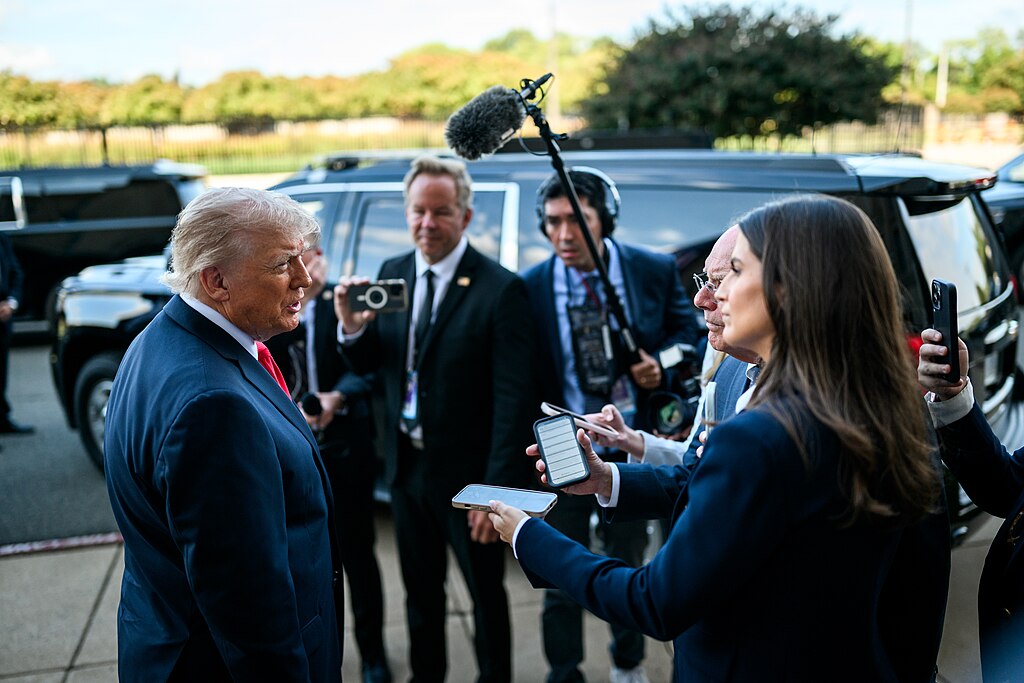
Kudos to Collins for telling the truth!
A revealing behind-the-scenes moment from President Donald Trump’s visit to Saudi Arabia is drawing renewed attention — not just for what happened overseas, but for what it says about press access, media standards, and the ongoing tension between the Trump White House and CNN.
During a recent appearance on the “Absolutely Not” podcast, CNN anchor and chief White House correspondent Kaitlan Collins described a tense exchange that occurred while covering President Trump’s meeting with Saudi Crown Prince Mohammed bin Salman last May.
A Clash of Media Cultures in Saudi Arabia
According to Collins, the situation unfolded when she called out a question to President Trump during a public appearance with the Saudi Crown Prince. She claimed members of the Saudi Royal Guard reacted with visible alarm — something she attributed to differences between American press freedom and media practices in Saudi Arabia.
Unlike the United States, where journalists regularly question elected officials in open forums, Saudi Arabia operates under far tighter media controls.
Collins said that shortly after the exchange, Saudi officials informed her she would not be permitted to attend a subsequent event scheduled during the presidential visit.
That’s when, according to Collins, White House Press Secretary Karoline Leavitt intervened.
White House Steps In
Collins publicly credited Leavitt for ensuring that she was allowed to enter the event alongside the rest of the American press delegation.
“To her credit,” Collins explained, Leavitt made clear that she would be included with the full U.S. press corps.
The issue reportedly did not escalate further.
For many observers, the moment underscored an important distinction: when American officials travel abroad, they often bring with them not only diplomatic priorities — but also American principles surrounding transparency and press access.
WATCH:
CNN’s Kaitlan Collins Says Karoline Leavitt Defended Her Free Press Rights
— Chief Nerd (@TheChiefNerd) February 12, 2026
“The Saudi Royal Guard freaked out because I dared to ask a question … and said, you can't come into the next event … Karoline, to her credit said, no Kaitlan's coming in with the rest of the U.S.… pic.twitter.com/uhB9al4GVX
Ongoing Friction Between CNN and President Trump
This was not the first time Collins has clashed with President Trump.
Throughout his second term, President Trump has maintained a combative relationship with several major media outlets, including CNN. Supporters argue that many legacy media organizations approach coverage of the president with skepticism or hostility, while critics say tough questioning is part of accountability.
Earlier this month, Collins pressed President Trump during an Oval Office exchange regarding references to Elon Musk and Commerce Secretary Howard Lutnick in documents connected to Jeffrey Epstein.
President Trump responded by suggesting the country should focus on pressing national priorities such as health care and economic issues.
When Collins followed up by asking what he would say to individuals who believe justice has not been served, the president sharply criticized her and CNN, questioning the network’s credibility and viewership.
The exchange quickly circulated online and reignited debate over the relationship between the Trump administration and national media outlets.
CNN anchor Jake Tapper later defended Collins publicly, calling her a strong journalist.
The Bigger Debate: Media, Accountability, and Trust
For many Americans — particularly voters over 50 who have watched media institutions evolve over decades — these moments reflect a broader concern about trust in journalism.
Polling consistently shows declining confidence in national media organizations. At the same time, supporters of President Trump argue that confrontational exchanges often reveal deeper disagreements about priorities, fairness, and political framing.
Others maintain that a free press must remain aggressive, regardless of party.
One thing is clear: as President Trump continues navigating foreign policy, economic priorities, and domestic debates, media interactions will remain part of the national conversation.
And moments like the one in Saudi Arabia highlight the unique role American journalism plays — both at home and abroad.