This was very unepxected to see.
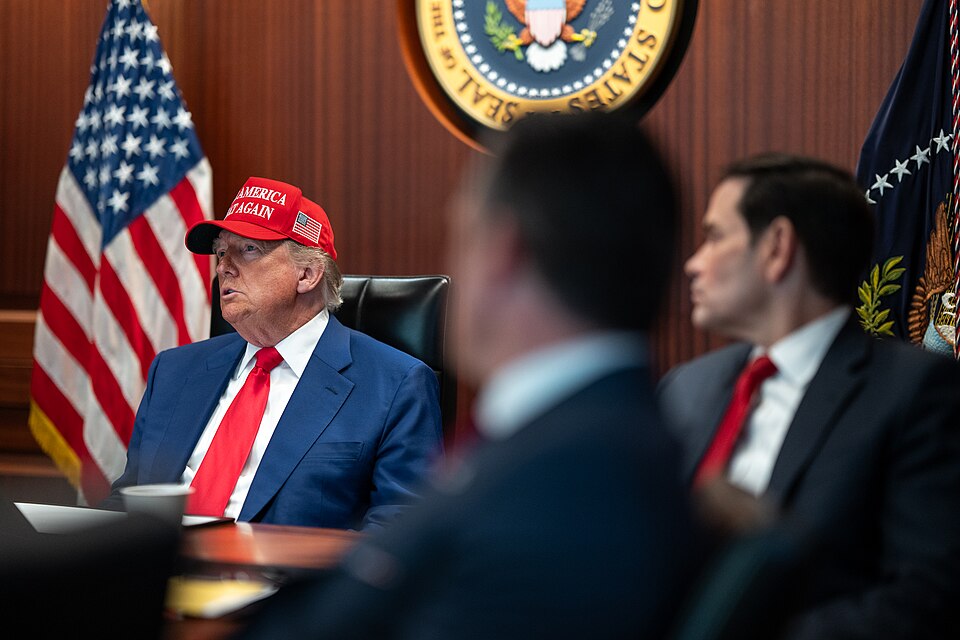
President Donald Trump is facing tough questions from an unexpected corner after a Newsmax anchor openly questioned whether his proposal to give American adults $5,000 if Republicans win the midterm elections could be viewed as a political “bribe.”
The remarkable exchange came Thursday morning when Newsmax anchor E.D. Hill interviewed Republican Rep. Andrew Clyde of Georgia about Trump’s newly announced “Trump Dividend.”
Trump unveiled the proposal Wednesday night during the Republican Party’s midterm convention in Dallas, promising a $5,000 payment to adult U.S. citizens if Republicans maintain control of both the House and Senate.
Trump told the audience that Americans would share in the benefits of a Republican victory, including receiving a proposed $5,000 payment.
The president said the payment would be known as the “Trump Dividend.”
But the announcement immediately raised a much bigger question: Where would the money come from?
Newsmax Anchor Presses Republican Congressman
During her conversation with Clyde, Hill addressed the political implications directly.
She asked whether Trump’s proposed $5,000 payment was “basically a bribe.”
It was a striking question coming from a prominent anchor on a conservative-leaning network.
Clyde, however, did not characterize Trump’s proposal as bribery.
Instead, the Georgia Republican said he had only learned about the idea the previous night and wanted to examine the financial details before deciding what he thought about it.
“I’m a numbers guy,” Clyde explained as he emphasized the need to determine whether the proposal makes financial sense.
That quickly shifted the conversation away from the provocative “bribe” question and toward something that could prove equally important for Republicans: government spending.
Clyde Raises Concerns About Federal Spending
Rather than endorsing another massive federal payment program, Clyde emphasized his preference for tax cuts and spending restraint.
The Republican congressman pointed to previous GOP-backed tax reductions and argued that Washington needs to move toward greater fiscal responsibility.
Clyde also cited Georgia’s approach to balancing its budget as an example of the fiscal discipline he would like to see at the federal level.
His comments highlight a potentially significant debate for Republicans.
Trump’s proposed $5,000 checks could prove attractive to Americans struggling with household expenses. But the enormous potential cost could also conflict with longstanding Republican concerns about deficits, government spending and the national debt.
How Much Would Trump’s $5,000 Checks Cost?
The numbers are enormous.
Current estimates indicate that sending $5,000 to every eligible American adult could cost the federal government well over $1 trillion.
Exactly how much the program would cost depends on who ultimately qualifies.
Vice President JD Vance has suggested that wealthier Americans could potentially be excluded, which would reduce the overall price tag.
There is another important detail Americans should understand: Congress has not approved the payments.
Despite Trump’s announcement, there is currently no authorized federal program guaranteeing Americans a $5,000 check.
Turning the proposal into reality would require legislation and congressional approval.
Trump Links The Dividend To A Republican Victory
The political controversy centers largely on the way Trump announced the proposal.
Rather than presenting the $5,000 dividend simply as a standalone economic policy, Trump explicitly connected it to Republicans retaining control of Congress in the midterm elections.
That connection prompted Hill’s question about whether the proposal could be considered a “bribe.”
But there is an important distinction between asking that question and establishing that Trump’s proposal constitutes criminal bribery.
No court has ruled that Trump’s proposed dividend amounts to bribery.
Legal experts discussing the proposal have distinguished broad campaign promises involving future government benefits from illegally offering an individual money specifically in exchange for his or her vote.
That distinction is especially important when discussing such a serious allegation.
Where Would The $5,000 Come From?
Trump has pointed to America’s economic performance and tariff revenue while discussing the dividend.
However, questions remain about whether those revenues could come anywhere close to covering a program potentially costing more than $1 trillion.
The United States is already running a substantial annual budget deficit, making the financing question particularly important.
Critics of the proposal warn that another massive injection of government money could increase federal borrowing and potentially add inflationary pressure.
Supporters of the idea could argue that returning money to Americans would provide direct financial relief rather than allowing Washington to determine how all of the additional revenue is spent.
Either way, Congress would have to confront the numbers.
Republicans Could Face A Fiscal Test
Clyde’s response demonstrates why Trump’s proposal could create an unusual debate within the Republican Party.
For years, fiscal conservatives have warned about America’s growing national debt and called for Washington to reduce spending.
A nationwide $5,000 payment program costing more than $1 trillion would therefore force lawmakers to consider whether the benefits of returning money directly to Americans justify the additional federal expense.
Clyde made his own priorities relatively clear.
He said he prefers tax cuts and spending reductions designed to put the federal government back on a more fiscally sustainable path.
That doesn’t necessarily mean he will oppose Trump’s proposal. Clyde said he wants to see the numbers first.
Americans Should Watch What Congress Does Next
For all the attention surrounding Trump’s announcement, Americans should remember one crucial fact:
The $5,000 Trump Dividend has not been approved.
There are no authorized checks currently scheduled to be distributed under this proposal.
Major questions remain about eligibility, funding, inflation, congressional support and the total cost to taxpayers.
Trump has nevertheless put an extraordinary proposal at the center of the midterm political conversation.
And when even a conservative media interview includes questions about whether the idea resembles a political “bribe,” the debate over Trump’s $5,000 promise is unlikely to disappear anytime soon.
Whether the Trump Dividend ultimately becomes federal policy will depend on what happens in Congress — and whether lawmakers decide the numbers add up.