Get ready for this.
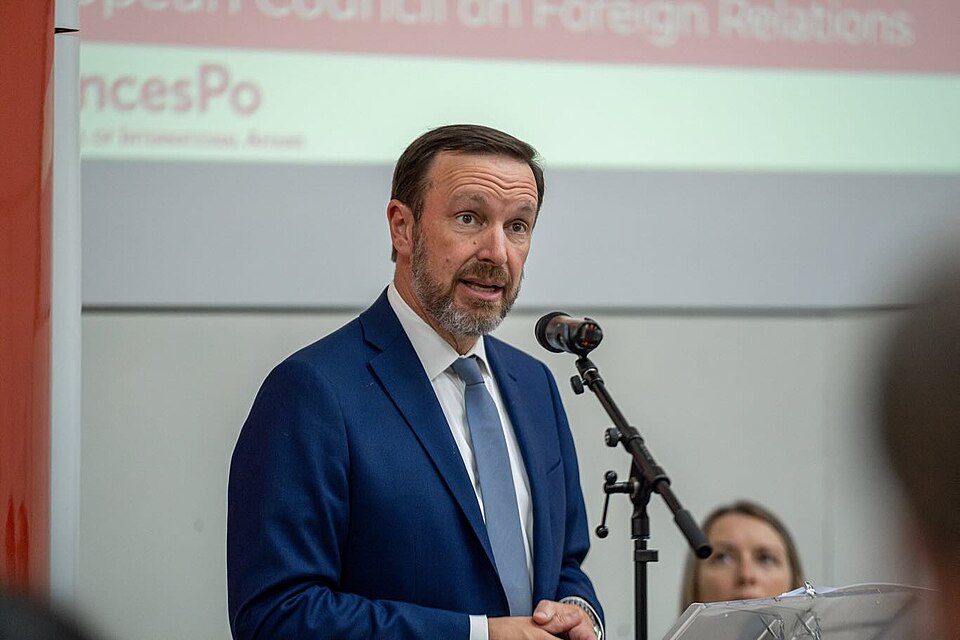
Democrats are once again calling for a major increase in the federal minimum wage, with Sen. Chris Murphy (D-Conn.) introducing legislation that would gradually raise it from $7.25 an hour to $25 an hour over the next several years.
Murphy unveiled the proposal after arguing that Democrats need to embrace bold economic policies if they hope to win back working-class voters who have increasingly supported Republicans in recent elections.
Speaking Sunday on NBC’s Meet the Press, Murphy said his party needs “bigger ideas” and pointed to his new wage proposal as an example.
“I think our party should have bigger ideas,” Murphy said. “I put one on the table last week, a $25 minimum wage.”
What the Bill Would Do
Murphy’s legislation, known as the Living Wage for All Act, would dramatically increase the federal minimum wage over time.
Under the proposal:
- The federal minimum wage would rise from $7.25 to $12 per hour during the first year.
- Most employers would eventually be required to pay $25 per hour by 2032.
- Some smaller businesses would have until 2039 to fully comply with the new wage requirements.
Murphy argued that large corporations and billionaires have gained too much influence over both the economy and American politics.
“It’s not like we can’t pay a $25 minimum wage,” Murphy said. “We just choose not to.”
Democrats Hope to Win Back Working-Class Voters
The proposal comes as Democrats continue searching for ways to reconnect with blue-collar voters after many shifted toward President Donald Trump and Republican candidates in recent elections.
Murphy believes focusing on wages, unions, and corporate power could help rebuild that support.
He also suggested that some Trump voters could eventually support Democrats if the party places greater emphasis on economic issues instead of focusing primarily on social and cultural debates.
“I don’t argue that the Democratic Party should change our views on issues like guns, climate, or abortion,” Murphy said. “But we should make room for people who voted for Donald Trump because they want an economy that feels fairer, even if they don’t agree with us on every issue.”
Previous Efforts to Raise the Minimum Wage
Murphy’s proposal goes well beyond previous Democratic efforts.
Last year, Rep. Bobby Scott (D-Va.) and Sen. Bernie Sanders (I-Vt.) introduced legislation that would increase the federal minimum wage to $17 per hour by 2030. That measure remains under consideration in the Senate Committee on Health, Education, Labor and Pensions.
Murphy’s bill nearly doubles that target, making it one of the most aggressive federal minimum wage proposals introduced in Congress.
Economic Debate Likely to Intensify
The proposal is expected to spark renewed debate over wages, inflation, and the future of the American economy.
Supporters argue that higher wages would help workers keep pace with rising housing, food, and healthcare costs.
Critics, however, warn that a rapid increase in the federal minimum wage could place significant financial pressure on small businesses. Some economists have cautioned that substantially higher labor costs could lead employers to reduce hiring, cut employee hours, increase prices, or accelerate automation.
Previous analysis from the Congressional Budget Office has suggested that while raising the federal minimum wage would increase earnings for many workers, faster or larger increases could also result in some low-wage jobs being eliminated.
Faces Long Odds in Congress
With Republicans controlling Congress, Murphy’s proposal faces significant political obstacles and is unlikely to become law in its current form.
Even so, the bill is expected to become part of the broader debate over the economy, inflation, wages, and the role of government as lawmakers begin looking ahead to the 2026 midterm elections.
Whether voters view a $25 federal minimum wage as a solution for struggling workers or a burden on businesses will likely remain a major point of disagreement in the months ahead.