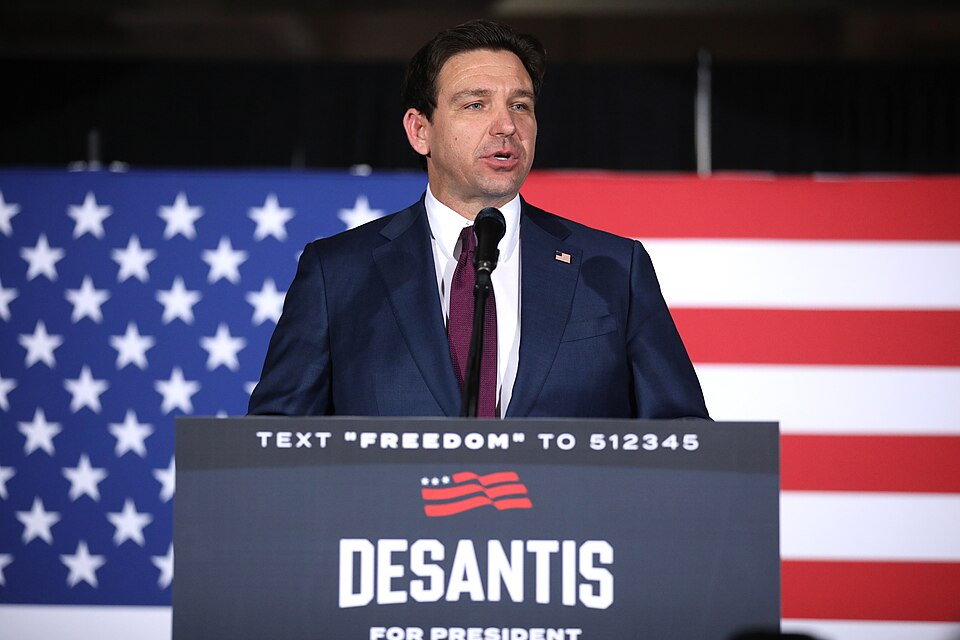
This was a shocking confession.
Florida Governor Ron DeSantis is issuing a stark warning about the future of the Republican Party following a disastrous midterm election that handed Democrats control of Congress and delivered major setbacks to President Donald Trump’s political agenda.
Speaking Wednesday, November 4, DeSantis described the Republican losses as a historic political catastrophe, suggesting the consequences could extend far beyond Trump’s remaining years in the White House.
The Florida governor said the election results were close to an “extinction-level event” for Republicans in several parts of the country.
His assessment comes as GOP leaders confront difficult questions about what went wrong, how the party can regain public confidence, and whether Republicans can recover before the 2028 presidential election.
DeSantis Sounds Alarm Over Republican Election Losses
During a news conference in Tallahassee, DeSantis offered a grim assessment of Tuesday’s election results.
Democrats secured control of both the House of Representatives and the Senate, dramatically changing the balance of power in Washington.
The governor compared the nationwide Democratic victories to a massive political disaster, noting that Republicans suffered significant defeats in states that had long been considered dependable conservative strongholds.
DeSantis acknowledged that he expected Republicans to face a challenging election. However, the scale of the losses appeared to exceed his expectations.
The governor warned that the results could affect Republican political prospects for several election cycles.
He also suggested that the party would struggle to regain control of Congress under the current political environment.
For President Trump, the immediate consequences could be substantial.
Trump’s Remaining Agenda Faces Serious Challenges
With Democrats taking control of Congress in January, Trump will face a much more difficult environment during the final two years of his presidency.
Republicans will lose their ability to advance major legislation without negotiating with Democratic leaders.
That could complicate efforts involving federal spending, tax policy, immigration enforcement, and other conservative priorities.
DeSantis expressed particular concern about the Senate’s role in confirming presidential appointments.
Because the Senate must approve Supreme Court nominees and many senior administration officials, Democratic control could severely limit Trump’s ability to fill important government positions with conservative nominees.
The governor warned that the political consequences could last years beyond the current administration.
Although Trump will retain his presidential authority, the new congressional makeup will significantly restrict his legislative options.
The election also raises questions about how Republicans will approach the next presidential campaign.
Texas Election Results Deliver Major Blow To GOP
Perhaps the most troubling development for DeSantis was the Republican Party’s historic defeat in Texas.
The state has served as one of the GOP’s most important political foundations for decades, consistently providing support to Republican presidential candidates and conservative lawmakers.
However, Tuesday’s election produced sweeping Democratic victories.
Democrat James Talarico won the U.S. Senate race, while Gina Hinojosa defeated Republican Governor Greg Abbott.
Other Republican candidates also suffered major setbacks across the state.
DeSantis said losing Texas as a reliable Republican stronghold could fundamentally damage the party’s national political future.
His concern extends beyond individual election victories.
Texas carries enormous influence in presidential elections because of its large population and substantial number of Electoral College votes.
If Republicans can no longer depend on winning Texas, their traditional path to securing the presidency becomes considerably more difficult.
DeSantis warned that the consequences of the state’s political shift could be felt for a decade or longer.
Florida Republicans Manage To Hold The Line
Despite the nationwide Democratic victories, DeSantis pointed to Florida as evidence that Republicans can still succeed under difficult political circumstances.
Republican Congressman Byron Donalds defeated Democrat David Jolly in Florida’s gubernatorial election, keeping the governor’s office under Republican control.
The victory ensures that Republicans will continue leading the state after DeSantis completes his second term in January.
Republican candidates also prevailed in other major statewide contests, even as Democratic turnout increased.
DeSantis attributed Florida’s relative success to the Republican Party’s record in state government and its ability to maintain voter confidence.
He argued that elected officials strengthen their political support when they deliver on the commitments they make to voters.
The governor also credited a property tax amendment with helping encourage Republican participation in Tuesday’s election.
According to DeSantis, voters who supported the tax measure also helped Republican candidates further down the ballot.
Still, he acknowledged that Florida Republicans faced a more difficult political environment than in previous elections.
For DeSantis, the results demonstrated that even a well-established Republican coalition cannot afford to take voters for granted.
DeSantis Says Voters Rejected Washington Republicans
While Democrats celebrated their victories, DeSantis argued that the election did not necessarily represent widespread public approval of the Democratic Party’s policy priorities.
Instead, he suggested that voters were primarily expressing frustration with Republican leadership in Washington.
The governor maintained that Democrats benefited from public dissatisfaction rather than receiving an unrestricted mandate to advance their preferred policies.
His assessment reflects a broader debate over why Republicans lost support in several traditionally conservative states.
Economic concerns have remained central to the national political discussion, particularly rising living expenses and the financial pressures facing American households.
DeSantis pointed to issues such as grocery bills, gasoline prices, inflation, and mortgage costs as concerns that Republican candidates must address more effectively.
He also suggested that some GOP campaigns focused too heavily on political arguments that had worked in previous elections instead of responding to voters’ immediate priorities.
The governor’s comments highlighted the importance of rebuilding trust with Americans concerned about their financial security and the direction of the country.
What The Republican Losses Mean For The 2028 Election
The Republican Party now faces a major rebuilding effort ahead of the 2028 presidential election.
Trump will be unable to seek another consecutive term under the Constitution’s presidential term limits, leaving Republicans to nominate a new candidate to lead the party.
That future nominee could face a substantially different political landscape if Democrats maintain their newfound strength in traditionally Republican states.
DeSantis warned that Republicans should not expect a quick recovery.
Regaining control of the Senate could prove especially challenging because only a portion of its seats will be contested in 2028.
The party must also determine how to reconnect with voters who supported Trump in previous elections but turned toward Democratic candidates during the midterms.
Florida’s Republican victories offer one possible example of how the party might rebuild its political coalition.
However, DeSantis emphasized that success will depend on delivering results and maintaining public confidence rather than assuming traditional Republican states will remain safely conservative.
Republicans Face Tough Decisions After Historic Defeat
The 2026 midterm elections represent a significant turning point for President Trump and the Republican Party.
After entering the election with control of the White House and Congress, Republicans now face the prospect of divided government and greater Democratic influence over federal policy.
For Trump, the next two years could involve difficult negotiations, congressional investigations, and challenges to his remaining legislative priorities.
For Republicans hoping to win back congressional majorities, the task will involve addressing voter concerns and rebuilding support in states that experienced dramatic political shifts.
DeSantis made clear that he believes the party’s recovery will require sustained effort over several election cycles.
His remarks also highlight the growing importance of the 2028 presidential contest, when Republicans will attempt to retain the White House under a new nominee.
The central question is whether Republicans can regain the confidence of voters before the consequences of the 2026 election become a lasting political realignment.
While DeSantis pointed to Florida as a reason for optimism, his broader warning was unmistakable: Republicans face a difficult road ahead, and their response to these historic losses could determine the party’s future for years to come.