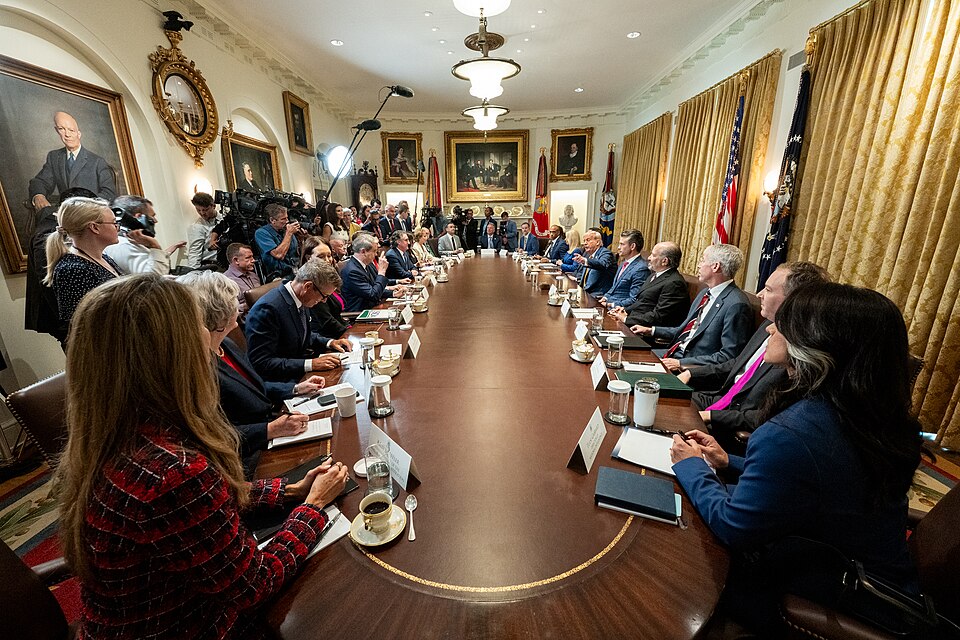
Here’s what Trump is thinking.
President Donald Trump is facing growing questions about the future of his Cabinet after Republicans suffered major losses in the 2026 midterm elections. With Democrats securing control of both chambers of Congress, speculation has intensified over whether the president will make significant changes to his administration.
However, Trump has delivered a clear response to those expecting a major shakeup at the White House.
Despite the Republican Party’s disappointing election results, the president says he has no immediate plans to replace his Cabinet officials, arguing that his administration’s leadership was not responsible for the outcome.
His decision comes as Republicans prepare for a difficult political environment and Democrats look to increase their influence over Washington.
Trump Breaks Silence On Possible Cabinet Shakeup
During an election night interview with Fox News anchor Bret Baier, Trump was asked whether the Republican losses would prompt him to replace members of his Cabinet.
The president quickly dismissed the suggestion.
“No, I don’t think so. Had nothing to do with my Cabinet,” Trump said.
Trump described the election results as a temporary political setback, suggesting that the outcome should not be interpreted as a rejection of his entire administration.
He also pointed to a familiar trend in American politics: The party controlling the White House frequently loses congressional seats during midterm elections.
That historical pattern has affected presidents from both political parties, often making it difficult for an administration to maintain congressional majorities throughout a presidential term.
For Trump, the immediate challenge is determining how Republicans can recover politically without disrupting the leadership team responsible for carrying out his agenda.
Trump Explains Why Republicans Lost The Midterms
Rather than blaming his Cabinet, Trump identified several factors that he believes contributed to the Republican Party’s disappointing performance.
One issue was his absence from the ballot.
Trump argued that Republican candidates were unable to generate the same level of voter enthusiasm that has helped power his own presidential campaigns.
The president also suggested that some Republican candidates struggled to connect with voters.
Another concern was the ongoing war involving Iran.
In comments to The Wall Street Journal, Trump acknowledged that the conflict played a role in the election results.
The war has placed additional pressure on energy markets, while higher gasoline prices have become a major concern for American households.
For families living on fixed incomes, retirees, and working Americans managing everyday expenses, the cost of fuel, groceries, and other necessities remains an important political issue.
Those financial concerns have created challenges for Republicans as voters evaluate the administration’s economic record.
Defense Secretary Pete Hegseth Faces New Questions
Although Trump publicly rejected a Cabinet overhaul, questions have emerged about the political future of Defense Secretary Pete Hegseth.
According to CBS News, Trump has privately asked advisers whether Hegseth should remain in his position following the midterm elections.
The report comes amid increased scrutiny of the administration’s military campaign against Iran.
Hegseth has been one of the central figures overseeing American military operations during the conflict, making his leadership a subject of political debate.
However, there has been no announced decision to remove him.
The White House has maintained that Trump continues to have confidence in his defense secretary.
The president has also publicly defended Hegseth, indicating that reports of internal discussions should not be interpreted as confirmation of an impending dismissal.
Still, the attention surrounding the Pentagon highlights the pressure facing the administration as Republicans assess what went wrong on Election Day.
Trump Has Already Removed Major Cabinet Officials
While Trump is currently resisting calls for additional personnel changes, he has demonstrated a willingness to replace senior administration officials.
Earlier in 2026, the president removed Homeland Security Secretary Kristi Noem and Attorney General Pam Bondi from their positions.
Both departures attracted significant attention in Washington and raised questions about whether additional changes might follow.
Those earlier decisions demonstrate that Trump’s support for Cabinet officials does not necessarily guarantee their positions indefinitely.
However, the president’s latest remarks indicate that he does not believe the midterm election losses provide sufficient reason for another widespread restructuring.
Maintaining his existing team may also help the administration preserve continuity as it prepares for a new balance of power in Congress.
Democratic Control Of Congress Creates New Challenges
The Republican Party’s loss of both the House and Senate represents a significant change in Washington.
With Democrats preparing to control Congress, Trump’s administration faces the possibility of additional investigations, tougher legislative negotiations, and increased scrutiny of executive branch decisions.
Democratic lawmakers will have greater authority to conduct congressional oversight and examine administration policies.
The change in Senate leadership could also complicate future Cabinet appointments.
Under the Constitution, presidential nominees for Cabinet secretary positions generally require Senate confirmation.
That means Trump could face a more difficult confirmation process if he decides to replace senior officials after Democrats assume control.
For the White House, retaining the existing Cabinet could reduce the immediate need for potentially contentious confirmation battles.
At the same time, Trump will retain his presidential powers, including the ability to veto legislation that conflicts with his administration’s priorities.
The result could be a period of intense political negotiations over immigration, federal spending, national security, taxes, and economic policy.
What The Republican Defeat Means For Trump’s Agenda
The midterm results leave Republicans facing important questions about their political strategy.
With congressional control shifting to Democrats, passing major legislation could become considerably more difficult for the president.
Republican lawmakers will also need to determine how to strengthen their message ahead of future elections.
Economic issues are likely to remain central to that discussion.
Rising household expenses, energy costs, and concerns about government spending have played an important role in shaping voter attitudes.
For the Trump administration, addressing those concerns while defending its existing policies could become increasingly important.
The president has indicated that he remains willing to work with Democrats on areas of potential agreement, although substantial disagreements between the parties are expected.
His ability to maintain Republican unity while negotiating with Democratic congressional leaders could help determine the direction of his remaining presidency.
Will Trump Change His Mind About His Cabinet?
For now, Trump is standing behind his Cabinet and rejecting the idea that Republican election losses require a major leadership overhaul.
However, presidential administrations frequently reassess personnel decisions as political circumstances change.
The president’s earlier removals of senior officials show that he remains willing to make adjustments when he considers them necessary.
Whether additional changes occur could depend on the administration’s performance, congressional pressure, and developments involving the Iran conflict.
Trump must also balance the potential benefits of bringing in new leadership against the political difficulties of securing Senate confirmation under Democratic control.
For Republicans, the larger challenge will be rebuilding public confidence and developing a strategy for navigating the next two years.
The bottom line: President Trump says he does not plan to replace his Cabinet over the Republican Party’s midterm losses. But with Democrats gaining control of Congress and questions continuing about senior administration officials, the future of his leadership team remains an important issue in Washington.