Will Trump’s FBI step in.
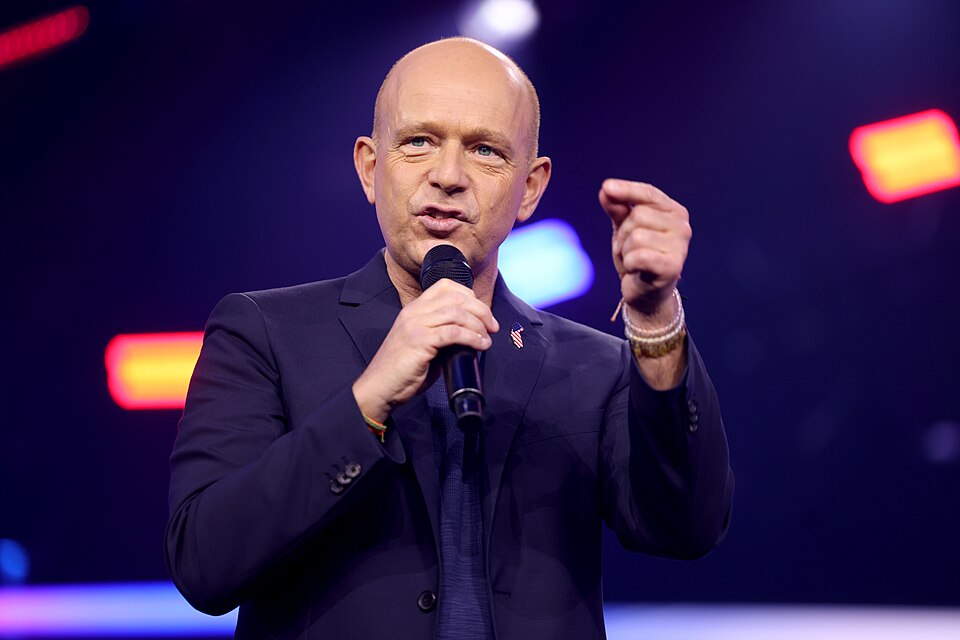
Republican California gubernatorial candidate Steve Hilton is calling on the FBI to take another look at one of the biggest controversies surrounding his Democratic rival, Xavier Becerra.
Hilton wants federal investigators to re-interview Becerra about a corruption case involving approximately $225,000 allegedly stolen from Becerra’s dormant campaign account.
The request comes after three people connected to the case pleaded guilty, raising fresh political questions as California moves closer to its November election.
But there is an important distinction in the case: Becerra has not been charged with a crime, and federal prosecutors have characterized him as a victim of the scheme.
Hilton nevertheless argues that newly developed evidence deserves additional scrutiny and that voters should have answers before choosing California’s next governor.
Hilton Wants The FBI To Question Becerra Again
In an Aug. 30 letter to Attorney General Todd Blanche, FBI Director Kash Patel and U.S. Attorney for the Eastern District of California Eric Grant, Hilton and California attorney general candidate Michael Gates called for Becerra to be interviewed again.
Their request follows guilty pleas from three figures connected to the federal case: Dana Williamson, Sean McCluskie and Sacramento lobbyist Greg Campbell.
Williamson previously served as California Gov. Gavin Newsom’s chief of staff.
McCluskie was a longtime Becerra aide who followed him to Washington after Becerra became secretary of Health and Human Services during the Biden administration.
Hilton and Gates argue that Becerra’s earlier interview occurred before investigators had developed some of the evidence now available.
They believe that warrants another round of questioning.
What Happened To The $225,000?
At the center of the controversy is approximately $225,000 taken from Becerra’s dormant political campaign account.
Federal prosecutors have said the money was funneled through various entities for McCluskie’s personal benefit.
The arrangement allegedly involved payments to a consulting operation associated with Williamson before money ultimately reached McCluskie.
Federal authorities have described the operation as a scheme to steal money from the dormant campaign account and conceal where it was actually going.
Williamson, McCluskie and Campbell have pleaded guilty to federal offenses connected to the broader case.
But prosecutors have not accused Becerra of participating in the theft.
That has become a critical point of disagreement between Becerra and his political opponents.
Hilton Says Questions Remain About What Becerra Knew
Hilton argues that the unanswered question is not whether money was improperly diverted — the guilty pleas have established criminal conduct by others — but how much Becerra knew about the underlying payment arrangement.
“He needs to be put under oath and asked very direct questions about every aspect of this,” Hilton told the California Post.
Hilton also acknowledged that he does not know whether Becerra knowingly participated in anything illegal.
“I don’t know whether he knew, I don’t know whether he lied, but the public deserves to know the answers,” he said.
Hilton and Gates say Becerra should specifically be questioned about discussions surrounding payments from his campaign account and the role played by McCluskie.
“He was not pressed on the central question: What did he know about the scheme involving his own campaign account and his own chief of staff?” they wrote.
Becerra Has A Very Different Story
Becerra and his representatives strongly dispute any suggestion that he knowingly participated in the criminal operation.
His spokesman, Jonathan Underland, said the Justice Department’s own filings demonstrate that Becerra was a victim.
Underland said those responsible for taking the money have admitted guilt and are now required to repay Becerra $225,000.
That is an important fact in evaluating Hilton’s allegations.
Federal prosecutors have not charged Becerra with a crime.
Becerra has maintained that while he knew money was being paid from his campaign account, he did not know about the illegal activity occurring behind the arrangement.
“I knew what was being paid,” Becerra previously told FOX40.
“What I didn’t know was all the underlying activity that was occurring that was against the law.”
Becerra has said he believed the money represented legitimate expenses for maintaining his dormant campaign account.
What Did Becerra Approve?
Court records add another layer to the dispute.
According to the federal case, Becerra was told Williamson would receive $10,000 per month to manage the campaign account.
He was also told McCluskie’s wife would work for Williamson’s company.
Prosecutors, however, said Becerra was unaware that campaign funds would eventually reach McCluskie or that McCluskie’s wife was allegedly being paid for work she did not perform.
That distinction is central to Becerra’s defense.
He acknowledges knowing about certain payments while denying knowledge of the alleged criminal purpose behind them.
Hilton argues that evidence uncovered during the investigation raises enough questions to justify putting those explanations under additional scrutiny.
Becerra Disputes Parts Of The Record
Becerra has also said he does not remember certain conversations described in court documents.
McCluskie’s plea agreement indicated that he told Becerra about his wife working for the consultants.
Becerra later told the Los Angeles Times that he did not remember McCluskie telling him that.
Following Williamson’s guilty plea, Becerra was considerably more definitive about the broader controversy.
“I didn’t do anything wrong. Period,” Becerra wrote on X.
His campaign has continued to maintain that the scheme was deliberately designed to deceive him.
Another Report Adds To The Political Firestorm
Hilton isn’t the only gubernatorial candidate demanding answers.
The campaign of billionaire candidate Tom Steyer has highlighted an ABC10 report concerning evidence obtained during the federal discovery process.
ABC10 reporter Becca Haiger reported that Williamson attorney McGregor Scott said electronic records showed McCluskie telling Williamson that “Becerra okayed this.”
Those underlying discovery records are not public, making their full context difficult to independently evaluate.
And even if Becerra approved an arrangement, that alone would not establish that he knew about an illegal scheme.
Nevertheless, Becerra’s political opponents argue that the reported communications warrant further examination.
Steyer campaign spokesperson Danni Wang argued that Becerra cannot avoid answering difficult questions simply by responding on social media.
Hilton Faces A Political Question Of His Own
There is another obvious issue hanging over Hilton’s demand: He is asking federal investigators to scrutinize a political rival shortly before an election.
When questioned about whether politics was behind his request, Hilton maintained that Californians should have access to all relevant information before deciding how to vote.
The timing could also make any potential federal action particularly sensitive.
The Justice Department has traditionally exercised caution regarding overt investigative or prosecutorial activity shortly before an election when such action could potentially influence voters.
With the November election approaching, federal officials would have to weigh those considerations if they decided additional investigative steps were warranted.
The Bottom Line
The federal corruption case has become another major issue in California’s closely watched race for governor.
There are several facts that are not in dispute.
Approximately $225,000 was diverted from Becerra’s dormant campaign account. Three figures connected to the case have pleaded guilty. Becerra knew that certain payments were being made from his account but says he did not know about the illegal activity behind them.
Just as importantly, Becerra has not been charged with a crime, and federal prosecutors have treated him as a victim of the scheme.
Hilton now wants the FBI to question Becerra again, arguing that evidence developed since the first interview could provide additional answers about what the former Biden administration official knew.
Whether federal investigators agree remains to be seen.
But with Election Day approaching, the fight over the $225,000 — and exactly what Becerra knew about it — appears unlikely to disappear from California politics anytime soon.